Demystifying Arbitration: Crafting a Winning Example Arbitration Brief
Demystifying Arbitration: Crafting a Winning Example Arbitration Brief
Understanding the intricacies of arbitration can be daunting, especially when it comes to preparing your case. A well-crafted arbitration brief is crucial for presenting your arguments effectively and influencing the arbitrator's decision. This article aims to demystify the process by exploring the key components of a successful brief, providing insights into structuring your arguments, and offering a glimpse into what a strong example arbitration brief might look like.
An arbitration brief serves as your primary written communication with the arbitrator outlining your case. Unlike court filings, arbitration briefs often have a more flexible format, but they still need to be persuasive, well-organized, and meticulously researched. The goal is to clearly and concisely present your facts, legal arguments, and requested relief. A poorly written brief can confuse the arbitrator, weaken your position, and ultimately harm your chances of success.
The arbitrator uses your brief to understand the context of your dispute, the relevant laws and precedents, and the specific remedies you are seeking. It's your opportunity to tell your story in a compelling and logical manner, supporting every claim with evidence and legal authority. Think of it as your most powerful tool in the arbitration process.
Key Components of a Winning Arbitration Brief
A strong arbitration brief typically includes the following elements:
1. Introduction and Statement of Facts
This section sets the stage for your argument. Begin with a concise overview of the dispute, clearly identifying the parties involved and the nature of the disagreement. Then, present a detailed factual narrative, laying out the timeline of events leading to the arbitration. This narrative should be supported by evidence, such as contracts, emails, and witness statements. Avoid emotional language and focus on objectivity.
Remember to present the facts in a chronological order, making it easy for the arbitrator to follow the sequence of events. Use clear and concise language, avoiding jargon and technical terms unless they are absolutely necessary. Support each factual assertion with concrete evidence.
This is the heart of your brief. Here, you present your legal arguments, connecting the facts to the relevant laws and precedents. Each argument should be supported by case law, statutes, and other persuasive authorities. You must demonstrate how the law applies to your specific situation. This section requires careful legal research and a strong understanding of the applicable legal framework.
Structure this section logically, addressing each point separately and clearly. Use headings and subheadings to organize your arguments and make them easy to follow. Cite cases and statutes correctly, using a consistent citation format. Anticipate counterarguments and address them directly, refuting them with evidence and legal reasoning.
3. Rebuttal of Opposing Arguments (if applicable)
If the opposing party has submitted a brief, your brief should include a section specifically addressing their arguments. This is your opportunity to refute their claims, point out weaknesses in their case, and demonstrate why their arguments should not be accepted by the arbitrator.
This section requires careful analysis of the opposing party's brief. Identify the key arguments they are making and address each one systematically. Present evidence and legal reasoning to demonstrate why their arguments are flawed or unsupported by the facts or law.
4. Conclusion and Relief Requested
Summarize your key arguments and reiterate your position in the dispute. Clearly state the specific relief you are seeking from the arbitrator, such as monetary damages, specific performance, or declaratory relief. This section should be concise and persuasive, leaving a lasting impression on the arbitrator.
This should be a strong and concise summary of your entire argument. It should clearly and directly state what you want the arbitrator to do. Be specific and avoid ambiguity.
5. Appendix (if applicable)
Include any supporting documents, such as contracts, emails, witness statements, and expert reports, as an appendix to your brief. Properly label and reference these documents within your brief.
This section should be well-organized and easy to navigate. Make sure all documents are relevant and properly identified.
Example Arbitration Brief: A Hypothetical Scenario
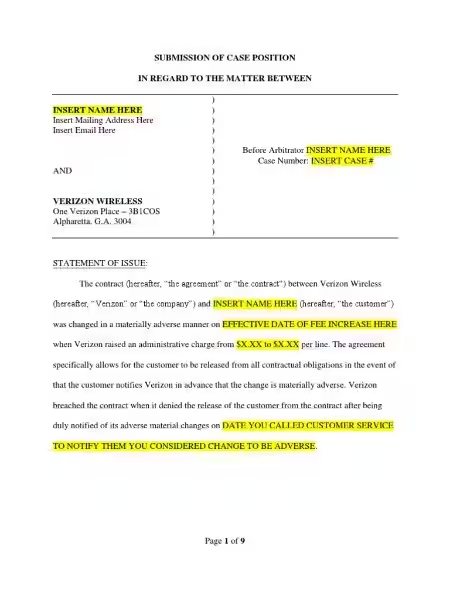
Let's imagine a scenario where a contractor (Party A) claims breach of contract by a client (Party B), who refused to pay for completed work. An example arbitration brief for Party A might include:
Introduction: Briefly states the dispute: Party A completed the work as per the contract, but Party B refuses payment.
Statement of Facts: Details the contract, the work performed, evidence of completion (photos, invoices), and Party B's refusal to pay, citing specific emails or communications.
Argument: Presents legal arguments based on contract law, showing how Party B breached the contract by failing to pay for completed work as agreed. Relevant case law supporting breach of contract would be cited.
Rebuttal: Addresses potential counterarguments from Party B (e.g., claims of substandard work) by presenting evidence to the contrary.
Conclusion: Summarizes the breach of contract and requests payment in full, plus any applicable damages.
Appendix: Includes the contract, invoices, photos of completed work, and relevant communications.
This hypothetical demonstrates the essential structure and content that a successful example arbitration brief would encompass. Remember that each brief needs to be tailored to the specific facts and circumstances of your case. Seeking legal counsel is crucial to ensure your brief effectively presents your case. A well-prepared brief significantly increases your chances of a favorable outcome in arbitration.
Frequently Asked Questions: Example Arbitration Briefs
This FAQ section addresses common questions about example arbitration briefs. Since no specific brief is provided, these answers offer general guidance. Remember, legal advice should always come from a qualified legal professional.
What is an arbitration brief?
An arbitration brief is a written legal document submitted to an arbitrator by a party involved in an arbitration proceeding. It outlines the party's arguments, evidence, and legal claims in support of their position. Think of it as a persuasive legal argument presented in writing for the arbitrator's review before a hearing.
Where can I find example arbitration briefs?
Finding specific example arbitration briefs publicly available online can be challenging due to confidentiality concerns. Many are considered privileged and confidential documents. Legal databases may contain some examples, but access often requires a subscription. Searching for "arbitration brief template" might yield some basic structural examples, but these won't contain specific case details.
What should be included in an arbitration brief?
A well-structured arbitration brief generally includes: a statement of the case, a factual summary, legal arguments supporting the party's claims, a discussion of relevant case law and statutes, and a conclusion summarizing the requested relief. It should be clear, concise, and well-organized, focusing on the key issues of the dispute. The specific requirements may vary based on the arbitration rules applicable to the case.
The length of an arbitration brief is usually dictated by the arbitration rules or by agreement between the parties. However, brevity and clarity are generally preferred. An excessively long brief can be detrimental as it may obscure key arguments. While there's no magic number, aim for conciseness while comprehensively addressing all relevant points.
What makes a good example arbitration brief?
A strong example arbitration brief is characterized by its clarity, organization, persuasive arguments, and thorough support with evidence and legal authority. It should clearly state the party’s position, present compelling evidence, and effectively address the opposing party's arguments (anticipating counter-arguments is crucial). It's also important to follow the specific formatting rules set forth by the arbitral tribunal or governing rules.
Can I use an example arbitration brief as a template for my own?
While you can use example briefs to understand the structure and format, directly copying content is plagiarism and unethical. It's crucial to tailor your brief to the specifics of your own case. Use examples only as a guide for organization and style, ensuring all content reflects your own case's unique facts and legal arguments. Remember to cite any legal authorities correctly.
What should I do if I can't find a suitable example?
If you are struggling to find helpful examples, consider consulting with a legal professional experienced in arbitration. They can provide guidance on structuring your brief and ensuring it effectively presents your case. They can also help you find relevant case law and legal precedents to support your arguments, ensuring you build a strong and compliant brief.