Understanding Bid Documents: Your Guide to Successful Bidding
Understanding Bid Documents: Your Guide to Successful Bidding
Winning a construction contract often hinges on understanding and responding effectively to bid documents. These aren't just paperwork; they're the blueprint for a successful project, outlining expectations, requirements, and the process for submitting your proposal. This article will guide you through the essential components of bid documents, helping you navigate the complexities and increase your chances of winning.
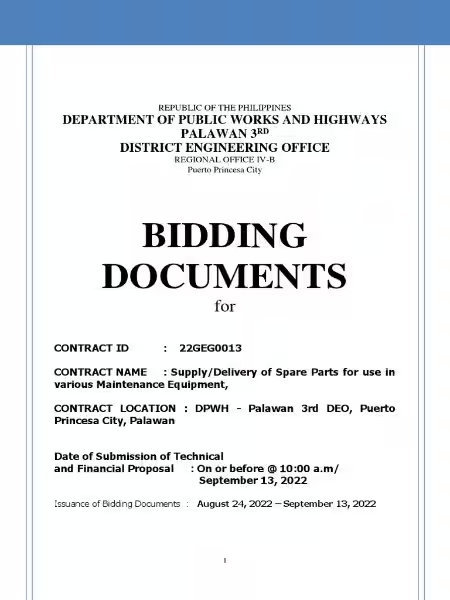
Bid documents, also known as tender documents or a bid package, are a comprehensive collection of information provided to potential contractors during the bidding phase of a construction project. They are designed to provide all bidders with the same complete and consistent information, ensuring a fair and transparent selection process. This creates a level playing field, allowing contractors to accurately estimate costs and submit competitive proposals. Think of them as the detailed instructions for building the project, and your bid is your response to those instructions.
The purpose extends beyond simply providing information. Well-structured bid documents minimize ambiguity, reducing the potential for disputes and misunderstandings later on. This careful planning, upfront, protects both the project owner and the contractor, leading to a smoother project execution and a more collaborative relationship.
Types of Bidding Processes and Their Documents
The specific documents you'll encounter will vary depending on the chosen bidding method. The most common methods include:
Invitation to Bid (ITB): This method focuses primarily on price competition. The bid documents will emphasize detailed specifications and a standardized bid form for easy price comparison.
Request for Proposal (RFP) and Request for Tender (RFT): These methods allow for more flexibility and consider factors beyond just price, such as the contractor's experience, approach, and qualifications. The bid documents will be more comprehensive, often including opportunities for creative solutions and detailed descriptions of the desired outcome. These documents will still include price information, but the emphasis is on a broader range of evaluation criteria.
Regardless of the method, meticulous preparation of the bid documents is critical to ensure a successful bidding process.
Key Components of a Bid Package
A complete bid package typically consists of several key components:
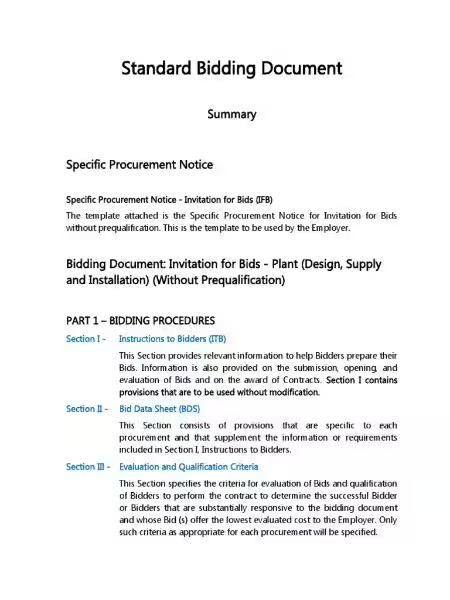
Cover Sheet and Instructions to Bidder
This section acts as the introduction to the entire package. It provides essential information like project details, contact information, deadlines for submission, guidelines on how to submit the bid (electronically or physically), arrangements for site visits, procedures for asking questions (Requests for Information or RFIs), evaluation criteria used to select the winning bid, and the overall contract award process. This portion also often includes legal requirements for public projects, such as prevailing wage stipulations or subcontractor diversity mandates. Paying close attention to these instructions is vital to ensure your bid is compliant. Ignoring these procedural components can immediately disqualify your bid.
Construction Documents: The Heart of the Bid Package
This section forms the core of the bid package and contains the technical details needed for accurate cost estimation and proposal development. It comprises:
Project Specifications: These provide detailed technical descriptions defining materials, workmanship, quality standards, and performance requirements. They can be:
Performance-based: Specifying desired outcomes.
Prescriptive: Detailing specific methods and materials.
Proprietary: Mandating specific manufacturers or products.
Drawings: These visual representations of the project's design and scope, such as site plans, floor plans, elevations, sections, details, and schedules. They also typically include structural, MEP (Mechanical, Electrical, Plumbing), and landscape drawings. The completeness of drawings can vary based on the project delivery method.
Bill of Quantities (BOQ) or Bill of Materials (BOM): These are comprehensive lists of materials and labor required. BOQs often break down the work into sub-groups, assigning units and quantities, facilitating accurate cost estimating and bid comparison. BOMs list materials, components, and assemblies. Their inclusion depends on the project's pricing structure.
Thorough review of these documents is crucial. Any discrepancies or misunderstandings at this stage can lead to significant cost overruns or project delays.
General and Supplemental Conditions
These documents outline the administrative and managerial responsibilities of all stakeholders involved in the project. General conditions cover broad areas like project management, site management, permits and regulations, insurance and bonding, change orders, payment terms, dispute resolution, and project closeout. Supplemental conditions address project-specific details or unique circumstances. These conditions directly impact contractor costs and must be carefully factored into your bids.
Bid Form
The bid form provides the standardized format for bid submission. It typically requires information such as bidder's details, bid price (lump sum, itemized, guaranteed maximum price, or cost-plus), unit pricing (if applicable), any alternates (if allowed), and the proposed project schedule. Public projects often require additional documentation, such as bid bonds, to demonstrate financial responsibility. Ensure you complete this form accurately and comprehensively. Inaccurate information can lead to bid rejection.
The Importance of Bid Documents for Project Owners
For project owners, creating a thorough and clear bid package is paramount to project success. Detailed specifications, drawings, and BOQs/BOMs minimize financial risks by enabling contractors to provide accurate bids. Standardized bid forms simplify bid comparison and selection. A well-prepared bid package sets the stage for a smoothly executed project and a fair and transparent selection process.
By carefully reviewing and understanding every aspect of the bid documents, both contractors and owners can contribute to a successful project outcome. The effort invested in understanding these documents is an investment in the entire project's success.
Bid Document FAQs
What is a bid package (or bid documents)?
A bid package, also known as a tender package or bid documents, is a comprehensive collection of project documents provided to potential contractors during the bidding phase of a construction project. Its purpose is to furnish bidders with complete and consistent information, enabling them to create accurate and competitive proposals. The package serves as the foundation for bid preparation and submission, ensuring fairness and transparency in the selection process. It's used with various bidding methods, including Invitation to Bid (ITB), Request for Proposal (RFP), and Request for Tender (RFT).
What are the key components of a bid package?
A typical bid package includes:
Cover Sheet and Instructions to Bidder: This provides essential project details, deadlines, submission guidelines, site visit arrangements, evaluation criteria, and the contract award process. Public projects often specify requirements like prevailing wages.
Construction Documents: This comprises project specifications (detailed descriptions of materials and workmanship), drawings (visual representations of the project), and a Bill of Quantities (BOQ) or Bill of Materials (BOM) (comprehensive lists of materials and labor).
General and Supplemental Conditions: These outline the administrative and managerial responsibilities of all stakeholders, including project management, insurance, payment terms, and dispute resolution.
Bid Form: A standardized format for bid submission, requiring bidder details, bid price, and proposed schedule. Public projects often require additional documentation like bid bonds.
What is the difference between an ITB, RFP, and RFT?
While all three solicit bids, they differ in their focus:
Invitation to Bid (ITB): Primarily focuses on price competition.
Request for Proposal (RFP) / Request for Tender (RFT): Allow for competition based on both approach and price, often emphasizing innovative solutions and project methodology.
What are project specifications, and what types exist?
Project specifications are detailed technical descriptions defining materials, workmanship, quality standards, and performance requirements. Three main types exist:
Prescriptive: Detailing specific methods and materials.
Performance-based: Specifying desired outcomes.
Proprietary: Mandating specific manufacturers or products.
What is a Bill of Quantities (BOQ) or Bill of Materials (BOM)?
A BOQ breaks down work into sub-groups with assigned units and quantities, facilitating cost estimating and bid comparison. A BOM lists materials, components, and assemblies. Their inclusion depends on the project's pricing structure.
Why is a thorough bid package crucial for project owners?
A detailed and clear bid package minimizes financial risks by enabling contractors to provide accurate bids. Standardized bid forms simplify bid comparison and selection, setting the stage for smooth project execution.
What happens if a contractor doesn't understand the bid documents?
Misunderstanding bid documents can lead to inaccurate bids, potential bid disqualification, contract disputes, and project delays or failures. It's crucial for contractors to thoroughly review all documents and seek clarification when needed.
Where can I find more information on bid document preparation?
Resources on bid document preparation are available from various sources, including industry associations, government agencies, and online construction resources. Consulting with legal and construction professionals is also recommended for complex projects.
Are there specific legal considerations for bid documents?
Yes, bid documents are legally binding. They must be clear, unambiguous, and comply with all applicable laws and regulations. Inconsistent or incomplete documents can lead to legal challenges. Seek legal counsel when necessary.
How can I ensure my bid is competitive?
Thoroughly understand the bid documents, accurately estimate costs, and showcase your experience and expertise in your bid proposal. Consider value engineering to optimize your bid strategically.