Understanding Bidding Documents: Your Guide to Successful Bidding
Understanding Bidding Documents: Your Guide to Successful Bidding
Winning a contract often hinges on thoroughly understanding the bidding documents. These documents, also known as tender packages or bid packages, are the cornerstone of any competitive bidding process. They provide all the necessary information for potential bidders to craft accurate and competitive bids. This article will break down the key components of bidding documents, helping you navigate the process with confidence.
Bidding documents are a comprehensive collection of project information provided to potential contractors. They serve as a blueprint, outlining the project's scope, requirements, and expectations. Think of them as the instruction manual for building a successful bid. Without a clear understanding of these documents, your chances of winning the contract significantly decrease.
The level of detail and complexity within the bidding documents will vary depending on the size and complexity of the project. A small, straightforward project might have a less extensive package, while a large, intricate project will require a much more detailed set of documents.
Key Components of Bidding Documents
Most bidding documents, regardless of the project type, will contain the following key elements:
Cover Sheet and Instructions to Bidders
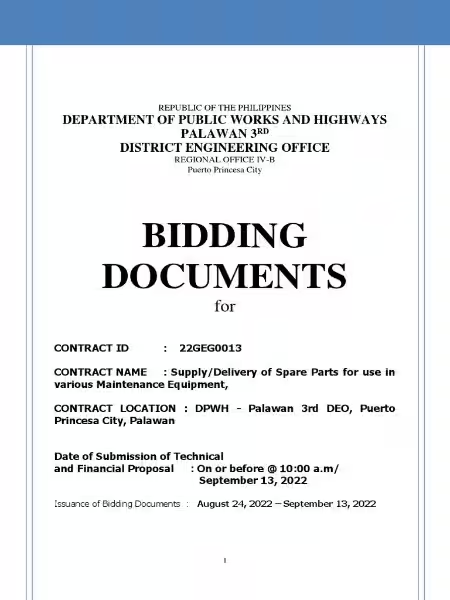
This initial section sets the stage for the entire bidding process. It provides essential information such as the project location, timeline, contact information, submission deadlines, and payment terms. Crucially, it spells out the rules of engagement, including guidelines for submitting your bid (electronic or physical), procedures for asking clarifying questions (Request for Information or RFI), bid evaluation criteria, and instructions on bid withdrawal or modification. Public projects often include details about prevailing wage requirements or subcontractor diversity goals. It is vital to read this section carefully.
Failure to adhere to these instructions can lead to your bid being disqualified, regardless of its merit.
Construction Documents: The Heart of the Package
This is often the most substantial part of the bidding documents. It consists of three critical components:
Project Specifications: These are detailed technical descriptions that define the materials, workmanship, quality standards, and performance requirements for all aspects of the project. They can be performance-based (specifying the desired outcome), prescriptive (detailing specific methods and materials), or proprietary (mandating specific brands). The level of detail here directly impacts contractor participation and potential costs. Paying close attention to these details is absolutely paramount.
Drawings: These visual representations bring the project to life. They include site plans, floor plans, elevations, sections, details, schedules, and drawings related to mechanical, electrical, plumbing, and structural aspects. The comprehensiveness of the drawings varies depending on the project delivery method (Design-Bid-Build, Design-Build, Integrated Project Delivery), directly influencing the level of detail available to bidders. 3D models are also becoming increasingly common.
Bill of Quantities/Materials (BOQ/BOM): This is a comprehensive list of all the materials, components, and labor required for the project. BOQs are particularly useful for unit pricing contracts, facilitating cost tracking and progress payments. They might also include breakout requests for specialty contractors to provide detailed pricing for specific tasks. Lump-sum contracts often omit this element. Carefully reviewing the BOQ/BOM is critical for accurate cost estimation.
This section outlines the administrative and managerial responsibilities of all stakeholders. General conditions cover project management, site management, permits and regulations, insurance and bonding, change orders, payment terms, dispute resolution, and project closeout and warranty. Supplemental conditions address project-specific circumstances, such as unique methods, local ordinances, or environmental factors. Contractors must carefully factor these conditions into their bids, as they directly impact cost and risk.
Bid Form
This standardized document is where you formally submit your bid. It requires details such as your company's information, your bid amount (lump sum, itemized, unit pricing, etc.), proposed schedule, and signatures. Public projects often require additional information and bid security (bid bond). Ensure that you complete this form accurately and completely.
The Importance of Effective Bidding Documents
Effective bidding documents are critical for the success of any project. Thorough specifications, drawings, and BOQs/BOMs minimize financial risk by enabling accurate bidding. Standardized bid forms facilitate bid comparison and selection of the most valuable proposal. Owners must strike a balance between detailed requirements and cost, ensuring the bidding documents provide sufficient information without being overly restrictive or burdensome. Clear and concise bidding documents are essential for a fair and transparent bidding process.
Ignoring even a small detail in the bidding documents can lead to costly mistakes and potential project delays. A thorough review and understanding of all sections are crucial for a successful bid. Remember, your bid is only as good as your understanding of the bidding documents.
Frequently Asked Questions about Bidding Documents
Here are some frequently asked questions about bidding documents for construction projects:
Bidding documents, also known as tender packages or bid documents, are a comprehensive set of project documents provided to potential contractors during the bidding phase of a construction project. Their purpose is to provide consistent and complete information so contractors can create accurate and competitive bids. The package forms the basis for bid preparation and submission, regardless of whether the project uses an Invitation to Bid (ITB), Request for Proposal (RFP), or Request for Tender (RFT).
What are the key components of a bid package?
Most bid packages contain these core elements:
Cover Sheet and Instructions to Bidders: This section gives project details (location, timeline, contact information), deadlines, submission guidelines, site visit information, RFI procedures, evaluation criteria, contract award processes, and bid withdrawal/modification instructions. Public projects often include prevailing wage requirements or subcontractor diversity goals.
Construction Documents: This is usually the largest part, including project specifications, drawings, and a bill of quantities (BOQ) or bill of materials (BOM). Specifications detail materials, workmanship, and quality standards. Drawings are visual representations of the design. The BOQ/BOM lists materials, components, and labor needed.
General and Supplemental Conditions: These outline administrative and managerial responsibilities of all stakeholders, covering project management, permits, insurance, change orders, payment terms, dispute resolution, and project closeout. Supplemental conditions address project-specific circumstances.
Bid Form: A standardized form for bid submission. This requires bidder information, bid amount, unit pricing (if applicable), alternates (if allowed), a proposed schedule, and signatures. Public projects often require additional information and bid security (bid bond).
Effective bidding documents are crucial for project success. Thorough specifications, drawings, and BOQs/BOMs minimize financial risk by enabling accurate bidding. Standardized bid forms facilitate bid comparison and selection of the most valuable proposal. They ensure a fair and transparent process.
What are the different types of specifications found in construction documents?
There are three main types of specifications:
Prescriptive: Detailing the exact materials and methods to be used.
Performance: Specifying the desired outcome without dictating the method of achieving it.
Proprietary: Mandating the use of specific brands or products.
What is a Bill of Quantities (BOQ) and how is it used?
A BOQ is a comprehensive list of materials, components, and labor needed for the project. It's particularly useful for unit pricing contracts, facilitating cost tracking and progress payments. Lump-sum contracts may not include a BOQ.
What if I have questions about the bidding documents?
The instructions to bidders will typically outline a process for submitting Requests for Information (RFIs). Use this process to clarify any ambiguities or uncertainties. Contact the designated point of contact specified in the bidding documents.
Are there standardized bidding documents?
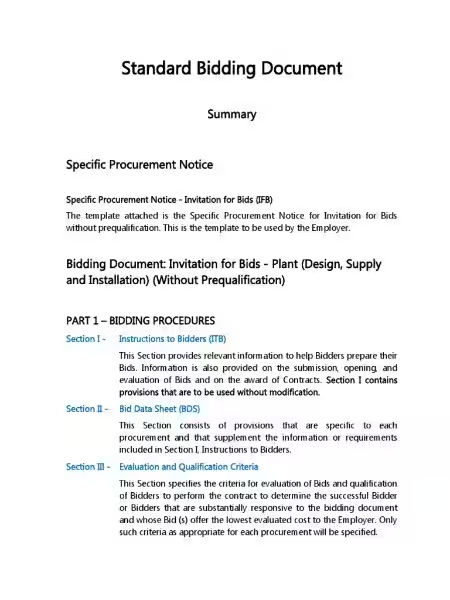
Yes, some organizations, like the Inter-American Development Bank (IDB), use Standard Bidding Documents (SBDs) to ensure transparency and efficiency in procurement. These standardized documents are often mandated for projects funded by these organizations. However, some jurisdictions also allow for the use of nationally approved SBDs if they meet certain criteria.
What happens if I don't follow the submission guidelines in the bidding documents?
Failure to adhere to the submission guidelines specified in the bidding documents may lead to your bid being rejected. Carefully review all instructions and ensure your submission complies with all requirements.