Creating the Perfect Sample Facilitator Guide: A Comprehensive Guide
Creating the Perfect Sample Facilitator Guide: A Comprehensive Guide
Are you struggling to create a facilitator guide that truly empowers your trainers and ensures a successful learning experience? This comprehensive guide will walk you through every step, providing insights and best practices to craft a sample facilitator guide that's both effective and easy to use. We'll cover everything from initial planning to post-training evaluation, ensuring your training sessions run smoothly and achieve their objectives.
Understanding the Importance of a Strong Facilitator Guide
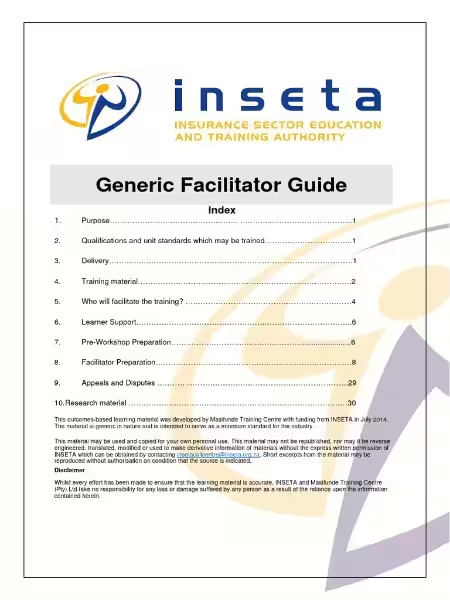
A well-structured facilitator guide is more than just a collection of lesson plans; it's the backbone of a successful training program. It provides a roadmap for your trainers, ensuring consistency and quality across all sessions. Think of it as a detailed playbook that enables even novice facilitators to deliver engaging and informative training.
Without a comprehensive guide, trainers may struggle to maintain the intended pace, miss key learning points, or fail to adequately address participant questions. This can result in a frustrating and unproductive learning experience for participants. A well-designed guide mitigates these risks by providing a clear structure and valuable resources.
Key Elements of an Effective Sample Facilitator Guide
Creating a truly effective sample facilitator guide requires careful planning and attention to detail. Here's a breakdown of the essential components:
1. Clearly Defined Learning Objectives and Goals
Before even thinking about the specific activities, clearly articulate the learning objectives. What should participants know, understand, or be able to do by the end of the training? These objectives are the foundation upon which the entire guide is built.
The learning objectives should be SMART (Specific, Measurable, Achievable, Relevant, and Time-bound). This ensures that the training is focused and measurable, allowing for effective evaluation of its success.
2. Detailed Session Agenda and Timing Guidelines
A detailed session agenda, including specific time allocations for each activity, is crucial. This helps maintain a consistent pace and prevents the session from running over or under time. No one wants to rush through important content or drag on unnecessarily.
Consider including buffer time between activities to allow for flexibility. This accommodates unexpected questions or discussions, ensuring the training remains engaging and adaptable.
3. Engaging Activities and Discussion Prompts
The guide should offer a variety of engaging activities to keep participants involved and actively learning. Include clear instructions for each activity, along with anticipated time requirements and potential challenges.
Provide sample talking points and discussion questions to guide the facilitator, but avoid creating rigid scripts. This allows for flexibility and adaptation according to the specific dynamics of each training session. Remember, the facilitator is the conductor, not a robot reading a script.
4. Supplemental Resources and Materials
Enhance the training experience by including access to supplemental resources. This could include relevant articles, videos, case studies, or interactive exercises. These resources provide additional context and reinforce the learning points.
The inclusion of visual aids is particularly important. Think about using charts, infographics, or interactive simulations to make the training more engaging and easier to understand.
5. Incorporating Feedback Mechanisms
Your sample facilitator guide shouldn't be a static document. Plan for feedback mechanisms to continuously improve the training. Include space for trainers to provide comments and suggestions after each session.
This iterative process ensures the guide remains relevant, effective, and continuously improved based on real-world experience. This feedback is crucial for identifying areas for improvement and refining the training materials.
The Role of the Facilitator: Beyond Content Delivery
While the facilitator guide is essential, the success of the training hinges significantly on the facilitator's skills. Effective facilitators possess strong communication skills, empathy, and the ability to adapt to various learning styles.
This includes the ability to read the room and adjust the pace and content accordingly. A skilled facilitator will be able to foster a collaborative learning environment and encourage active participation.
Creating a User-Friendly Sample Facilitator Guide Template
The design of your sample facilitator guide is crucial. A poorly designed guide can be confusing and difficult to use, undermining the entire training process. Consider using a clear and concise template with headings, subheadings, bullet points, and visual aids.
Color-coding can enhance readability and help trainers quickly locate specific information. This makes the guide accessible and easy to navigate, enabling trainers to focus on their facilitation rather than getting bogged down in the document itself. Consider using a digital format allowing for easy updates and distribution.
Conclusion: Empowering Trainers for Success
Creating a comprehensive sample facilitator guide is an investment in the success of your training programs. By following these guidelines and incorporating feedback mechanisms, you can create a resource that empowers your trainers to deliver engaging, effective, and consistent learning experiences. Remember, a well-designed guide is the key to unlocking the full potential of your training sessions, leading to better participant engagement and more impactful learning outcomes.
Facilitator Guide FAQ
Here are some frequently asked questions about creating and using a facilitator guide:
What is a facilitator guide, and why is it important?
A facilitator guide is a comprehensive document that serves as a roadmap for trainers conducting a training session or workshop. It's crucial because it ensures consistency, effectiveness, and a smooth learning experience for participants. A well-structured guide empowers facilitators, particularly those newer to the role, and contributes significantly to the overall success of the training. It's more than just a schedule; it's a resource packed with information to help the facilitator deliver the training effectively.
What should be included in a facilitator guide?
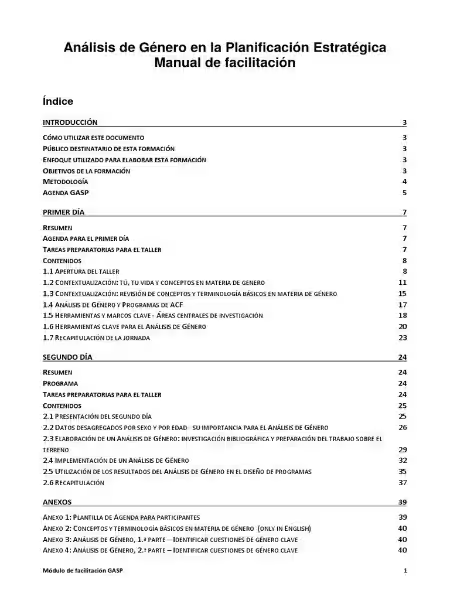
A robust facilitator guide includes clear learning objectives, a detailed session plan with timing guidelines for each section, sample talking points and discussion questions (not scripts), descriptions of activities and their purpose, supplemental resources like articles or videos, and a table of contents for easy navigation. It should also contextualize the training within a broader curriculum and clearly state the overall goals of the session. Visual aids and a user-friendly template are also beneficial.
How does a facilitator guide differ from a training manual?
While both support training, their focus differs. A training manual is for participants, providing the core learning content. The facilitator guide is for the trainer, providing the tools and information they need to deliver the training effectively – the session plan, talking points, troubleshooting tips, and supplementary materials for the facilitator's use.
When should I create a facilitator guide?
The facilitator guide should be developed after the training content is finalized. This ensures the guide accurately reflects the learning objectives, schedule, and materials. It's best to create it after the training materials themselves are complete and tested.
How can I ensure my facilitator guide is effective?
Involve trainers in the creation process to ensure practicality. Partner experienced and new trainers during development to leverage expertise and provide mentorship. Conduct practice sessions with feedback to refine the guide before actual use. Use a clear, simple, and easily readable template, incorporating visual aids for better understanding. Remember to gather feedback after each session to iteratively improve the guide.
What are the key qualities of an effective facilitator?
Effective facilitators possess strong communication skills, empathy, adaptability, and the ability to engage participants. While subject matter expertise is important, these soft skills are equally crucial for creating a positive and productive learning environment. The ability to adapt the session based on participant needs is also vital.
How can I improve my facilitator guide over time?
Iterative improvement is key. Gather feedback from facilitators and participants after each training session. Analyze this feedback to identify areas for improvement in the guide's content, structure, or flow. Regularly update the guide to reflect any changes in the training content or participant needs.