Creating a Powerful Facilitation Guide for Instructor-Led Training (ILT)
Creating a Powerful Facilitation Guide for Instructor-Led Training (ILT)
Are you struggling to ensure consistent, high-quality Instructor-Led Training (ILT) sessions? A well-structured facilitation guide is the key to unlocking success, empowering your trainers to deliver engaging and effective learning experiences, regardless of their individual experience levels. This article provides a comprehensive guide to crafting such a resource.
A facilitation guide is more than just a simple lesson plan; it's a comprehensive resource that equips your trainers with everything they need to deliver a successful ILT session. This includes clearly defined goals, detailed teaching methodologies, and all the necessary materials. Think of it as a detailed yet concise roadmap, guiding trainers through the entire process while still allowing their unique personalities and expertise to shine through. It provides enough structure for clear direction but remains flexible enough to allow for adaptation and improvisation.
The ultimate goal of a facilitation guide is to create consistency. Even experienced trainers benefit from a structured approach, ensuring that key learning points are covered thoroughly and effectively in every session. A robust guide minimizes the risk of crucial information being overlooked or presented inconsistently.
Key Components of an Effective Facilitation Guide
Creating a truly effective facilitation guide requires careful planning and attention to detail. Here are the vital components:
Clearly Defined Goals and Objectives
Your facilitation guide must clearly articulate the desired learning outcomes. What specific knowledge, skills, and behaviors should participants acquire by the end of the session? This clarity ensures the trainer stays focused and the session remains on track, avoiding tangents and unnecessary detours. Measurable objectives are vital for evaluating the effectiveness of the training afterward.
Without clear objectives, the session can easily lose its focus, leaving participants feeling unfulfilled and the training program ineffective. The objectives act as a compass, guiding both the trainer and the participants throughout the learning journey.
Organized Structure and Time Management
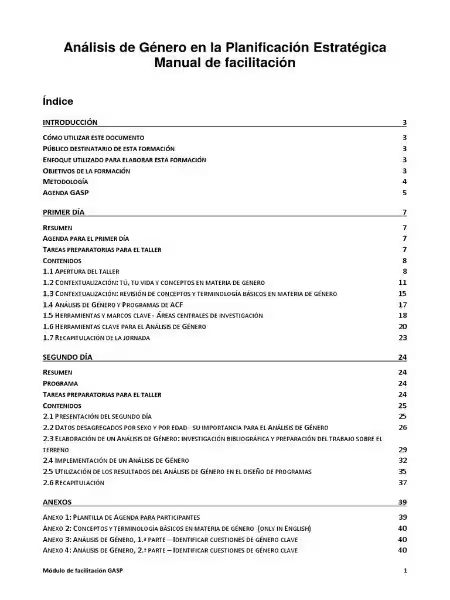
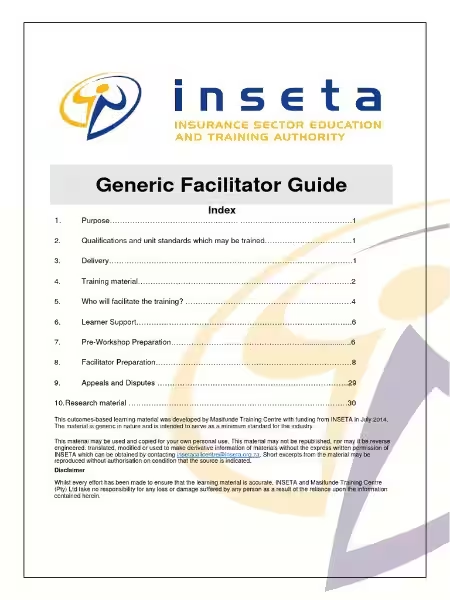
A well-organized structure is essential for navigation and understanding. Include a detailed table of contents, a clear overview of the session's place within a broader curriculum, and precise timing guidelines for each section. This ensures that the session flows smoothly and avoids time mismanagement.
Descriptions of each section should clarify the purpose of discussions and activities, providing context and rationale for the trainer and the participants. A structured approach prevents confusion and ensures a cohesive learning experience.
Supporting Materials: More Than Just a Script
Your facilitation guide should include a wealth of supporting materials to enhance engagement and provide additional learning opportunities. This could include:
Sample Talking Points: These are suggestions, not scripts! They guide the trainer, ensuring key concepts are covered, but leave room for personalization and improvisation.
Discussion Questions: Include both questions and suggested answers, particularly beneficial for newer trainers.
Supplemental Resources: Videos, articles, and other relevant materials can enrich the learning experience and provide further insight. Properly cited references enhance credibility and provide participants with additional resources for continued learning.
Handouts and Worksheets: Carefully designed handouts and worksheets can reinforce learning points and provide structure for activities.
Trainer Preparation: Investing in Success
Adequate trainer preparation is crucial for the success of any ILT session. Your facilitation guide should facilitate this process by:
Facilitating "Train the Trainer" Sessions: These sessions ensure all trainers understand the material and the facilitation guide itself.
Encouraging Collaboration with Experienced Facilitators: Mentorship and peer learning are invaluable resources for developing expertise.
Providing Opportunities for Practice Sessions: Practice with feedback loops, including external participants, allows trainers to refine their approach and identify potential challenges before the actual training.
Including Rehearsal Time: Rehearsals are essential to address any uncertainties and ensure a smooth delivery.
Involving Trainers Early: Include trainers in the guide's creation process to leverage their insights and expertise.
While subject matter expertise is helpful, it's not the only crucial factor for effective facilitation. Successful trainers possess:
Empathy and Patience: Understanding and responding to participant needs and questions with patience is paramount.
Adaptability: The ability to adjust the session based on participant engagement and feedback is vital.
Accommodating Leadership Qualities: Guiding discussions, managing group dynamics, and fostering a collaborative environment are all crucial skills.
Remember, the facilitation guide can help address technical questions by providing readily accessible resources and contact information for subject matter experts.
Guide Template Development: An Iterative Process
Developing a reusable facilitation guide template is a wise investment. A well-designed template ensures consistency across all sessions and provides a framework for ongoing improvement. The template should be visually appealing, easily readable, and regularly refined.
This continuous improvement process relies on feedback from trainers after each ILT session. By incorporating this feedback, the guide becomes a living document, constantly evolving and improving its effectiveness. This iterative design process leads to more effective and engaging training over time. The feedback loop is critical to the success of the facilitation guide as a whole.
Conclusion: A Facilitation Guide is Your Key to Consistent Success
A well-crafted facilitation guide is an indispensable tool for delivering high-quality Instructor-Led Training. By following the guidelines outlined in this facilitation guide, you can equip your trainers with the resources they need to deliver consistent, engaging, and effective training sessions, regardless of their individual experience levels. The investment in developing a robust and continuously improved facilitation guide will pay dividends in the long run.
Facilitator Guide FAQ
What is a facilitator guide?
A facilitator guide is a comprehensive resource that equips trainers with everything they need to deliver effective Instructor-Led Training (ILT) sessions. It provides a detailed roadmap, including session goals, teaching methodologies, and necessary materials, allowing trainers to prepare thoroughly and confidently conduct the training while still incorporating their individual style and expertise. It acts as a detailed yet concise guide, providing clear direction without being overly prescriptive.
Why is a facilitator guide crucial for ILT?
While a skilled trainer is essential, a well-structured facilitator guide ensures consistent delivery of successful training sessions. It empowers even experienced facilitators, providing a framework to maintain focus, manage time effectively, and ensure all key learning objectives are met. It ensures consistency in the training delivery regardless of the facilitator.
What are the key components of an effective facilitator guide?
An effective facilitator guide includes:
Clearly Defined Goals and Objectives: Explicitly stating the desired learning outcomes (knowledge, skills, behaviors).
Organized Structure: A clear table of contents, session overview within a broader curriculum, timing guidelines, and descriptions of each section.
Supporting Materials: Sample talking points, discussion questions (with suggested answers), and supplemental resources (videos, articles). These are suggestions, not scripts.
Trainer Preparation: Guidance on "train the trainer" sessions, collaboration with experienced facilitators, practice sessions with feedback, and rehearsal.
Trainer Qualities: Emphasis on empathy, patience, adaptability, and accommodating leadership, acknowledging that subject matter expertise can be supplemented by others.
Guide Template Development: A reusable, visually appealing template refined iteratively based on feedback.
How does a facilitator guide help with trainer preparation?
The guide facilitates thorough preparation by providing all necessary materials and outlining the session's structure. It supports "train the trainer" sessions, collaboration with experienced facilitators, and practice sessions with feedback, ultimately building the trainer's confidence and ensuring a smooth delivery. Involving the trainer early in the guide's creation process is also recommended.
What qualities should a good facilitator possess?
While subject matter expertise is helpful, crucial qualities include empathy, patience, adaptability, and strong leadership. The ability to foster a collaborative and engaging learning environment is paramount. Technical questions can be addressed by subject matter experts if needed.
How can a facilitator guide be continuously improved?
A reusable template should be continuously refined based on feedback received from trainers after each ILT session. This iterative process ensures that the guide remains relevant, effective, and consistently improves over time.
What if the facilitator deviates from the guide?
The guide provides a framework, not a rigid script. Facilitators are encouraged to adapt the material to suit the specific needs and energy of the participants, allowing their personality and expertise to enhance the training. The guide's purpose is to provide structure and support, not to stifle creativity.
Is a facilitator guide only for experienced trainers?
No, a facilitator guide benefits trainers of all experience levels. It provides a structured approach for novice trainers, while experienced trainers can use it as a foundation to build upon and personalize their delivery. The suggested answers and supporting materials are particularly helpful for less experienced trainers.
How does a facilitator guide ensure consistent training delivery?
By providing a standardized structure and materials, the guide ensures consistency in what is taught and how it is presented. This minimizes variations between different trainers and ensures all participants receive a similar, high-quality learning experience.
Can a facilitator guide be used for different training topics?
While some elements will need adjustments, a well-designed template can be adapted for different training topics. The focus should be on ensuring the core components (objectives, structure, materials) are tailored to each specific training.