Understanding Sodium Carbonate Solution: Uses, Properties, and Safety
Understanding Sodium Carbonate Solution: Uses, Properties, and Safety
Sodium carbonate solution, a common household and industrial chemical, offers a wide range of applications due to its unique properties. Understanding its characteristics and uses is crucial for safe and effective application, whether in cleaning, food preparation, or industrial processes.
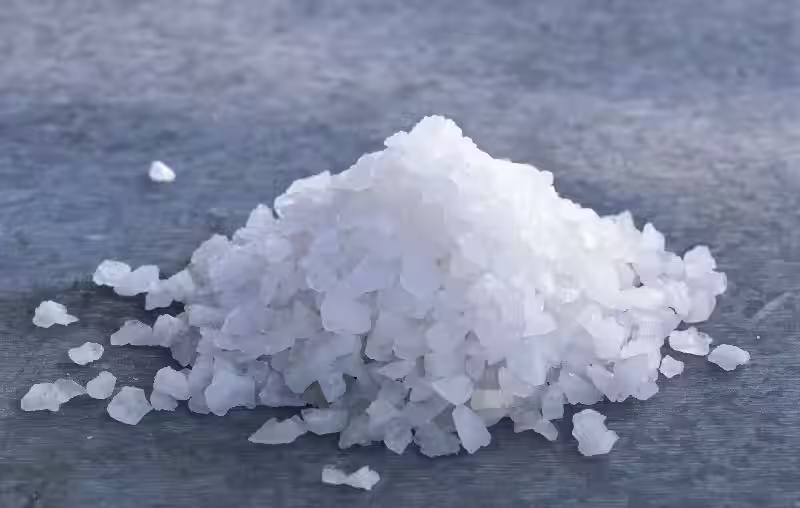
Sodium carbonate (Na₂CO₃), also known by several common names including washing soda, soda ash, sal soda, and soda crystals, is a fascinating inorganic compound. It's a white, odorless powder that readily dissolves in water, forming an alkaline solution. This means the solution has a pH greater than 7, indicating its basic nature. The alkalinity stems from the carbonate ions (CO₃²⁻) which react with water to produce hydroxide ions (OH⁻). The strength of the alkaline solution depends directly on the concentration of sodium carbonate; a more concentrated solution will be more alkaline.
The alkalinity isn't just a chemical quirk; it's the foundation of many of sodium carbonate's applications. This characteristic allows it to neutralize acids, react with certain metal ions, and act as a powerful cleaning agent. Understanding the relationship between concentration and alkalinity is key to controlling the solution's properties for a given application. For instance, a dilute sodium carbonate solution might be suitable for cleaning delicate surfaces, while a stronger solution is appropriate for tougher cleaning tasks.
Different Forms and Hydrates
Sodium carbonate doesn't exist solely as the anhydrous form (Na₂CO₃). It also exists naturally in several hydrated forms, meaning it incorporates water molecules into its crystal structure. These include the decahydrate (Na₂CO₃·10H₂O, also known as washing soda), heptahydrate (Na₂CO₃·7H₂O), and monohydrate (Na₂CO₃·H₂O). The decahydrate form is commonly found in households and readily loses water upon exposure to air, eventually transforming into the monohydrate or anhydrous form. This loss of water is also dependent on factors like temperature and humidity. This ability to exist in various hydration states makes sodium carbonate versatile for numerous applications, as the choice of form can be tailored to specific needs.
Applications of Sodium Carbonate Solution
The versatility of sodium carbonate solution extends across numerous industries and everyday applications. Its alkaline nature and solubility are the driving forces behind its widespread use.
The alkaline nature of a sodium carbonate solution makes it an effective cleaning agent. It can dissolve grease, oils, and other grime, making it a key ingredient in many commercially available detergents and cleaning products. Furthermore, its water-softening properties enhance the effectiveness of other cleaning agents by removing hardness-causing minerals like calcium and magnesium ions. This dual action enhances the cleaning efficiency significantly, making it a cost-effective and environmentally friendly cleaning solution (when used responsibly).
Water Treatment and Softening
Sodium carbonate is extensively used in water treatment to adjust pH levels and remove water hardness. In water softening, it reacts with calcium and magnesium ions, precipitating them out of solution and thus reducing water hardness. This is crucial in industrial processes where hard water can be detrimental to machinery and equipment. In addition, adjusting the pH of water is critical in various applications, from swimming pools to industrial processes. The precise concentration of the sodium carbonate solution used will depend on the initial water quality and the desired final pH.
Food Industry Applications
In the food industry, sodium carbonate is a versatile additive (E500). It acts as an acidity regulator, raising agent (in baking), and stabilizer in various food products. Its alkalinity is essential in specific culinary applications. In Asian cuisine, it’s a key component of kansui, an alkaline solution used in making ramen noodles, contributing to their characteristic texture and flavor. Sodium carbonate also aids in browning in some baked goods, such as moon cakes and pretzels, and is used to create the fizzing sensation in sherbet.
Other Industrial Applications
Beyond cleaning, water treatment, and food applications, sodium carbonate solutions find use in numerous industrial processes. It is used as a pH regulator in photographic developing, in the production of glass (acting as a flux), in textile dyeing (as a mordant), and in other chemical processes. Its role extends to applications like froth flotation in mining and as a precursor in the production of other chemical compounds, such as sodium bicarbonate (baking soda).
Safety Precautions When Handling Sodium Carbonate Solution
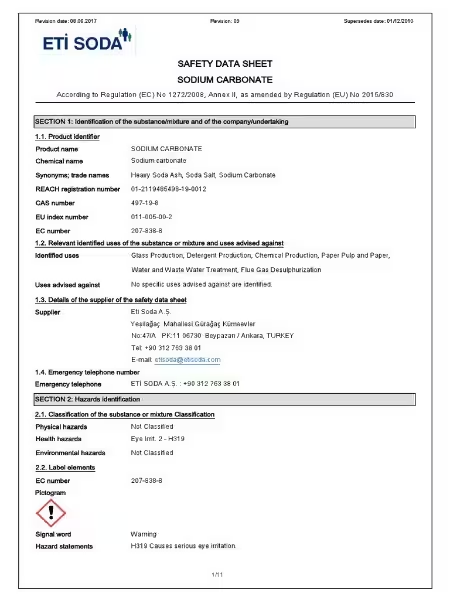
While sodium carbonate is generally safe when used in dilute concentrations, it's crucial to practice safety precautions when handling more concentrated solutions. Concentrated solutions are corrosive and can cause skin irritation, eye damage, and respiratory problems if inhaled as dust or mist. Always wear appropriate personal protective equipment (PPE) such as gloves, eye protection, and a respirator when handling concentrated solutions or powders. Ensure adequate ventilation when working with sodium carbonate to avoid inhalation of dust. In case of contact with skin or eyes, immediately flush the affected area with plenty of water and seek medical attention if necessary. It's also essential to store sodium carbonate solutions properly, away from incompatible materials.
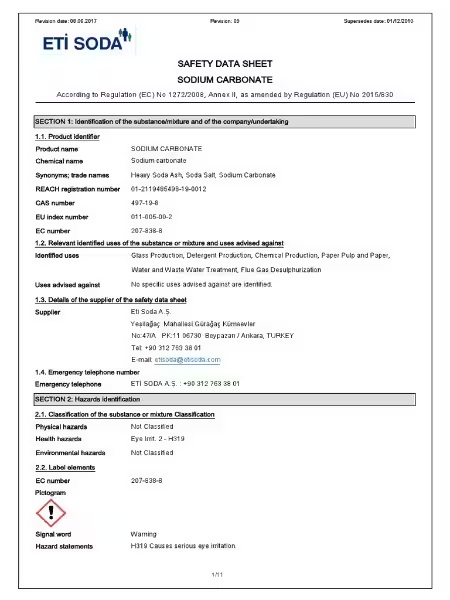
In conclusion, sodium carbonate solution is a versatile and important chemical with a broad range of applications. Understanding its properties, uses, and safety precautions is vital for its safe and effective application in various settings. Always refer to the safety data sheet (SDS) for specific guidance on handling and storage.
Sodium Carbonate Solution FAQ
What is sodium carbonate solution?
Sodium carbonate (Na₂CO₃), also known as washing soda, soda ash, or sal soda, dissolves in water to form an alkaline solution. The alkalinity results from the carbonate ions reacting with water to produce hydroxide ions (OH⁻), increasing the solution's pH above 7. The specific pH depends on the concentration of the sodium carbonate.
What are the different forms of sodium carbonate?
Sodium carbonate exists in several hydrated forms, each with differing amounts of water molecules bound to the sodium carbonate molecule: decahydrate (Na₂CO₃·10H₂O, washing soda), heptahydrate (Na₂CO₃·7H₂O), monohydrate (Na₂CO₃·H₂O), and the anhydrous form (Na₂CO₃). The decahydrate is the most common hydrated form and readily loses water to become the monohydrate.
How is sodium carbonate solution made?
Sodium carbonate solution is simply made by dissolving sodium carbonate powder (any of the hydrated forms) in water. The concentration of the solution depends on the amount of sodium carbonate dissolved in a given volume of water. Stirring helps to ensure complete dissolution.
What are the common uses of sodium carbonate solution?
The alkaline nature and solubility of sodium carbonate solution lead to numerous applications. These include: water softening (removing calcium and magnesium ions), pH regulation in various industrial processes (e.g., photography, swimming pools), cleaning and detergents (dissolving grease and grime), and as a food additive (E500) for functions like acidity regulation and raising agent in baking. It also finds use in glassmaking, textile dyeing, and other industrial processes.
Dilute sodium carbonate solutions are generally safe, but concentrated solutions can be corrosive to skin and eyes. Always wear appropriate safety goggles and gloves when handling concentrated solutions. Ingestion can cause digestive irritation. Follow proper safety guidelines and consult the Safety Data Sheet (SDS) for detailed information.
What are the safety precautions when handling sodium carbonate solution?
Wear appropriate personal protective equipment (PPE), including safety goggles and gloves, when handling sodium carbonate solutions, especially concentrated ones. Avoid skin and eye contact. In case of contact, flush with plenty of water and seek medical attention if necessary. Ensure adequate ventilation when working with large quantities or concentrated solutions.
How is the concentration of a sodium carbonate solution expressed?
Concentration can be expressed in various ways, including molarity (moles of Na₂CO₃ per liter of solution), weight percent (grams of Na₂CO₃ per 100 grams of solution), or normality (equivalent weight of Na₂CO₃ per liter of solution). The method used depends on the specific application.
What happens when sodium carbonate solution reacts with an acid?
Sodium carbonate solution reacts with acids in a neutralization reaction. Carbon dioxide gas (CO₂), water (H₂O), and a sodium salt are produced. For example, reacting with hydrochloric acid (HCl) produces sodium chloride (NaCl), water, and carbon dioxide.
How does sodium carbonate solution work in water softening?
In water softening, sodium carbonate reacts with calcium and magnesium ions (which cause water hardness) to form insoluble precipitates (calcium carbonate and magnesium carbonate), effectively removing them from the water.
What are some alternative names for sodium carbonate?
Sodium carbonate is also known as washing soda, soda ash, sal soda, soda crystals, natron (for the decahydrate form), and natrite (for the anhydrous form).