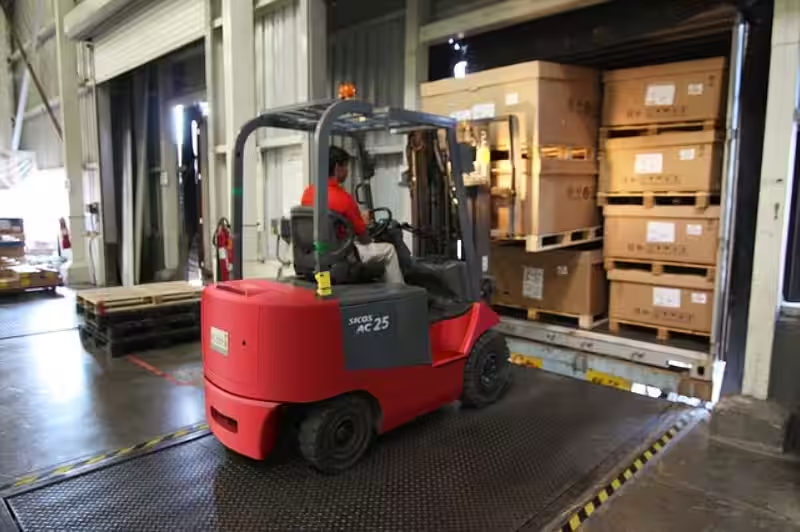
Your Complete Forklift Guide: Mastering Safe and Efficient Operation
Your Complete Forklift Guide: Mastering Safe and Efficient Operation
This forklift guide will equip you with the knowledge and skills needed to operate a forklift safely and efficiently. We'll cover everything from pre-operational checks to advanced maneuvering techniques, ensuring you're prepared to handle any situation.
Understanding Forklift Controls: The Foundation of Safe Operation
Before you even think about lifting a load, you need to be completely familiar with your forklift's controls. This isn't just about knowing where the buttons are; it's about understanding how each control affects the machine's performance and how those actions impact safety.
This section will cover the essential controls found on most forklifts. However, remember that specific controls and their placement may vary slightly depending on the manufacturer and model. Always consult your forklift's operator's manual for precise details. Key controls generally include:
Steering Wheel/Tiller: Used for directional control, much like a car.
Accelerator Pedal: Controls the forklift's speed. Smooth acceleration is key to safe operation.
Brake Pedal: Used for stopping the forklift. Develop a feel for how much pressure is needed for smooth braking in different situations.
Inching Pedal (if present): Allows for extremely slow and precise movements, crucial for delicate maneuvering.
Lift Lever: Raises and lowers the forks. Remember to always lower the forks completely before dismounting.
Tilt Lever: Tilts the mast forward or backward to help maintain load balance. Proper tilting is essential for safe load handling.
Side Shift Lever (if equipped): Moves the forks laterally, allowing for precise positioning of the load.
The smooth, controlled use of these controls is paramount. Jerky movements can lead to accidents and damage. Practice makes perfect, so dedicate time to familiarize yourself with the feel of each control before handling any significant load.
Pre-Operational Inspection: A Crucial First Step
Before you even consider starting the engine, a thorough pre-operational inspection is mandatory. This simple yet vital step can prevent accidents and costly repairs. Think of it as a safety check-up for your forklift.
Your inspection should include:
Tires: Check for proper inflation and any visible damage.
Forks: Inspect for cracks, bends, or damage. Ensure they are securely attached.
Overhead Guard: Make sure it's securely fastened and undamaged.
Hydraulic Hoses: Look for leaks, cracks, or damage.
Safety Decals: Verify that all warning decals are present and legible.
Lights and Signals: Test all lights (headlights, brake lights, backup lights, turn signals) and the horn.
Ignoring this step can lead to serious consequences. A small leak, for example, might go unnoticed until it's too late, causing a hydraulic failure and potentially a dangerous accident. Make the pre-operational inspection a routine part of your workflow.
Additional Pre-Operational Checks
Beyond the visual inspection, you should also check your forklift's gauges and warning lights. Understanding what these indicators mean is critical for safe operation. These typically include:
Hour Meter: Tracks the forklift's operating time, helping with scheduled maintenance.
Fuel Gauge: Indicates the remaining fuel level.
Oil Pressure Gauge: Monitors engine oil pressure, a critical indicator of engine health.
Temperature Gauge: Shows the engine's operating temperature. High temperatures can signal an overheating problem.
Checking these gauges and lights is just as important as the visual inspection. A malfunctioning gauge can lead to serious problems if ignored.
Safe Operation Techniques: Beyond the Basics
Mastering the forklift's controls is only half the battle. Safe and efficient operation requires understanding and implementing best practices. This section will cover essential techniques and considerations for safe forklift usage.
Load Handling and Balance
Maintaining proper load balance is critical. Overloading can cause instability and tip-overs. Always center the load on the forks and ensure it doesn't exceed the forklift's rated capacity. Use load backrest extensions for tall, unstable loads. Tilt the mast back slightly while carrying a load for improved stability.
Navigation and Pedestrian Safety
Always be aware of your surroundings. Use your mirrors, look out for pedestrians and obstacles, and take turns slowly and carefully. Yield to pedestrians; they always have the right of way. Use your horn to warn others of your presence, but don't overuse it. Maintain a safe speed, especially in congested areas, on ramps, or on uneven surfaces.
Park your forklift in a designated, safe area away from traffic and on a level surface. Engage the neutral gear and parking brake before shutting down the engine. Lower the forks completely to the ground. This simple routine prevents accidents and protects your equipment.
The Importance of OSHA Certification and Ongoing Training
Your forklift guide would be incomplete without emphasizing the critical role of OSHA certification and ongoing training. OSHA regulations mandate proper training for forklift operators, and for good reason. Proper training isn't just about operating the machine; it's about understanding the risks, preventing accidents, and adhering to safety protocols.
OSHA-approved training programs provide a structured learning experience, covering theoretical knowledge and practical application. This hands-on training builds confidence and competence, equipping operators to handle various situations safely and efficiently. Regular refresher courses are recommended to maintain proficiency and stay updated on industry best practices. Remember, safety is paramount. Investing in proper training is an investment in safety, productivity, and avoiding costly mistakes.
Forklift Guide FAQ
Here are some frequently asked questions about forklift operation and safety:
1. What is the most crucial aspect of safe forklift operation?
OSHA certification is mandatory and non-negotiable. Comprehensive training, including both classroom instruction and hands-on practice, is essential before operating a forklift. This training covers technical aspects, controls, the physics of lifting, and safe operating procedures.
2. What pre-operational checks should I perform before using a forklift?
Before each use, perform a thorough visual inspection. This includes checking the forks, tires, overhead guard, hydraulic hoses, safety decals, and fluid levels (engine oil, hydraulic fluid, coolant, and fuel, if applicable). Additionally, test all gauges (hour meter, fuel gauge, oil pressure, temperature) and warning lights to ensure they are functioning correctly. Finally, test all controls: horn, brakes (service and parking), mast tilt/lift, backup alarm, and steering.
3. How do I safely operate the forklift controls?
Familiarize yourself with all controls: steering, accelerator, brake, inching pedal (if present), directional controls, lift lever, tilt lever, and side shift lever (if equipped). Understand the dashboard gauges and indicators. Smooth acceleration and gradual operation of hydraulic controls (lifting, tilting, side-shifting) are crucial to prevent load instability. Always use the parking brake when leaving the machine.
Center loads to maintain balance, avoid overloading, and use load backrest extensions for tall loads. Tilt the mast back slightly while carrying a load. Maintain awareness of your surroundings, use mirrors, watch for pedestrians and obstacles, take turns slowly, and use the horn. Always yield to pedestrians and maintain a safe distance.
5. What are the proper parking procedures?
Park only in designated, safe areas away from traffic, on a flat surface. Engage neutral gear and the parking brake before shutting down. Lower the forks completely to the ground to prevent hazards and reduce strain on the hydraulic system.
6. What are my responsibilities as a forklift operator?
Your responsibilities include inspecting the forklift before each use, reporting any issues, following traffic rules and safety protocols, securing loads properly, and never exceeding the load capacity. Remember, a safety-first mentality is paramount.
7. What are the consequences of improper forklift operation?
Improper operation can lead to serious accidents, injuries, and damage to equipment and property. Adherence to safety procedures and regular practice are crucial for preventing accidents.
8. Where can I find proper forklift training?
Seek out trusted and OSHA-approved training programs. These programs provide structured learning, encompassing both classroom instruction and practical application to ensure you can confidently handle various operating conditions, including navigating ramps and uneven terrain.
9. What should I do if I notice a problem with the forklift?
Report any issues immediately to your supervisor. Do not operate the forklift if you suspect a malfunction. Common issues include slow hydraulic response (requiring fluid level checks and leak detection), unresponsive acceleration (needing throttle linkage inspection), braking inconsistencies (demanding brake pad and hydraulic pressure checks), and erratic steering (requiring tire and alignment assessment). Pre-shift inspections help identify these problems before they become safety hazards.
10. How important is regular practice?
Becoming a proficient and safe forklift operator requires consistent practice and adherence to safety procedures. Regular practice builds muscle memory and improves your reaction time in various situations.