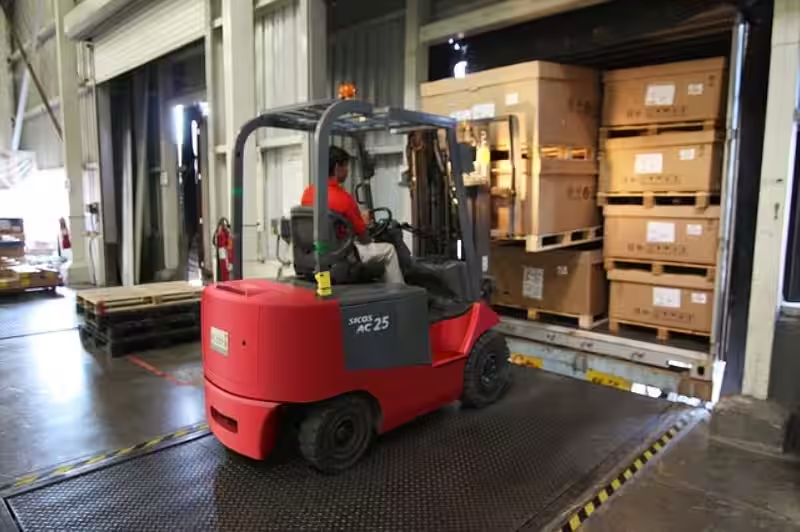
Forklift Safety Policy: Protecting Your Workforce and Your Bottom Line
Forklift Safety Policy: Protecting Your Workforce and Your Bottom Line
Implementing a robust and effective forklift safety policy is crucial for any workplace that utilizes these powerful machines. A well-defined policy isn't just a legal requirement; it's a commitment to the well-being of your employees and the overall success of your operation. This article will guide you through the essential elements of a comprehensive forklift safety policy, helping you create a safer and more productive work environment.
Understanding the Risks: Why a Strong Forklift Safety Policy is Essential
Forklifts are indispensable tools in many industries, but they also present significant safety hazards. Accidents involving forklifts can lead to serious injuries, fatalities, and substantial financial losses due to medical expenses, worker's compensation claims, and damaged equipment. Ignoring forklift safety can expose your business to legal repercussions and damage your reputation.
Beyond the immediate costs, a strong safety culture, including a defined forklift safety policy, fosters a sense of trust and responsibility among employees. This contributes to improved morale and productivity. A proactive approach to safety is far more cost-effective than reacting to accidents after they occur.
Key Components of an Effective Forklift Safety Policy
A comprehensive forklift safety policy should cover various aspects of forklift operation and maintenance. Here's a breakdown of the essential elements:
Operator Training and Certification
This is arguably the most crucial element. All forklift operators must receive thorough training, covering pre-operation checks, safe operating procedures, load handling techniques, and hazard awareness. Certification programs provide standardized training and ensure operators possess the necessary skills and knowledge. Regular refresher training should also be incorporated into your policy.
The training should be documented and readily available for review. This documentation is vital for legal compliance and for tracking operator competence. Consider using a combination of classroom instruction, hands-on practice, and written examinations to ensure comprehensive understanding.
Pre-Shift Inspection Procedures
Before each use, operators must conduct a thorough pre-shift inspection of the forklift. This includes checking fluid levels, tire pressure, brakes, lights, horn, and the overall condition of the machine. Any defects should be immediately reported to the supervisor and the forklift removed from service until repaired.
A standardized checklist can help ensure consistency in inspections and minimize the risk of overlooking critical issues. This checklist should be readily available to operators and documented after every inspection. Regular maintenance schedules beyond pre-shift checks are also essential.
Safe Operating Procedures
Your policy must clearly define safe operating procedures, including:
Speed limits: Establish appropriate speed limits for various areas of the facility.
Load capacity: Operators must never exceed the forklift's rated load capacity.
Load stability: Proper load centering and securing are crucial to prevent tipping.
Pedestrian safety: Implement clear pedestrian walkways and prioritize pedestrian safety by establishing clear communication and designated zones.
Intersection procedures: Define protocols for navigating intersections and blind spots.
Ramp operation: Establish specific guidelines for operating forklifts on ramps and inclines.
Emergency procedures: Clearly outline procedures to follow in case of accidents or emergencies.
These procedures should be readily available and easily understood by all operators. Regular training sessions should reinforce these procedures and address any questions or concerns operators may have.
Maintenance and Repair
Regular maintenance is paramount to ensuring forklift safety. Establish a preventative maintenance schedule that includes routine inspections, lubrication, repairs, and component replacement. Only qualified technicians should perform maintenance and repairs.
All maintenance records should be meticulously documented, providing a clear history of the forklift's condition and any repairs made. This documentation helps identify potential problems early on and ensures compliance with safety regulations.
Personal Protective Equipment (PPE)
Your policy must mandate the use of appropriate PPE by all forklift operators and those working in proximity to forklifts. This typically includes:
Safety shoes: Steel-toed shoes or boots offer protection against dropped objects.
High-visibility vests: Increase visibility in busy areas.
Hard hats: Protect against falling objects.
Hearing protection: Reduce exposure to noise from forklift operation.
Gloves: Protect hands from cuts and abrasions.
Workplace Organization and Signage
A well-organized workplace is essential for forklift safety. Clearly marked pedestrian walkways, designated forklift traffic routes, and adequate lighting reduce the risk of accidents. Warning signs, clearly indicating speed limits, load restrictions, and pedestrian areas, are also crucial.
Maintaining a clean and clutter-free environment helps prevent accidents caused by obstructions. Regular inspections of the workplace to identify and address potential hazards should be a part of your safety protocol.
Enforcement and Continuous Improvement of the Forklift Safety Policy
Your forklift safety policy isn't just a document; it's a living document that requires regular review and updates. Enforcement is key, and this should include regular inspections, operator evaluations, and disciplinary action for violations.
Implementing a system for reporting near misses and accidents is also critical. Analyzing these incidents helps identify potential hazards and areas for improvement in your policy and procedures. Regular safety training and communication are essential in maintaining a culture of safety within your workplace. Remember, a proactive approach to forklift safety is a vital investment in the well-being of your employees and the success of your business. A comprehensive forklift safety policy is not merely a box to tick; it's a continuous commitment to safety excellence.
Forklift Safety Policy FAQ
Here are some frequently asked questions regarding our forklift safety policy:
What are the basic requirements for operating a forklift?
To operate a forklift, you must be at least 18 years old, possess a valid driver's license, and successfully complete our company's forklift operator training program. This training covers safe operating procedures, pre-operational checks, and emergency procedures. You must also pass a written and practical driving test demonstrating competency. Refresher training is required annually.
What are the pre-operational checks I need to perform before operating a forklift?
Before each use, you must perform a thorough pre-operational inspection. This includes checking: tire pressure and condition, fluid levels (hydraulic fluid, engine oil), brakes, lights, horn, mast, forks, and safety devices (seatbelt, horn etc.). Any defects must be reported immediately to your supervisor.
What are some crucial safety rules to follow while operating a forklift?
Always wear your seatbelt. Maintain a safe speed, appropriate to the conditions and load. Never operate a forklift under the influence of alcohol or drugs. Be aware of your surroundings, including pedestrians, other equipment, and obstacles. Follow designated traffic routes and observe all traffic signals. Never lift a load beyond the forklift's rated capacity. Ensure the load is properly secured and balanced before lifting.
What should I do if I encounter a problem while operating the forklift?
If you encounter any mechanical problems, safety concerns, or accidents, immediately stop operating the forklift and report the incident to your supervisor. Do not attempt to repair the forklift yourself.
What happens if I violate the forklift safety policy?
Violating the forklift safety policy can result in disciplinary action, including warnings, suspension, or termination of employment. Serious violations may also result in further consequences depending on the severity of the infraction.
How often do I need to undergo refresher training?
Refresher training is mandatory annually to ensure you remain up-to-date on safe operating procedures and any changes to company policy. This training will cover both theory and practical application.
Who should I contact if I have questions about the forklift safety policy?
If you have any questions or require clarification regarding the forklift safety policy, please contact your supervisor or the safety officer.
What are the procedures for reporting a forklift accident?
In the event of an accident, immediately secure the area and render first aid if required. Then, report the accident to your supervisor and the safety officer as soon as possible. Complete an accident report form, providing detailed information about the incident. Cooperate fully with any investigation.
What are the load capacity limits of the forklifts?
The load capacity limits for each forklift are clearly marked on the data plate affixed to the machine. Never exceed these limits. Incorrect loading can lead to accidents and damage to equipment. Consult the data plate before lifting any load.
Can I operate a forklift without proper training?
No. Operating a forklift without proper training is strictly prohibited and poses a significant safety risk. Only trained and authorized personnel are permitted to operate forklifts.