Understanding Your Temporary Work Contract: A Comprehensive Guide
Understanding Your Temporary Work Contract: A Comprehensive Guide
Navigating the world of work can be complex, and understanding the nuances of different employment contracts is crucial. One common type is the temporary work contract, offering both flexibility for employers and short-term opportunities for employees. But what exactly constitutes a temporary work contract, and what are its key features? This guide will clarify the essential aspects of temporary work contracts, helping you understand your rights and responsibilities.
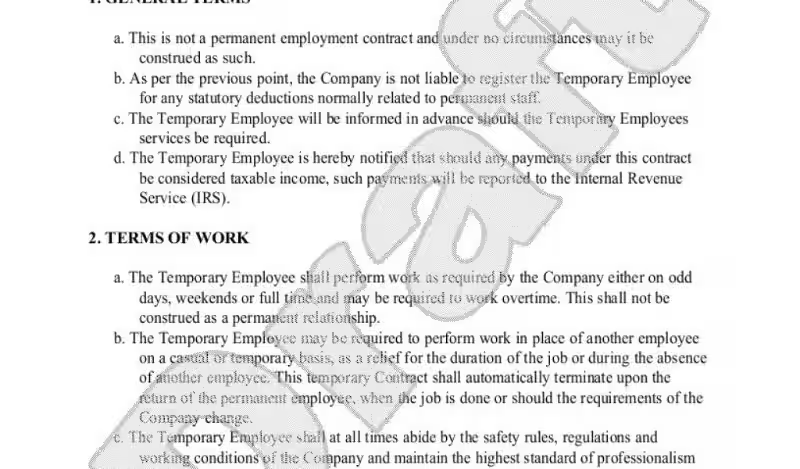
A temporary work contract is a legally binding agreement between an employer and an employee for a short-term engagement. Unlike a permanent contract, which offers continuous employment, a temporary contract specifies a limited duration of employment, although the exact end date might not always be explicitly defined in the contract itself. This is a key difference from a fixed-term contract, which does have a predetermined end date.
The lack of a fixed end date in a typical temporary work contract doesn't imply open-ended employment. Rather, it often implies a duration that is typically understood to be under 1000 hours or one year. Beyond this timeframe, best practice dictates that the employee should be offered a permanent position or the contract should be formally terminated. Some contracts may also include clauses outlining the possibility of renewal or extension, depending on the needs of the employer and the performance of the employee.
Key Differences Between Temporary and Fixed-Term Contracts
The primary distinction between temporary and fixed-term contracts lies in their duration. As previously mentioned, temporary contracts often lack a specified end date, relying on a general understanding of the temporary nature of the work. Fixed-term contracts, conversely, have a clearly defined start and end date, making them suitable for projects with set deadlines or temporary absences like maternity leave.
Both contract types offer flexibility and provide access to talent for employers. However, it's crucial to understand that both types still adhere to all relevant legal employee rights and protections, regardless of the term length. The rights of a temporary worker are the same as those of a permanent employee during the term of the temporary work contract. This includes fair wages, working conditions, and protection against discrimination.
Essential Components of a Comprehensive Temporary Employment Contract
Creating a thorough and legally sound temporary employment contract requires careful consideration of several key components. A poorly drafted contract can leave both the employer and the employee vulnerable to misunderstandings and disputes. Below are the essential elements:
This section should clearly state the full legal names and addresses of both the employer and the employee. Including contact information like phone numbers and email addresses is also beneficial for efficient communication.
It's important to ensure accuracy in this section as it forms the foundation of the legal agreement. Any discrepancies could lead to complications later on.
Job Description and Responsibilities
This part requires a detailed and precise description of the employee's duties and responsibilities. Avoid vague terms and use specific and measurable descriptors. The job description should reflect the specific tasks and projects the employee is expected to undertake during the temporary employment period.
Consider including key performance indicators (KPIs) to objectively measure the employee’s success. This helps avoid ambiguity and potential disputes regarding performance expectations.
Compensation and Payment Schedule
Clearly specify the method of payment (hourly rate, daily rate, or salary), the payment frequency (weekly, bi-weekly, monthly), and any applicable bonuses or allowances. The contract should also outline how overtime pay will be calculated and any other applicable compensation details.
Transparency in compensation prevents future disagreements and assures both parties understand the financial aspects of the employment.
Work Pattern and Hours
This section should define the expected working hours, including any shift patterns, weekend work, or holiday work. This is particularly significant for temporary work contracts, as the work schedule might be variable depending on the nature of the assignment.
Specificity in work hours provides clarity to the employee and protects them from unreasonable demands.
Start Date and Contract Term
While a precise end date might be absent in a temporary contract, a clear start date should be specified. Furthermore, the contract should ideally state the maximum duration of the temporary assignment, usually capped at one year, and mention the possibility of conversion to a permanent role.
The lack of a firm end date doesn't imply perpetual employment. It points to a temporary assignment with an understood, albeit flexible, termination point.
Notice Period
This clause specifies the length of notice required from both the employer and the employee before termination of the contract, allowing for a smooth transition. A reasonable notice period is crucial for both parties to prepare for the end of the temporary assignment.
Appropriate notice periods are essential for minimizing disruption and maintaining a professional relationship.
Benefits and Other Provisions
This section should outline any benefits offered to the temporary employee, such as health insurance (if applicable), paid time off, or other perks. The contract should also include clauses regarding confidentiality, non-solicitation of other employees, work for hire, and agency provisions (if the employee is placed through a staffing agency).
Including all relevant provisions safeguards both parties' interests and prevents future misunderstandings.
Termination Clause
The termination clause clearly outlines the conditions under which the contract may be terminated by either party. It should specify grounds for termination, such as unsatisfactory performance or breach of contract, and the procedure for termination. This should also include details about any severance pay or other entitlements upon termination.
A well-defined termination clause promotes fairness and transparency and protects both employer and employee from potential disputes.
Utilizing Templates and Seeking Legal Advice
Using a template or sample temporary work contract can be very helpful in ensuring that all necessary legal elements are included. However, it's crucial to remember that every situation is unique, and you should always seek legal advice to ensure the contract is tailored to your specific circumstances and complies with all applicable labor laws. A poorly drafted contract can lead to legal complications and disputes, so seeking professional guidance is always a wise investment. Having a lawyer review your temporary work contract can potentially save significant time, money, and heartache down the road.
Frequently Asked Questions about Temporary Work Contracts
What is a temporary work contract?
A temporary work contract is a legally binding agreement between an employer and employee for a short-term work arrangement. It outlines the rights, responsibilities, and compensation of both parties. Unlike fixed-term contracts with predetermined end dates, temporary contracts typically don't have a specific end date, although best practice suggests a duration of under 1000 hours or one year. After this period, a permanent contract should be offered. A variation, the casual employment contract, explicitly allows for periods without work.
What is the key difference between a temporary and a fixed-term contract?
The primary difference lies in the end date. Temporary contracts lack a defined end date, while fixed-term contracts have a clearly specified start and end date. Temporary contracts are suitable for short-term needs or seasonal work, often involving hourly pay. Fixed-term contracts are better suited for projects with a defined scope or temporary absences like maternity leave.
How long does a temporary contract typically last?
While there's no legal limit, best practice suggests a temporary contract should not exceed 1000 hours or one year. Beyond this duration, offering a permanent position is generally advisable to comply with employment laws and best practices.
What are the essential components of a comprehensive temporary employment contract?
A comprehensive temporary employment contract should include:
Identifying Information: Employer and employee details.
Job Description: Clear and measurable responsibilities.
Compensation: Payment method, rate, and applicable hours.
Work Pattern: Expected work hours, including shifts and holidays.
Start Date: Commencement date of employment.
Contract Term: While not legally defined for temporary contracts, a maximum of one year is recommended.
Notice Period: Notice required by the employee before leaving.
Benefits: Any non-financial benefits offered.
Confidentiality and Non-Solicitation: Clauses protecting employer information.
Work for Hire Clause: Protecting employer intellectual property.
Agency Provision (if applicable): Clarifying the employee's authority to act on behalf of the organization.
Termination Clause: Grounds for termination, such as unsatisfactory performance.
What are the benefits of using a temporary contract for both employers and employees?
For Employers: Flexibility to address fluctuating workloads, access to specialized skills for short-term projects, and reduced long-term commitment.
For Employees: Opportunity to gain experience, explore different career paths, and maintain flexibility in their work schedule.
Are temporary employees entitled to the same benefits as permanent employees?
Not necessarily. While temporary employees are entitled to the same legal protections (minimum wage, anti-discrimination laws, etc.), the level of benefits (health insurance, paid time off) may differ and is usually outlined in the contract.
What happens after a temporary contract ends?
If the temporary work is successfully completed, the contract simply ends. However, if the employer wishes to continue the employment relationship, a permanent contract should be offered.
What happens if I need to terminate a temporary contract early?
The termination process should be outlined in the contract. Generally, both the employer and employee have the right to terminate, with or without notice (though notice periods are usually specified). However, the contract may stipulate exceptions, such as for serious misconduct.
Where can I find a template for a temporary employment contract?
You can find templates online from various legal and HR resources. However, it's strongly recommended to consult with an employment lawyer to ensure the contract complies with all applicable laws and regulations in your jurisdiction. Using a generic template without legal review is risky.
What are the legal implications of a poorly drafted temporary contract?
A poorly drafted contract can lead to disputes, misunderstandings, and potentially costly legal battles. Ambiguity regarding termination, compensation, or responsibilities can create significant liabilities for both the employer and the employee. Therefore, legal counsel is strongly recommended.