Understanding K₃[Fe(CN)₆]: Properties, Applications, and Safety of Potassium Ferricyanide
Understanding K₃[Fe(CN)₆]: Properties, Applications, and Safety of Potassium Ferricyanide
Potassium ferricyanide (K₃[Fe(CN)₆]), often abbreviated as K3Fe(CN)6, is a fascinating chemical compound with a wide range of applications across various scientific and industrial fields. This article delves into its properties, explores its diverse uses, and emphasizes the importance of safe handling procedures.
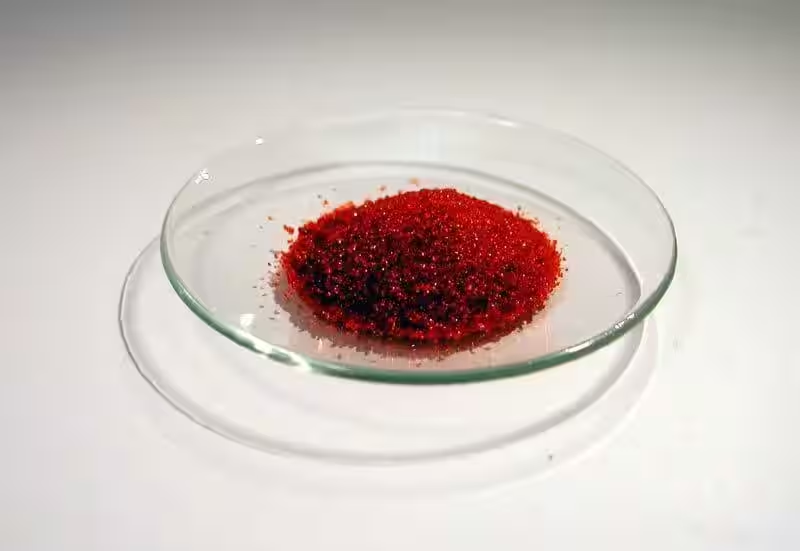
Potassium ferricyanide is a bright red, crystalline solid that dissolves readily in water, yielding a slightly greenish-yellow solution exhibiting a subtle fluorescence. This solubility is key to many of its applications, allowing for easy incorporation into solutions and reactions. The intense color is a characteristic feature, often used as a visual indicator in certain applications.
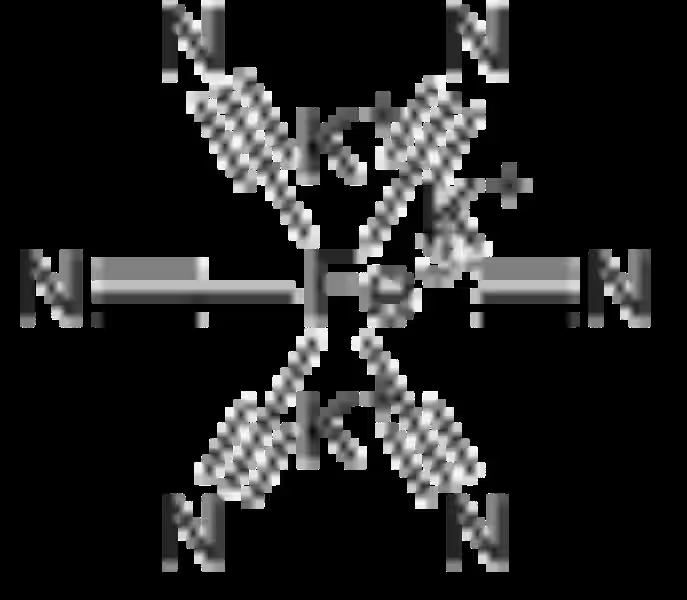
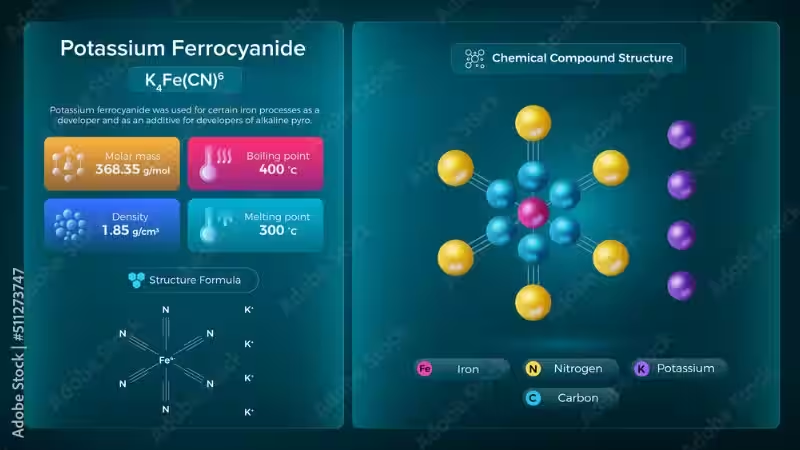
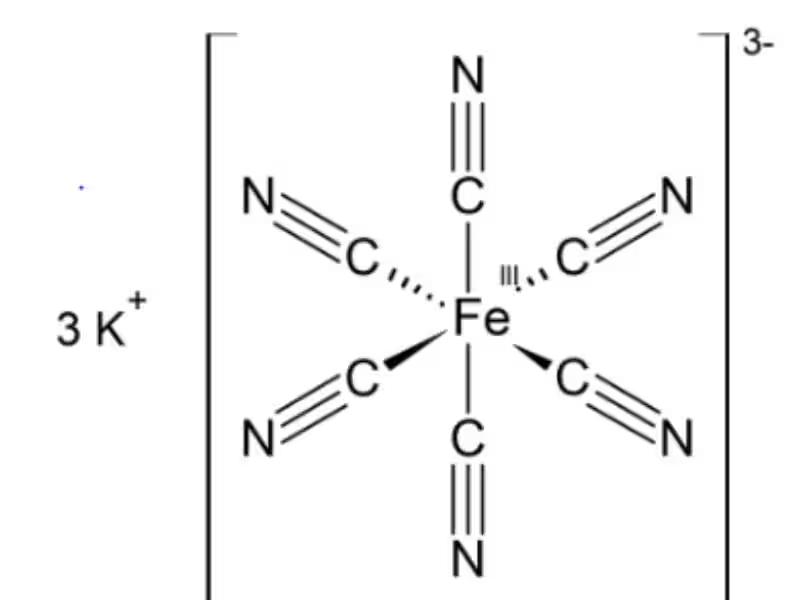
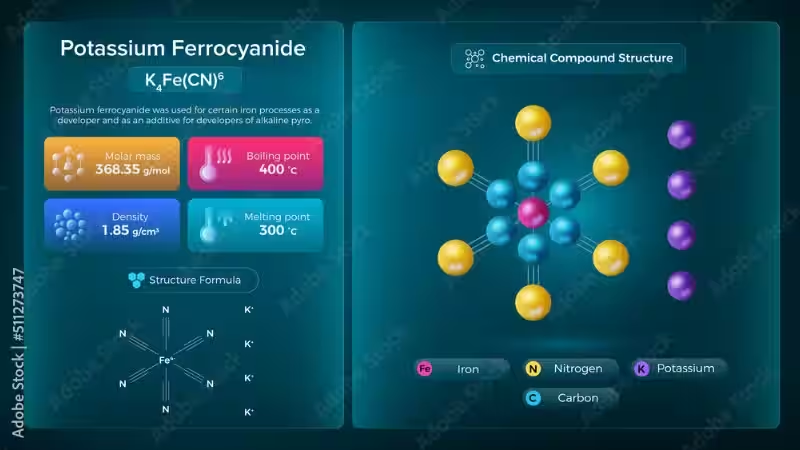
The compound's structure is quite complex. In the solid state, it's a polymeric network involving [Fe(CN)₆]³⁻ centers linked with K⁺ ions. However, this structure disintegrates when dissolved in water, leading to the release of individual ions into solution. This behavior impacts its reactivity and ability to participate in various chemical processes.
Industrial and Photographic Applications of K3Fe(CN)6
Potassium ferricyanide's industrial applications are extensive. It acts as a mild oxidizing agent in organic chemistry, playing a crucial role in catalyst regeneration in reactions like Sharpless dihydroxylations. Its oxidizing power is not exceptionally strong, making it a useful reagent where a controlled oxidation is needed.
Beyond organic chemistry, K3Fe(CN)6 finds applications in metallurgy, specifically in the hardening of iron and steel. It's also used in electroplating processes, where it contributes to the deposition of metals onto surfaces. The textile industry utilizes it in the dyeing of wool, further highlighting its versatility.
Perhaps its most well-known application lies in photography. It's a key component of the cyanotype process, producing the characteristic blue prints. It also plays a role in print toning and acts as a mild bleach, reducing the density of film or prints. Historically used in color film bleaching, safer alternatives have largely replaced it due to the potential release of highly toxic hydrogen cyanide under acidic conditions. Even today, it finds niche applications in color lithography for dot etching.
Photography: Cyanotype printing, print toning, and bleaching (though largely replaced by safer alternatives).
Lithography: Dot etching.
Analytical and Biological Applications of K₃[Fe(CN)₆]
Potassium ferricyanide's importance extends to analytical and biological chemistry. It's a vital component of ferroxyl indicator solution, used for detecting Fe²⁺ ions through the formation of Prussian blue. This reaction is based on the redox properties of K3Fe(CN)6 and is a classic example of its use in qualitative analysis.
In physiology experiments, its ability to increase a solution's redox potential proves extremely useful. For example, it can oxidize reduced cytochrome c in isolated mitochondria, providing valuable insights into cellular respiration. Its role in determining ferric reducing power potential – assessing antioxidant capacity – underlines its significance in the study of biological systems.
Furthermore, K3Fe(CN)6 serves as an electron transfer agent in amperometric biosensors, notably in blood glucose meters. This application leverages its redox capabilities for sensitive and accurate detection of biological molecules. In metallography, it's a key component of Murakami's etchant, used for contrasting binder and carbide phases in cemented carbides. Finally, in histology, it's employed to detect ferrous iron in biological tissues, again through the formation of Prussian blue (also known as Turnbull's blue in this context).
Specific Roles in Analytical and Biological Settings:
Qualitative Analysis: Detection of Fe²⁺ ions (ferroxyl indicator).
While generally considered to have low toxicity compared to other cyanide compounds, potassium ferricyanide is still a mild irritant. Its primary safety concern arises from its reaction with strong acids, producing highly toxic hydrogen cyanide (HCN) gas. This reaction is exemplified by its interaction with sulfuric acid, yielding potassium sulfate, ferric sulfate, and the dangerously poisonous HCN. This emphasizes the crucial need for safe handling and storage procedures.
Always handle K3Fe(CN)6 with appropriate personal protective equipment (PPE), including gloves and eye protection. Ensure adequate ventilation to prevent the buildup of any potentially released HCN gas. Storage should be in a cool, dry place, away from acids and incompatible materials. In case of accidental exposure, seek immediate medical attention.
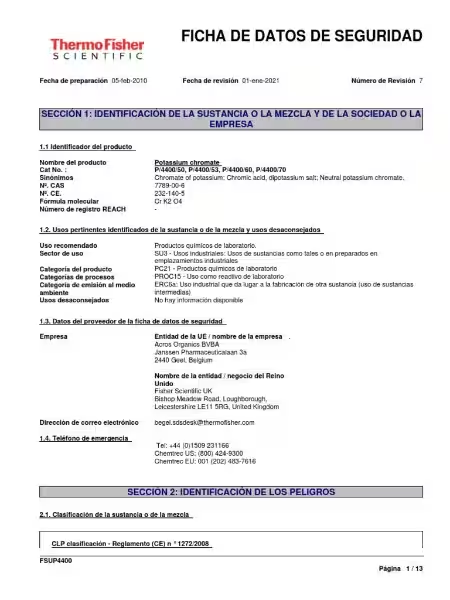
The potential for HCN release underscores the gravity of proper handling and disposal practices to prevent accidental exposure and environmental contamination. Always consult relevant safety data sheets (SDS) before working with potassium ferricyanide. Understanding the hazards and implementing appropriate safety measures is paramount when dealing with this valuable but potentially hazardous chemical.
Frequently Asked Questions about Potassium Ferricyanide (K₃[Fe(CN)₆])
What is Potassium Ferricyanide?
Potassium ferricyanide (K₃[Fe(CN)₆]) is a bright red, water-soluble salt. It contains the [Fe(CN)₆]³⁻ ion, where iron is octahedrally coordinated to six cyanide ligands. Its solutions exhibit a slight green-yellow fluorescence.
How is Potassium Ferricyanide Produced?
Industrially, it's produced by chlorinating potassium ferrocyanide: 2 K₄[Fe(CN)₆] + Cl₂ → 2 K₃[Fe(CN)₆] + 2 KCl.
What are the Key Applications of Potassium Ferricyanide?
Potassium ferricyanide has diverse applications. It acts as a mild oxidizing agent in organic chemistry (e.g., Sharpless dihydroxylations), is used in hardening iron and steel, electroplating, and wool dyeing. It's extensively used in photography (cyanotype process, print toning, Farmer's reducer), color lithography (dot etching), and metallography (Murakami's etchant). In analytical chemistry, it's used in ferroxyl indicator solution (detecting Fe²⁺), assessing antioxidant capacity, and in amperometric biosensors. It also plays a role in histology, detecting ferrous iron in tissues.
What are the Safety Concerns Associated with Potassium Ferricyanide?
While generally considered to have low toxicity, it's a mild irritant. The primary safety concern is its reaction with strong acids, producing highly toxic hydrogen cyanide gas (e.g., K₃[Fe(CN)₆] + 3 H₂SO₄ → K₂SO₄ + Fe₂(SO₄)₃ + 3 HCN). Safe handling and storage are crucial to prevent accidental exposure to this gas.
Is Potassium Ferricyanide a Strong Oxidizing Agent?
No, it's considered a mild oxidizing agent. Its oxidizing power is significantly less than that of stronger oxidizing agents like potassium permanganate or chromic acid.
What is the Structure of Solid Potassium Ferricyanide?
Solid potassium ferricyanide has a complex polymeric structure involving [Fe(CN)₆]³⁻ centers cross-linked with K⁺ ions. This structure breaks down upon dissolution in water.
What is the role of Potassium Ferricyanide in the Cyanotype Process?
In the cyanotype process (blueprint drawing), potassium ferricyanide reacts with ferrous salts exposed to light, forming insoluble Prussian blue, which creates the image.
How is Potassium Ferricyanide Used in Analytical Chemistry?
It serves as a component of the ferroxyl indicator solution, detecting Fe²⁺ ions by forming Prussian blue. Its ability to increase redox potential is useful in physiology experiments and determining the ferric reducing power of samples (assessing antioxidant capacity). It also acts as an electron transfer agent in certain biosensors.
What are the potential health effects of Potassium Ferricyanide?
It's a mild irritant. Ingestion can lead to cyanide poisoning. Always wear appropriate personal protective equipment (PPE) when handling.
What happens when Potassium Ferricyanide reacts with strong acids?
Reaction with strong acids, such as sulfuric acid, produces highly toxic hydrogen cyanide gas (HCN). This is a serious safety hazard.