Understanding Potassium Ferricyanide: Applications and Safety
Understanding Potassium Ferricyanide: Applications and Safety
Potassium ferricyanide, also known as potassium hexacyanoferrate(III), is a fascinating chemical compound with a surprisingly wide range of applications. Its bright red color and water solubility are just the beginning of its interesting story, one that spans from the darkroom to the laboratory bench and beyond. This article will delve into its properties, uses, and safety considerations, providing a comprehensive overview for those curious about this versatile chemical.
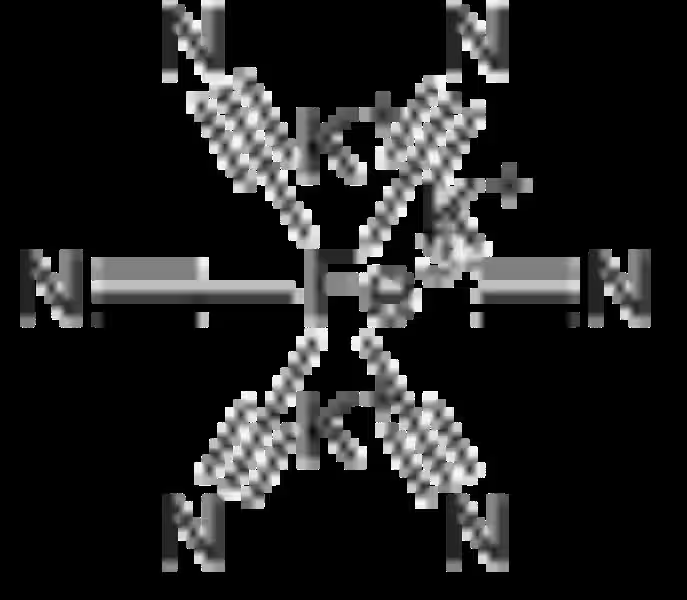
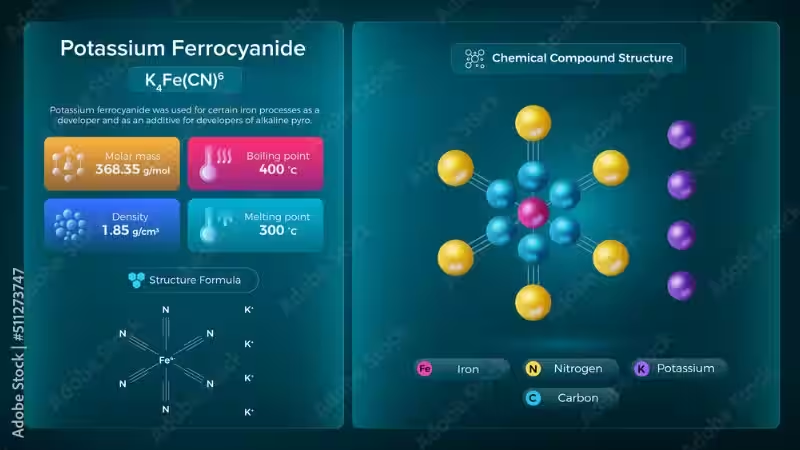
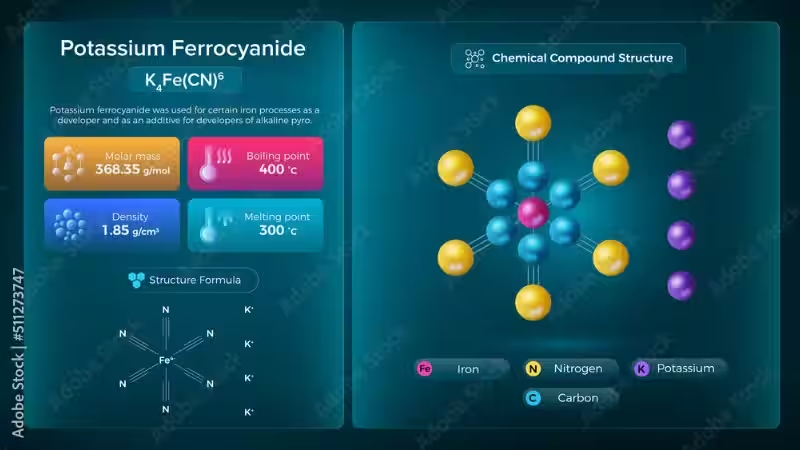
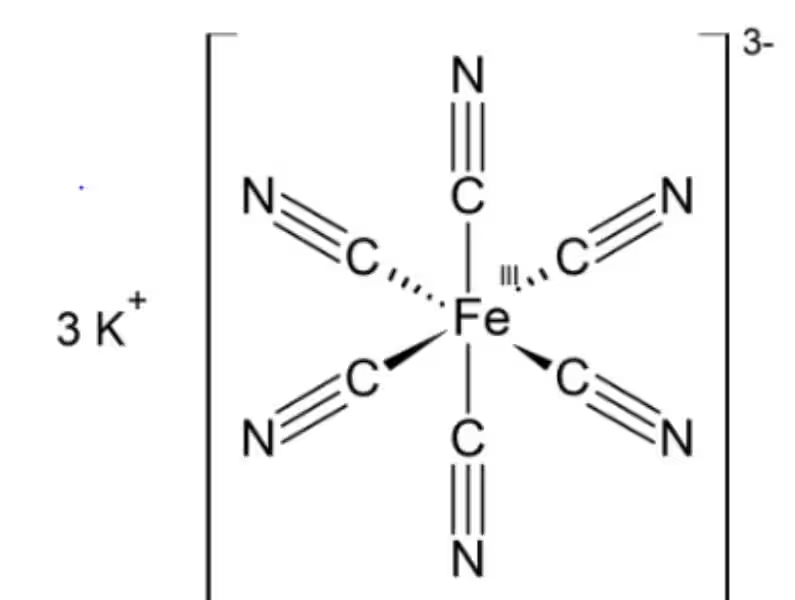
Potassium ferricyanide (K₃[Fe(CN)₆]) is a coordination complex, meaning it features a central metal ion—in this case, iron(III)—surrounded by ligands. These ligands are cyanide ions (CN⁻), six of which are arranged octahedrally around the iron(III) ion, forming the [Fe(CN)₆]³⁻ complex anion. In solid form, this anion is linked to potassium (K⁺) ions in a complex polymeric structure. However, this structure readily dissolves in water, breaking down into individual ions.
This ionic nature and the presence of the iron(III) ion are key to understanding potassium ferricyanide's properties. The iron(III) ion is in a +3 oxidation state, making it a relatively mild oxidizing agent. This means it can readily accept electrons from other substances, causing a change in their oxidation state. This mild oxidizing power, coupled with its ability to participate in various redox reactions, is the basis of many of its applications. The cyanide ligands themselves, while individually highly toxic, are strongly bound to the iron ion in this stable complex, reducing the risk of cyanide release under normal conditions. However, as we'll discuss later, certain conditions can alter this stability.
Applications of Potassium Ferricyanide: A Diverse Range
The mild oxidizing properties and the ability to form Prussian blue (a deep blue pigment) through reaction with iron(II) ions make potassium ferricyanide highly versatile. Its applications span numerous fields:
Photography and Imaging
Potassium ferricyanide plays a significant role in photography, particularly in alternative processes. It's a crucial component of cyanotype printing, where it generates the characteristic blue prints through a reaction with iron(II) salts upon exposure to UV light. It also acts as a bleaching agent, reducing the density of photographic negatives or prints, and is a key ingredient in Farmer's reducer, a solution used to control contrast in prints and negatives when used in conjunction with sodium thiosulfate. Historically, it was used as a bleaching agent in color photography, although safer alternatives are now preferred.
In metalworking, potassium ferricyanide is used to harden iron and steel, taking advantage of its ability to participate in redox reactions that alter the metal's surface properties. It's also employed in certain electroplating processes to modify the properties of the deposited metal layers.
Analytical and Organic Chemistry
Its oxidizing properties find use in organic chemistry as a mild oxidizing agent in various syntheses. For example, in Sharpless dihydroxylations, it assists in catalyst regeneration. In analytical chemistry, it's a vital component of ferroxyl indicator solution used to detect Fe²⁺ ions. The solution turns a characteristic blue (Prussian blue) in the presence of ferrous ions, providing a sensitive visual indication. Furthermore, its role as an electron transfer agent in amperometric biosensors, particularly in blood glucose meters, highlights its electrochemical properties.
Other Applications
Potassium ferricyanide also has applications in metallography, where it's part of Murakami's etchant used to improve contrast in cemented carbides. In histology, it’s used in conjunction with acidic solutions to form Turnbull's blue (chemically indistinguishable from Prussian blue) for detecting ferrous iron in biological tissues.
While potassium ferricyanide is generally considered to have low toxicity, posing primarily a skin and eye irritant risk, it presents a significant hazard under specific conditions. The most critical concern is its reaction with strong acids, particularly under heating. This reaction releases highly toxic hydrogen cyanide (HCN) gas, a lethal poison.
Therefore, it's crucial to handle potassium ferricyanide with care, following these safety precautions:
Avoid contact with skin and eyes: Wear appropriate personal protective equipment (PPE), including gloves, eye protection, and a lab coat.
Handle in a well-ventilated area: This minimizes the risk of inhaling any potential fumes.
Never mix with strong acids: Avoid contact with strong acids under any circumstances. Even relatively weak acids should be handled with caution.
Proper disposal: Follow local regulations for the safe disposal of chemical waste.
The reaction with concentrated sulfuric acid, however, is more complex and doesn't necessarily produce hydrogen cyanide. Always consult the Safety Data Sheet (SDS) for the specific product you are using for detailed safety information.
In conclusion, potassium ferricyanide is a multifaceted chemical compound with a remarkable range of applications. Understanding its properties and handling it with appropriate safety measures are essential for its safe and effective use in various contexts. Remember that responsible handling is paramount when working with any chemical, and potassium ferricyanide is no exception.
Frequently Asked Questions about Potassium Ferricyanide
What is Potassium Ferricyanide?
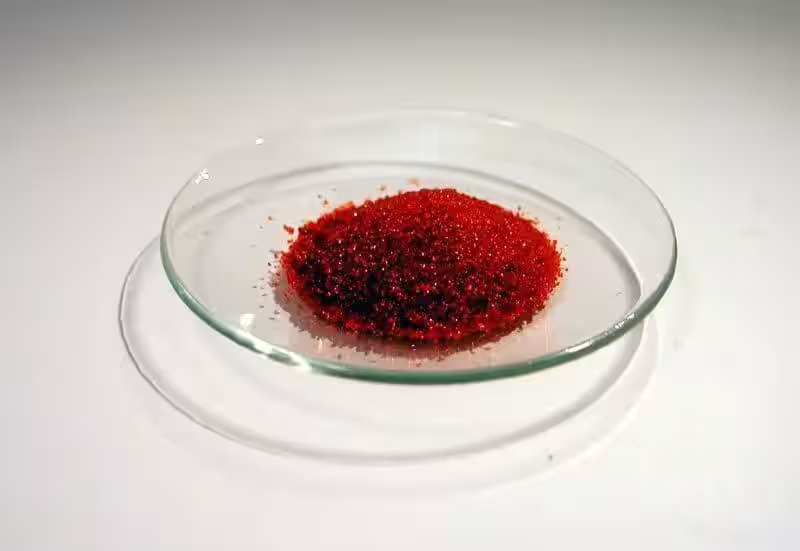
Potassium ferricyanide, with the chemical formula K₃[Fe(CN)₆], is a bright red, water-soluble salt. It contains the [Fe(CN)₆]³⁻ ion, where an iron(III) ion is octahedrally coordinated to six cyanide ligands. In solid form, it exists as a complex polymer, but this structure breaks down in solution. It's also known as potassium hexacyanoferrate(III) or red prussiate of potash.
What are the main uses of Potassium Ferricyanide?
Potassium ferricyanide's primary applications stem from its mild oxidizing properties and its ability to form Prussian blue. Key uses include:
Photography: Cyanotype printing (blueprints), bleaching film/prints, Farmer's reducer (density adjustment). Historically used as a bleaching agent in color photography.
Metalworking: Hardening iron and steel, electroplating.
Organic Chemistry: Mild oxidizing agent in various syntheses, catalyst regeneration.
Analytical Chemistry: Component of ferroxyl indicator (detecting Fe²⁺ ions), determining ferric reducing power (antioxidant capacity), electron transfer agent in biosensors.
Metallography: Component of Murakami's etchant (enhancing contrast in cemented carbides).
Histology: Detecting ferrous iron in biological tissues (forming Turnbull's blue/Prussian blue).
Food Industry: Clarifying agent in sugar production.
Dyeing and Printing: Mordant to fix dyes to fabrics.
What are the safety hazards associated with Potassium Ferricyanide?
While generally considered of low toxicity (primarily a skin and eye irritant), potassium ferricyanide poses a significant hazard under strongly acidic conditions. Reaction with strong acids, especially with heat, releases highly toxic hydrogen cyanide gas (HCN). Therefore, careful handling and appropriate safety measures are crucial, particularly when working with acidic solutions. Note that the reaction with concentrated sulfuric acid produces different products and does not necessarily yield hydrogen cyanide. Always consult the Safety Data Sheet (SDS) before handling.
How is Potassium Ferricyanide produced industrially?
Potassium ferricyanide is produced industrially through the chlorination of potassium ferrocyanide.
What is the structure of Potassium Ferricyanide?
Potassium ferricyanide features an iron(III) ion (Fe³⁺) centrally located within a complex anion, [Fe(CN)₆]³⁻. Six cyanide ligands (CN⁻) are octahedrally coordinated around the iron ion. In solid form, it's a complex polymer cross-linked with potassium ions (K⁺), but this structure disassembles in aqueous solution.
Is Potassium Ferricyanide soluble in water?
Yes, potassium ferricyanide is readily soluble in water.
What is the color of Potassium Ferricyanide?
Potassium ferricyanide is a bright red crystalline solid.
How does Potassium Ferricyanide work as a mild oxidizing agent?
The iron(III) ion (Fe³⁺) in the [Fe(CN)₆]³⁻ complex readily accepts electrons, making it a mild oxidizing agent in various chemical reactions.
What is Prussian Blue, and how is it related to Potassium Ferricyanide?
Prussian blue is a deep blue pigment formed by the reaction of potassium ferricyanide with iron(II) salts. This reaction is crucial in several applications, including cyanotype printing. Turnbull's blue, formed by the reaction of potassium ferrocyanide with iron(III) salts, is chemically identical to Prussian blue.
Where can I find more detailed information about Potassium Ferricyanide's properties?
Consult a Safety Data Sheet (SDS) for comprehensive safety and handling information. Further chemical data, such as molar mass, CAS number, solubility details, etc., can be found in chemical databases like PubChem (though access may require enabling JavaScript in your browser). Always prioritize safety and consult appropriate resources before handling any chemical.


![Understanding K₃[Fe(CN)₆]: Properties, Applications, and Safety of Potassium Ferricyanide](https://laboraprevencion.com/en/wp-content/uploads/k3-fe-cn-6.avif "Understanding K₃[Fe(CN)₆]: Properties, Applications, and Safety of Potassium Ferricyanide")