Understanding Potassium Ferricyanide: Uses, Safety, and Properties
Understanding Potassium Ferricyanide: Uses, Safety, and Properties
Potassium ferricyanide, also known as potassium hexacyanoferrate(III), is a fascinating chemical compound with a surprisingly wide range of applications. Its bright red color and unique chemical properties have made it indispensable in various industries, from photography to metallography. This article will explore its characteristics, applications, and safety considerations in detail.
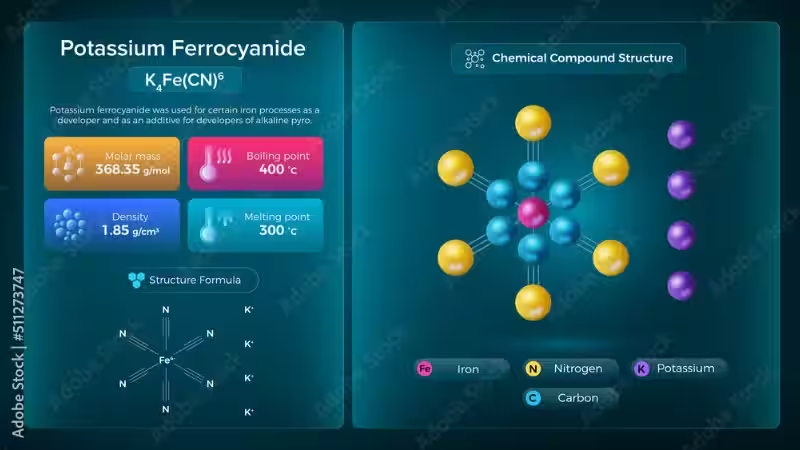
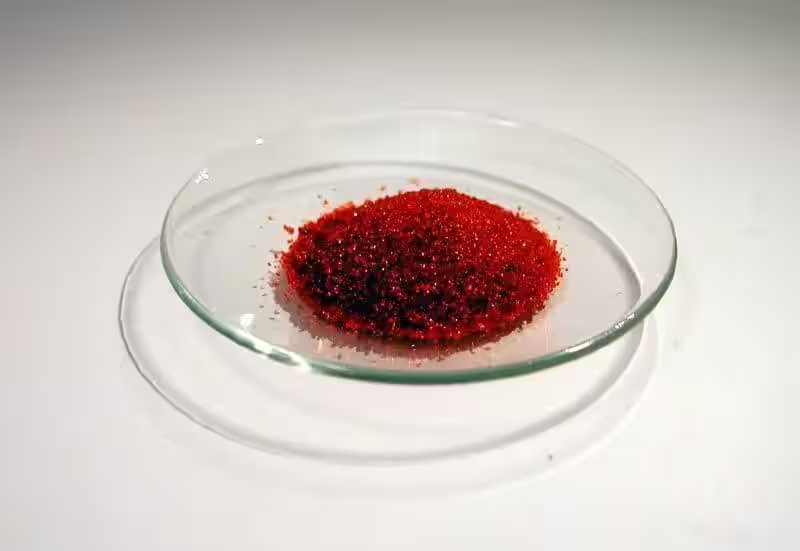
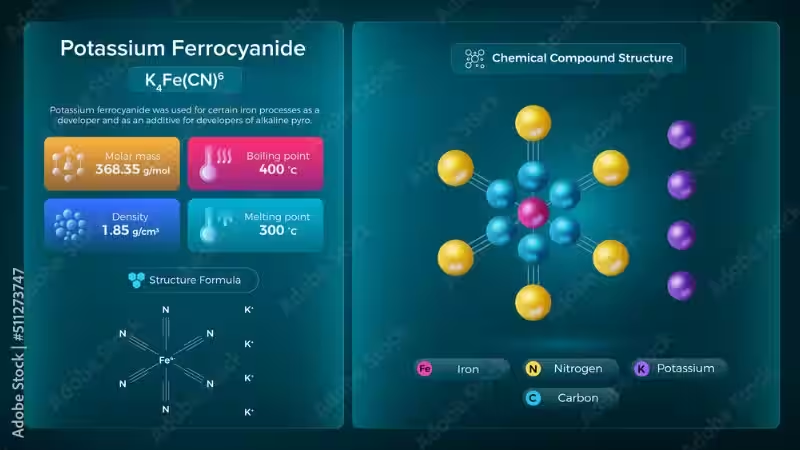
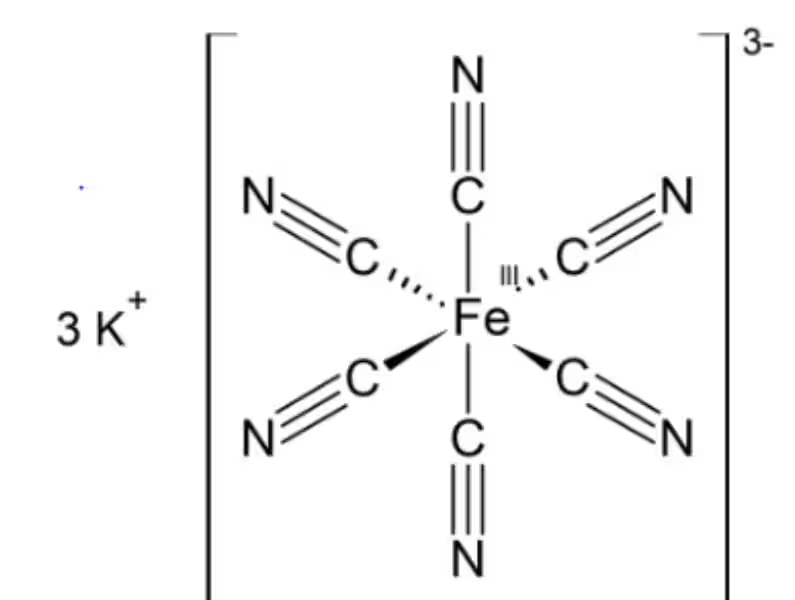
Potassium ferricyanide (K₃[Fe(CN)₆]) is a water-soluble salt characterized by its intense red color. This vibrant hue arises from the octahedrally coordinated [Fe(CN)₆]³⁻ ion, where an iron(III) ion sits at the center, surrounded by six cyanide ligands. This arrangement forms a stable, complex anion.
The solid form of potassium ferricyanide exhibits a complex polymeric structure, with the [Fe(CN)₆]³⁻ units linked together by potassium (K⁺) ions. However, these linkages dissolve in water, resulting in a solution of freely moving ions. This solubility is a key factor contributing to its widespread use in various aqueous-based applications. The synthesis of potassium ferricyanide, often achieved through the chlorination of potassium ferrocyanide, is a testament to its importance in industrial chemistry. The reaction, 2 K₄[Fe(CN)₆] + Cl₂ → 2 K₃[Fe(CN)₆] + 2 KCl, highlights the relatively simple yet effective method of its production.
Structure and Properties
The octahedral geometry of the [Fe(CN)₆]³⁻ anion and the interactions between the anions and potassium cations determine many of its physical properties. These properties are crucial in determining its function in different applications. The compound's solubility in water facilitates its use in aqueous solutions, while its crystalline structure influences its storage and handling.
Applications of Potassium Ferricyanide
The versatility of potassium ferricyanide is evident in its diverse applications across various sectors. Its mild oxidizing properties, ability to form complexes, and participation in redox reactions make it a valuable reagent in numerous contexts.
In industry, potassium ferricyanide finds use in several key areas:
Hardening of Iron and Steel: Its ability to modify the surface properties of metals makes it useful in metal treatment processes.
Electroplating: It contributes to the quality and efficiency of electroplating processes.
Dyeing: Its color properties allow it to be used as a dye, particularly for wool.
Catalyst Regeneration: In organic chemistry, it aids in the regeneration of catalysts in processes like Sharpless dihydroxylations.
Photography and Imaging
Photography holds a special place in the history of potassium ferricyanide. It plays a crucial role in several photographic techniques:
Blueprinting (Cyanotype): A key component in the classic blueprint process, reacting with iron(II) salts to create the characteristic Prussian blue image.
Film and Print Density Reduction: As a mild bleach, it reduces density (at 10g/L) in photographic materials, a process often used for correcting overexposure.
Farmer's Reducer: When combined with sodium thiosulfate (hypo), it forms Farmer's reducer, a powerful tool for reducing density in black and white photography.
Color Lithography: Used in dot etching, a manual color correction technique in color lithography.
Analytical Chemistry and Biochemistry
Potassium ferricyanide's importance extends into analytical chemistry and biochemistry:
Ferroxyl Indicator: A component of the ferroxyl indicator solution, used to detect Fe²⁺ ions through the formation of Prussian blue.
Redox Potential Adjustment: Its ability to increase the redox potential of a solution is exploited in various biochemical experiments, such as oxidizing reduced cytochrome c.
Antioxidant Capacity Determination: It helps measure the ferric reducing power (FRP), an indicator of antioxidant capacity in samples.
Amperometric Biosensors: Acts as an electron transfer agent, notably in commercial blood glucose meters.
Metallography: This compound is a crucial component of Murakami's etchant, enhancing contrast in cemented carbides.
Safety Considerations and Handling Potassium Ferricyanide
Although potassium ferricyanide exhibits relatively low toxicity compared to other cyanide compounds, appropriate safety measures are crucial due to the potential release of highly toxic hydrogen cyanide (HCN) gas under certain conditions.
Skin and Eye Irritation: Direct contact can cause mild irritation.
Hydrogen Cyanide Release: Reaction with strong acids, especially under heating, leads to the release of highly toxic hydrogen cyanide gas. This is a significant safety concern that demands careful handling and adequate ventilation. Always add potassium ferricyanide to acid, never the other way around. This minimizes the chance of a rapid exothermic reaction.
Safe Handling Practices
Personal Protective Equipment (PPE): Always wear appropriate PPE, including gloves, eye protection, and a lab coat.
Ventilation: Work in a well-ventilated area or use a fume hood.
Acid Handling: Exercise extreme caution when handling acids near potassium ferricyanide.
Disposal: Follow local regulations for the proper disposal of chemical waste.
In conclusion, potassium ferricyanide is a versatile compound with numerous applications. Understanding its properties and safety considerations is paramount for its safe and effective utilization. Its role in diverse fields, from photography to biochemistry, highlights its enduring importance in science and technology. Remember to always prioritize safety when working with this chemical.
What is Potassium Ferricyanide?
Potassium ferricyanide (K₃[Fe(CN)₆]), also known as potassium hexacyanoferrate(III), is a bright red, water-soluble salt. It contains the [Fe(CN)₆]³⁻ ion, where an iron(III) ion is coordinated to six cyanide ligands in an octahedral arrangement. Discovered in 1822, it's produced by chlorinating potassium ferrocyanide. In its solid state, it has a complex polymeric structure; this breaks down when dissolved in water.
What are the applications of Potassium Ferricyanide?
Potassium ferricyanide has a wide range of applications due to its mild oxidizing properties and ability to form colored compounds. These include:
Industry: Hardening iron and steel, electroplating, dyeing wool.
Photography: Blueprint drawing, cyanotype processes, reducing film or print density (as a mild bleach), color lithography (dot etching), and as a component of Farmer's reducer (with sodium thiosulfate).
Reagent: Component of ferroxyl indicator (detecting Fe²⁺ ions), oxidizing agent in physiology experiments (e.g., oxidizing cytochrome c), determining ferric reducing power (antioxidant capacity), electron transfer agent in amperometric biosensors (e.g., blood glucose meters), and part of Murakami's etchant in metallography.
Prussian Blue Formation: Reacting with ferrous ions (Fe²⁺) to produce Prussian blue, a deep blue pigment used in blueprints and histology (detecting ferrous iron in tissues, forming Turnbull's blue).
Food Industry: Used as an anti-caking agent (E536) in some salts.
What are the safety concerns associated with Potassium Ferricyanide?
While relatively low in toxicity (causing mainly mild skin and eye irritation), potassium ferricyanide poses a significant hazard under strongly acidic conditions. Reaction with strong acids, especially with heating, releases highly toxic hydrogen cyanide gas (HCN). Therefore, careful handling, appropriate safety precautions, and correct disposal methods are crucial.
Is Potassium Ferricyanide toxic?
Potassium ferricyanide has low toxicity compared to other cyanide compounds due to the strong binding of cyanide to the iron ion, reducing its bioavailability. However, it's still a cyanide source and should be handled with care. Ingestion and inhalation of dust should be avoided.
How is Potassium Ferricyanide produced?
It's produced by the chlorination of potassium ferrocyanide: 2 K₄[Fe(CN)₆] + Cl₂ → 2 K₃[Fe(CN)₆] + 2 KCl
What is the chemical formula of Potassium Ferricyanide?
The chemical formula is K₃[Fe(CN)₆].
What is the color of Potassium Ferricyanide?
It is a bright red crystalline solid that forms a yellowish-brown solution in water.


![Understanding K₃[Fe(CN)₆]: Properties, Applications, and Safety of Potassium Ferricyanide](https://laboraprevencion.com/en/wp-content/uploads/k3-fe-cn-6.avif "Understanding K₃[Fe(CN)₆]: Properties, Applications, and Safety of Potassium Ferricyanide")