Feasibility Plan Sample: Is Your Project Idea Worth Pursuing?
Feasibility Plan Sample: Is Your Project Idea Worth Pursuing?
Many promising projects fail before they even begin. The reason? A lack of thorough upfront planning. A comprehensive feasibility plan sample can act as your compass, guiding you through the critical evaluation process and helping you avoid costly mistakes. This article will break down everything you need to know to create a strong feasibility plan and make informed decisions about your project.
A feasibility study is a critical pre-project assessment. Think of it as a detailed investigation into whether your project is viable – whether it's realistically achievable given your resources and whether it offers a sufficient return on investment (ROI). It aims to answer the crucial question: "Should we proceed?"
This isn't merely a hunch or a gut feeling. A feasibility study is data-driven, utilizing market research, financial projections, and operational assessments to paint a clear picture of your project's potential success. It's much more than a simple brainstorming session; it's an in-depth analysis that helps mitigate risks and prevent unnecessary expenditure. By conducting a thorough feasibility study, you can make an informed decision based on facts rather than speculation.
When to Conduct (and When NOT to Conduct) a Feasibility Study
While a feasibility study is essential for most projects, there are exceptions. Conducting a feasibility study after the project is pitched but before significant work begins, is usually ideal. It often runs alongside a SWOT analysis or a risk assessment.
However, a feasibility study isn't always necessary. You might skip it if:
The project's feasibility is already clearly established.
A virtually identical project has already been successfully completed.
Competitors are already successfully operating similar initiatives.
The project is extremely small and straightforward, requiring minimal resources.
A recent, relevant feasibility analysis already exists.
Knowing when not to conduct a feasibility study is just as important as knowing when to do so. It saves time and resources by focusing efforts on projects that truly need this in-depth evaluation.
A comprehensive feasibility study typically encompasses several key areas:
Technical Feasibility: This assesses whether the required technology, equipment, and expertise are available and accessible. Can you acquire the necessary tools and skills to complete the project successfully?
Financial Feasibility: This is all about the numbers. It involves projecting costs, benefits, and ROI. Will the project generate sufficient profits to justify the investment? A feasibility plan sample often includes detailed financial models and projections.
Market Feasibility: This analyzes market demand, competition, and the potential for sales. Is there a real market need for your product or service? Can you successfully compete with existing players?
Operational Feasibility: This examines whether your organization has the necessary resources (staffing, structure, processes) to effectively manage and execute the project. Do you have the right people and systems in place?
Legal Feasibility: This ensures compliance with all relevant laws, regulations, and permits. Are there any legal hurdles or potential liabilities that could derail the project?
Essential Components of a Strong Feasibility Plan
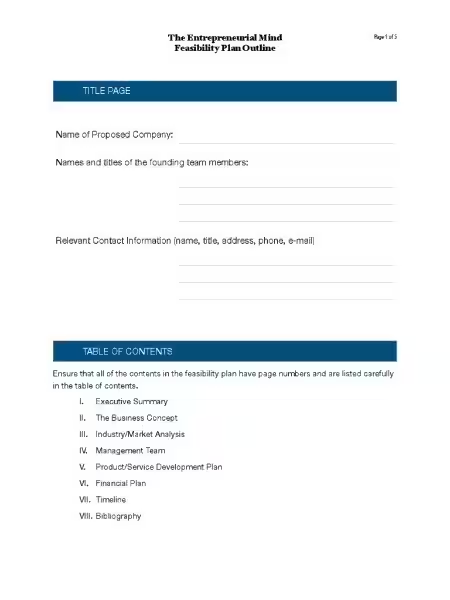
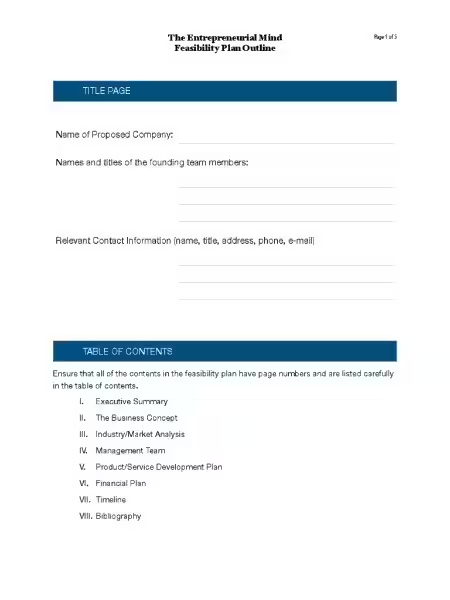
A well-structured feasibility plan follows a clear format that helps present your findings in a coherent and understandable manner. A typical feasibility plan includes:
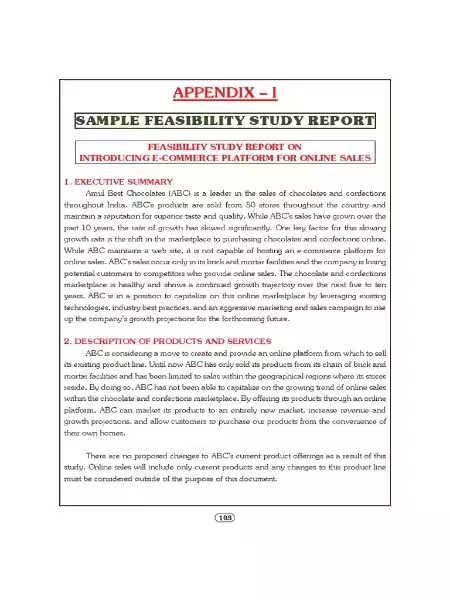
Executive Summary: A concise overview of the entire study, highlighting key findings and recommendations.
Product/Service Description: A detailed description of what you're proposing.
Technical Considerations: A breakdown of the technical requirements, resources, and challenges.
Market Survey: The results of your market research, including demand analysis and competitive landscape.
Operational Assessment: An analysis of the operational resources and capabilities needed.
Timeline: A realistic project schedule, outlining key milestones and deadlines.
Financial Projections: Detailed financial models, including cost estimates, revenue projections, and ROI calculations.
Step-by-Step Guide to Conducting a Feasibility Study
A structured approach ensures thoroughness and helps avoid overlooking critical factors. Here's a suggested process:
Preliminary Analysis: Identify any obvious and insurmountable roadblocks early on. This saves time and resources by quickly eliminating unfeasible projects.
Financial Feasibility Evaluation: Project income and required investment, considering the impact on cash flow.
Market Assessment: Identify market demand, potential revenue, and risks by analyzing competition and demographics.
Utilizing a Feasibility Plan Sample and Project Management Software
A feasibility plan sample can serve as a valuable template, providing a framework for your own analysis. However, remember that every project is unique. Adapt the template to match your specific needs and context. Once you've completed your feasibility study and decided to proceed, robust project management software can help ensure successful execution. This software helps track progress, manage resources, and keep the project on schedule and within budget.
By following these steps and using a well-structured feasibility plan, you can significantly increase the likelihood of your project's success. Remember, careful planning upfront is an investment that pays off handsomely in the long run.
Feasibility Plan Sample: Frequently Asked Questions
Here are some frequently asked questions about feasibility plan samples and their use:
What is a feasibility plan sample, and why is it useful?
A feasibility plan sample is a template or example that outlines the key components and structure of a feasibility study. It provides a framework for assessing the viability of a project before significant resources are invested. Using a sample helps ensure all essential aspects are considered, leading to a more thorough and accurate evaluation. This prevents costly mistakes and wasted resources down the line. It also helps standardize the process, making it easier to compare feasibility studies across different projects.
What are the key components of a typical feasibility plan sample?
A comprehensive feasibility plan sample typically includes sections covering: an executive summary, a detailed description of the product or service, a technical assessment (including technology, equipment, and expertise needed), a market analysis (including demand, competition, and pricing), an operational assessment (including resources, staffing, and infrastructure), a timeline, and detailed financial projections (including costs, benefits, and ROI). A robust sample also incorporates a vulnerability review, identifying potential risks and outlining contingency plans.
What types of feasibility are typically assessed in a feasibility plan sample?
Most feasibility plan samples address several key areas of feasibility:
Technical Feasibility: Does the necessary technology and expertise exist to complete the project?
Financial Feasibility: Is the project financially viable? Will it generate sufficient return on investment (ROI)?
Market Feasibility: Is there sufficient market demand for the product or service? What is the competitive landscape?
Operational Feasibility: Does the organization have the resources (staff, structure, etc.) to successfully execute the project?
Legal Feasibility: Does the project comply with all relevant laws and regulations?
When should I not use a feasibility plan sample (or conduct a feasibility study)?
A feasibility study might be unnecessary if:
The project's feasibility is already well-established.
A very similar project has already been successfully completed.
The project is small and simple, with minimal risk.
A recent, relevant feasibility analysis already exists.
How does a feasibility plan differ from a project pitch or business plan?
A project pitch focuses on the overall merits and appeal of the project, aiming to gain approval. A feasibility study, on the other hand, assesses the practicality of the project given available resources and potential challenges. A business plan is a more comprehensive document covering the entire business venture, including market analysis, operational plans, and financial projections over a longer time horizon. The feasibility study informs the business plan and helps justify its development.
What are the steps involved in creating a feasibility plan using a sample?
While the specific steps may vary depending on the chosen sample, a typical process includes:
Preliminary Analysis: Identifying any immediate show-stoppers.
Financial Feasibility Evaluation: Projecting income and expenses.
Market Assessment: Analyzing market demand and competition.
Vulnerability Review: Identifying and mitigating potential risks.
Decision Proposal: Summarizing findings and recommending a "go" or "no-go" decision.
Where can I find a good feasibility plan sample?
Many online resources offer free feasibility plan templates and samples. However, be sure to choose a template that aligns with the specific needs of your project and industry. Consider consulting with a project management professional for guidance in selecting and utilizing a suitable template.
This FAQ provides a starting point; the specifics will always depend on the nature of the project. Remember that a well-executed feasibility plan is a critical step towards successful project execution.