Feasibility Report Sample: Your Guide to Assessing Project Viability
Feasibility Report Sample: Your Guide to Assessing Project Viability
Starting a new business or undertaking a significant project requires careful planning and assessment. One crucial tool in this process is the feasibility report. Many entrepreneurs struggle to understand how to create one, often wondering, "Where can I find a good feasibility report sample to guide me?" This article will not only answer that question but also provide a comprehensive understanding of what a feasibility report entails and how it can help you make informed decisions.
A feasibility report is a detailed analysis of the practicality and potential success of a proposed project or business venture. It examines various aspects to determine whether the project is worth pursuing. Think of it as a thorough due diligence process, helping you avoid costly mistakes down the line.
It's not simply a collection of optimistic projections; instead, it objectively weighs the potential benefits against potential risks and challenges. A well-crafted feasibility report will identify potential roadblocks and propose mitigation strategies, offering a realistic picture of the project's prospects.
Key Components of a Feasibility Report
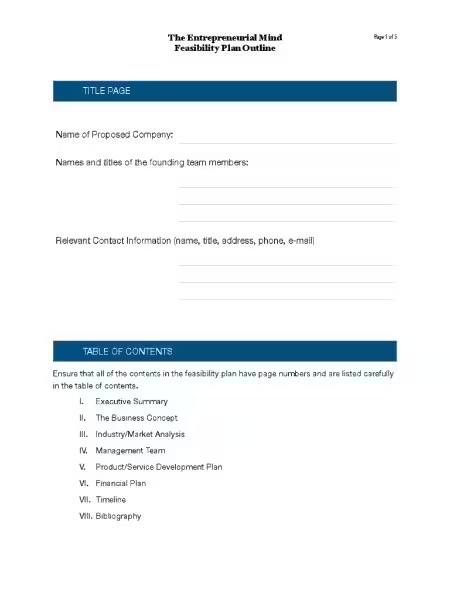
A comprehensive feasibility report typically includes several key sections:
1. Executive Summary
This section provides a concise overview of the entire report, highlighting key findings and recommendations. It should be written last, after all other sections are complete. Think of it as a "cliff notes" version of your entire analysis.
It should clearly state whether the project is deemed feasible or not, based on the findings presented in the subsequent sections. This is the first and often only section many stakeholders will read, so clarity and conciseness are paramount.
2. Description of the Project
This section details the proposed project or business venture, outlining its goals, objectives, and scope. Include a clear explanation of what the project aims to achieve and why it’s important.
Be specific and avoid vague language. Include all relevant information, such as timelines, deliverables, and any unique aspects of your project that might influence its feasibility.
3. Market Analysis
This crucial section assesses the market demand for the product or service. It involves researching the target market, analyzing competitors, and evaluating market size and potential.
Consider factors like market trends, consumer behavior, and pricing strategies. Include data and evidence to support your conclusions. A strong market analysis will demonstrate the potential for success and identify any significant market risks.
This section assesses the technical aspects of the project, determining whether the project is technologically achievable and within the available resources.
This might involve evaluating the required technology, infrastructure, and expertise. It also assesses potential technological challenges and outlines strategies to overcome them. This section should clearly demonstrate that the project is technically possible within the given constraints.
5. Financial Feasibility
This section is arguably the most important part of the report. It analyzes the financial aspects of the project, including projected costs, revenues, and profitability.
This will typically include detailed financial projections, such as income statements, cash flow statements, and balance sheets. It also needs to outline the funding sources and the financial risks involved. A thorough financial feasibility analysis will assess whether the project is financially viable and sustainable in the long run.
6. Management and Organizational Feasibility
This section assesses the management team's capabilities and organizational structure. It evaluates the team's experience, skills, and resources necessary for successful project implementation.
It should also assess the organizational structure and its ability to support the project. This section determines if the project has the right people and structure in place for success.
7. Legal and Regulatory Feasibility
This section examines any legal or regulatory requirements that might affect the project. This includes permits, licenses, regulations, and potential legal risks.
It’s crucial to identify and address any potential legal hurdles early on. Ignoring legal and regulatory considerations can lead to significant delays or even project failure.
8. Environmental Feasibility
For many projects, especially those with a significant environmental impact, an environmental feasibility assessment is needed. This section will examine any potential environmental impacts of the project and propose mitigation strategies.
This could include air and water quality, waste management, and habitat preservation. Compliance with environmental regulations is crucial and often legally mandated.
9. Social Feasibility
This section assesses the social impact of the project, considering its effects on the community and stakeholders. This is particularly important for projects that might have a substantial social impact, positive or negative.
It should consider things like job creation, community relations, and potential social disruption.
10. Risk Assessment and Mitigation
This section identifies potential risks and challenges that could affect the project's success. It also outlines strategies to mitigate these risks.
This might include financial risks, technical risks, market risks, and legal risks. A robust risk assessment and mitigation plan is crucial for minimizing negative impacts and ensuring the project's resilience.
Finding a Feasibility Report Sample
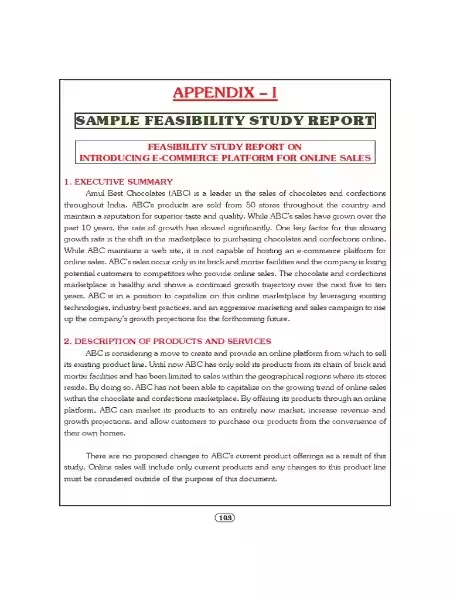
Finding a feasibility report sample can be a valuable tool for understanding the structure and content of a well-written report. Online resources, business libraries, and academic databases can provide examples. However, remember that these samples should be used as guides, not templates. Your report needs to be tailored to your specific project.
Creating a comprehensive feasibility report is essential for evaluating the viability of any new venture or project. By thoroughly examining all aspects, you can make informed decisions, minimize risks, and maximize your chances of success. Remember to adapt the information and guidance provided in a feasibility report sample to your specific circumstances. Thorough planning is key to success, and the feasibility report is a crucial tool in that process.
Feasibility Report Sample FAQ
Here are some frequently asked questions about feasibility report samples and how they relate to entrepreneurship education:
What is a feasibility report?
A feasibility report is a document that assesses the practicality and potential success of a proposed project or business venture. It examines various aspects to determine if the project is viable and worth pursuing. This includes market analysis, financial projections, and operational considerations. Essentially, it answers the question: "Should we proceed with this project?"
Where can I find feasibility report samples?
Many online resources offer feasibility report samples. A simple web search using keywords like "feasibility report sample," "business plan template," or "feasibility study example" will yield numerous results. Some business schools and academic databases also provide access to sample reports. Remember to use these samples as templates and adapt them to your specific project. Directly copying is plagiarism.
What are the key sections of a feasibility report?
A typical feasibility report includes sections on:
Executive Summary: A brief overview of the entire report, highlighting key findings and recommendations.
Market Analysis: Research on the target market, including size, demographics, and trends. Competitive analysis is also crucial.
Technical Feasibility: An assessment of the technology, resources, and infrastructure needed to execute the project.
Financial Feasibility: Detailed financial projections, including startup costs, operating expenses, revenue forecasts, and profitability analysis.
Management and Organization: Details about the management team, organizational structure, and operational plan.
Legal and Regulatory Considerations: An overview of relevant legal requirements and permits.
Risk Assessment: Identification and analysis of potential risks and mitigation strategies.
Conclusion and Recommendations: A summary of the findings and a recommendation on whether to proceed with the project.
How does a feasibility report relate to an entrepreneurship course like MBAB 5P23?
An entrepreneurship course, such as MBAB 5P23, would likely cover the principles and methodologies used to create and analyze a feasibility report. The course would equip students with the skills needed to conduct market research, develop financial projections, assess risks, and make informed business decisions. Creating a feasibility report is often a core assignment in such a course.
Can I use a feasibility report sample as a template for my own report?
Yes, using a sample report as a template is a good practice. However, remember to replace all the sample data with your own research and projections. Simply changing a few words or numbers is still plagiarism. Use the sample to understand the structure and content required, but conduct your own independent analysis.
What are the common mistakes to avoid when creating a feasibility report?
Common errors include:
Insufficient market research: Failing to thoroughly analyze the target market and competition.
Unrealistic financial projections: Overestimating revenue or underestimating costs.
Ignoring risks: Failing to identify and address potential problems.
Poorly written and organized report: Making it difficult for readers to understand the findings.
Lack of supporting data and evidence: Presenting conclusions without adequate justification.
By avoiding these mistakes and using a sample report as a guide, you can create a comprehensive and well-supported feasibility report.