Understanding and Utilizing a Feasibility Template
Understanding and Utilizing a Feasibility Template
Are you considering a new project, product, or business venture, but unsure if it's truly viable? A feasibility template can be your lifeline. It's a structured framework that guides you through a thorough assessment, helping you make informed decisions based on data, not guesswork. This article will explore the importance of feasibility studies and how a well-designed template can streamline the entire process.
What is a Feasibility Study and Why Use a Template?
A feasibility study is a critical preliminary assessment determining if a project or venture is practical and worthwhile. It answers vital questions about resource availability and potential return on investment (ROI). It's not just about whether something could be done, but whether it should be done, considering all relevant factors.
Using a pre-designed feasibility template offers significant advantages. It provides a structured format, ensuring consistency and completeness. This prevents overlooking crucial aspects, common in less formal approaches. A template is a time-saver, providing a ready-made framework to fill in with your specific project details. The standardized structure also makes the study easier to review and understand for stakeholders.
Key Components of a Robust Feasibility Template
A comprehensive feasibility template should encompass several crucial areas, allowing for a holistic evaluation.
1. Executive Summary
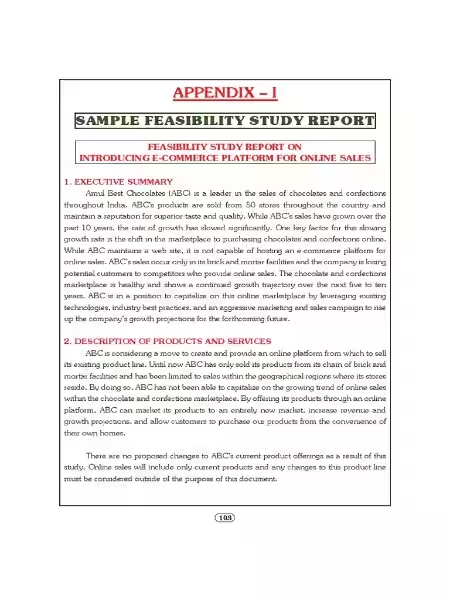
This section provides a concise overview of the entire study. It summarizes the project's goals, methodology, key findings, and recommendations. Think of it as the elevator pitch for your feasibility analysis. It should be compelling enough to grab attention and highlight the most critical aspects of the study. It's usually written last, once the entire study is complete.
2. Project Description
Clearly and concisely describe the project, product, or service. Detail its purpose, features, and intended target audience. This section lays the foundation, setting the stage for the subsequent analyses. Ensure the description is detailed enough for anyone unfamiliar with the project to understand its essence and potential.
3. Market Analysis
This is arguably the most crucial component. A thorough market analysis investigates market size, demand, trends, and competition. It identifies your target audience, their needs, and how your project addresses those needs. Competitor analysis is a vital part, assessing their strengths, weaknesses, and market share. This helps determine your competitive advantage and potential market penetration.
This section delves into the financial aspects, projecting costs, revenues, and profitability. It typically includes a detailed budget, profit and loss statements, and cash flow projections. Calculate the return on investment (ROI) and assess financial risks. This section is essential for determining the project's financial viability. A clear picture of the financial landscape is crucial for decision-making.
5. Technical Feasibility
This element considers the technical aspects, including technology requirements, infrastructure, resources, and expertise. Assess the availability of necessary equipment, software, and skilled personnel to implement the project successfully. Identify any potential technical challenges and outline mitigation strategies. This is particularly important for technology-driven ventures.
6. Operational Feasibility
This examines the operational aspects, including organizational structure, staffing, processes, and logistics. Assess your organization's capacity to manage and execute the project effectively. Identify potential operational challenges and propose solutions. This section assesses whether your company's current structure and resources are sufficient for project success.
7. Legal and Regulatory Feasibility
This crucial aspect examines legal and regulatory compliance. Identify all relevant laws, regulations, permits, and licenses required for the project. Assess any potential legal or regulatory risks and propose solutions. Ignoring this can lead to significant legal issues down the line.
8. Timeline and Milestones
Establish a realistic project timeline, outlining key milestones and deadlines. Consider potential delays and develop contingency plans. This is essential for effective project management. Include resource allocation and dependency mapping to enhance the accuracy of the timeline.
9. Risk Assessment
Identify potential risks and develop mitigation strategies. This proactive approach helps minimize potential problems and ensures project success. Consider both internal and external risks, and tailor the mitigation plans accordingly. This shows a thorough understanding of potential challenges.
10. Findings and Recommendations
Summarize your findings from each section, providing a clear and concise recommendation on whether to proceed with the project. Justify your recommendation based on the evidence presented in the study. This is the culmination of your efforts, presenting a clear path forward.
Utilizing a Feasibility Template: A Step-by-Step Guide
Choose a suitable template: Numerous feasibility templates are available online, so select one that aligns with your project's specific needs.
Gather data: Collect all necessary information from various sources, including market research, financial statements, and technical specifications.
Fill in the template: Systematically complete each section of the template, ensuring accuracy and completeness.
Analyze the data: Critically analyze the gathered data, identifying strengths, weaknesses, opportunities, and threats.
Develop recommendations: Based on your analysis, formulate clear and well-justified recommendations.
Review and refine: Thoroughly review the completed study, ensuring accuracy, consistency, and clarity.
By utilizing a feasibility template and following these steps, you'll transform a potentially daunting task into a manageable and insightful process. The resulting feasibility study will provide the confidence and data-driven insights necessary to make informed decisions about your project's future. Remember, a well-executed feasibility study is an investment in your project's success.
Feasibility Template FAQ
Here are some frequently asked questions about feasibility templates and their use:
What is a feasibility template, and why is it useful?
A feasibility template is a pre-formatted document that guides the creation of a feasibility study. It provides a structured framework ensuring all critical aspects of a project's viability are considered. This streamlines the process, promotes consistency, and reduces the risk of overlooking crucial information. Using a template helps ensure a thorough and comprehensive assessment before significant resources are committed to a project.
What key areas does a feasibility template typically cover?
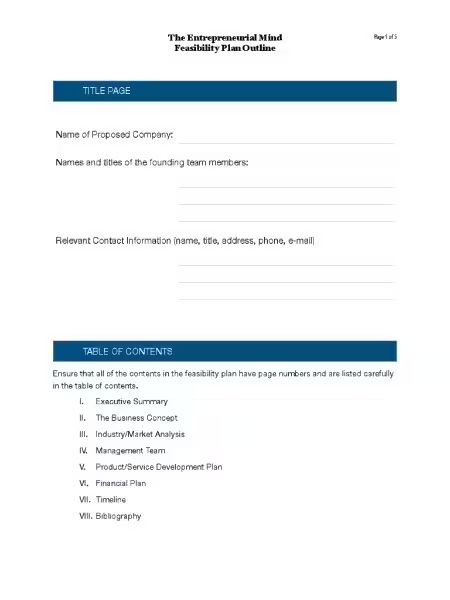
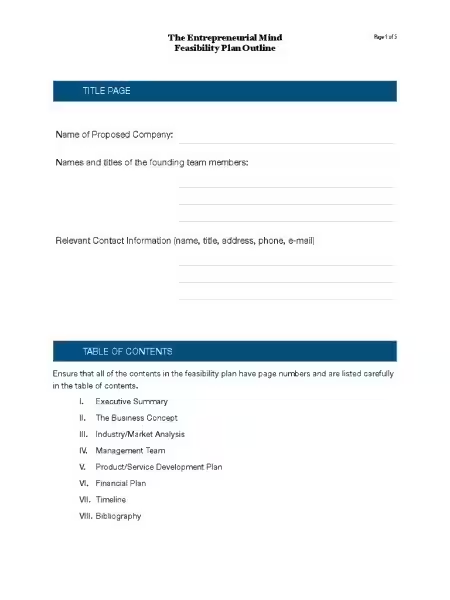
A comprehensive feasibility template encompasses several key areas: financial analysis (including ROI and cost-effectiveness), market analysis (including competitor analysis and consumer needs), technical considerations (materials, technology, labor), marketing strategy, operational assessment (staffing, organizational structure), legal compliance, and a detailed project timeline. It also includes sections for an executive summary and final recommendations.
Who should conduct a feasibility study?
Ideally, a feasibility study should be conducted by an objective individual or team with relevant subject matter expertise. While internal teams may conduct initial investigations, external validation from an impartial consultant is often recommended to ensure an unbiased assessment. Someone directly involved in the project may have inherent biases that could compromise the objectivity of the study.
What information should be included in a feasibility study created using a template?
A properly completed feasibility study, using a template or not, should include a detailed description of the project and its goals, a comprehensive market analysis (including competitive landscape and consumer demand), a thorough assessment of technical requirements, a defined marketing strategy, an operational plan addressing staffing and organizational needs, financial projections (including a cost-benefit analysis and ROI), a realistic project timeline, a risk assessment, and a clear summary of findings and recommendations.
Feasibility studies are particularly crucial for large-scale projects, high-investment ventures, and situations with significant potential risks. They are valuable before launching new businesses, adding major product lines, bidding on large projects, or undertaking substantial acquisitions. Conversely, they are generally unnecessary for small-scale projects with minimal risk or those closely resembling past successes where feasibility is already well-established.
What is the difference between a feasibility study and a business plan?
A feasibility study focuses specifically on determining the viability of a single project, answering the question: "Can this project be successfully completed given the available resources and market conditions?" A business plan, on the other hand, provides a comprehensive overview of an entire business or organization, encompassing its goals, strategies, market analysis, and financial projections. A feasibility study might be a component within a larger business plan.
What happens after a feasibility study is complete?
The feasibility study concludes with a recommendation on whether to proceed with the project based on the findings. If the recommendation is positive, the next step typically involves detailed project planning and the potential use of project management software to track progress, manage resources, and monitor the project's success. If the recommendation is negative, the project may be abandoned or revised based on the identified issues.
Are there specific software tools recommended to use after a feasibility study?
Following a positive feasibility study, project management software such as ProjectManager can be highly beneficial for planning, executing, and tracking the project. These tools help manage timelines, resources, budgets, and communication throughout the project lifecycle.