Mastering the Art of Project Assessment: A Comprehensive Guide
Mastering the Art of Project Assessment: A Comprehensive Guide
Project assessment: it's a phrase that often evokes a sense of dread, especially for those unfamiliar with its importance. But fear not! This guide will demystify the project assessment process, revealing its value as a powerful tool for project success and continuous improvement. Whether you're a seasoned project manager or just starting out, understanding how to effectively assess your projects is crucial for achieving your goals and maximizing your impact.
The entire assessment of the project unfolds across three distinct phases: pre-project, ongoing, and post-project. Each phase plays a vital role in ensuring project success.
Pre-Project Evaluation: Laying the Foundation
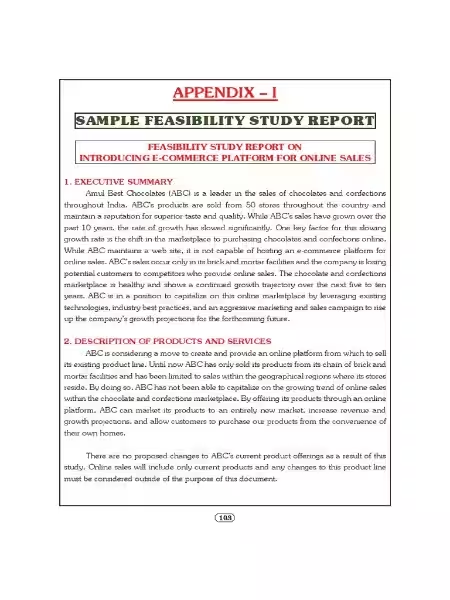
Before a single line of code is written or a single meeting is held, pre-project assessment is crucial. This phase involves a thorough feasibility study, examining the project's potential for success. Key elements include:
Defining clear objectives: What are you trying to achieve? What are the measurable goals?
Identifying key stakeholders: Who are the individuals and groups impacted by this project?
Conducting a cost-benefit analysis: Does the project's potential return justify the investment?
Assessing risks and potential challenges: What obstacles might hinder progress? How can they be mitigated?
This meticulous planning stage prevents costly mistakes down the line by ensuring the project is viable and aligned with organizational objectives. Without a strong pre-project assessment, the project might be doomed from the start.
Ongoing (Formative) Evaluation: Navigating the Journey
This phase involves constant monitoring and feedback throughout the project lifecycle. Think of it as real-time course correction. Ongoing assessment allows for early identification of problems, facilitating timely adjustments to keep the project on track. Key aspects include:
Regular progress monitoring: Are you meeting deadlines and staying within budget?
Risk management: Are emerging risks being addressed effectively?
Stakeholder communication: Are stakeholders regularly updated on progress and challenges?
Utilizing project management tools: Dashboards and trackers provide crucial data for informed decision-making.
Methods like process evaluation, focusing on how things are done, and participatory evaluation, involving stakeholders actively, contribute significantly to this phase's effectiveness. Regular check-ins and adjustments ensure the project remains aligned with its goals and that issues are addressed promptly.
Post-Project Evaluation: Lessons Learned and Future Improvements
The post-project evaluation is the "postmortem," offering a crucial opportunity to reflect on what went well and what could be improved. This isn't just about assigning blame; it's about learning from both successes and failures to enhance future projects. Key components include:
Data analysis: Examining collected data to identify trends and patterns.
Stakeholder interviews: Gathering feedback from those involved in the project.
Document review: Examining project documentation for insights and lessons learned.
Summative evaluation: Assessing the project's overall effectiveness against its pre-defined goals.
This phase is where you transform challenges into opportunities for growth. The insights gathered here directly inform future planning, leading to more efficient and successful projects.
The Four Steps of the Project Assessment Process
The entire assessment of the project is structured around four key steps:
Planning: Defining objectives, identifying stakeholders, and creating a detailed evaluation plan.
Implementation: Collecting and monitoring data throughout the project.
Completion: Analyzing the collected data and drawing conclusions.
Reporting and Dissemination: Communicating findings to relevant stakeholders through reports, presentations, or meetings.
Each step is crucial for a comprehensive and effective assessment. Skipping any step weakens the overall process and diminishes the value of the insights gained.
Benefits of a Robust Project Assessment Process
Implementing a thorough project assessment process provides significant benefits:
Improved project management: Identifying areas for improvement in cost, time, and resource management.
Enhanced team performance: Increased accountability and a culture of continuous improvement.
Better stakeholder management: Consistent communication and transparency.
Effective benefits management: Accurately assessing the project's outcomes and impact.
By embracing a robust project assessment process, organizations can transform challenges into opportunities, fostering a culture of continuous improvement and maximizing the impact of their projects. The investment in time and resources for project assessment is an investment in future success. It's not just about evaluating past performance; it's about shaping a future of consistently successful projects.
Project Assessment FAQ
Here are some frequently asked questions about our project assessment process:
What is project assessment and why is it important?
Project assessment is a systematic evaluation of a project's progress, performance, and overall impact. It's a crucial process for measuring the effectiveness and efficiency of projects, programs, or portfolios. Through data gathering and analysis, we identify areas for improvement and keep stakeholders informed, leading to better decision-making, enhanced project performance, and risk mitigation. The process isn't a one-time event but a continuous cycle that helps us learn and improve.
When does project assessment take place?
Our assessment process is divided into three phases:
Pre-project (Feasibility): Before the project begins, we assess proposals using established criteria (cost-benefit analysis, alignment with organizational goals) to determine feasibility and prioritize projects with the highest potential for success. This phase acts as a thorough feasibility study.
Ongoing (Formative): Throughout the project lifecycle, we conduct ongoing monitoring and evaluation. This involves tracking progress against schedules and budgets, identifying and mitigating risks, and optimizing resource allocation. We use various methods such as process evaluation, participatory evaluation, and goals-based evaluation to provide real-time feedback and improve the project.
Post-project (Summative): After project completion, we conduct a thorough "postmortem" analysis. This involves reviewing data, interviewing team members, and examining documentation to identify successes, challenges, and areas for improvement in future projects. This phase includes a summative evaluation to assess the overall effectiveness and impact against pre-defined goals.
What methods do you use for project assessment?
We utilize a variety of methods tailored to the specific project and its goals. These may include:
Quantitative methods: Analyzing financial reports, project timelines, and other numerical data.
Qualitative methods: Conducting surveys, interviews, and focus groups to gather stakeholder feedback.
Goals-based evaluation: Measuring achievements against pre-defined objectives and KPIs.
Outcome evaluation: Assessing the actual impact and changes the project produced.
Process evaluation: Examining the efficiency of project implementation and adherence to protocols.
Cost-benefit analysis: Comparing project costs to benefits to determine financial viability.
We often employ a hybrid approach, combining quantitative and qualitative methods for a comprehensive assessment.
How are the assessment findings used?
The findings from our assessments are meticulously documented and shared with relevant stakeholders through reports, meetings, and presentations. This information is crucial for:
Improving future projects: Lessons learned are incorporated into future project planning and execution.
Enhancing team performance: Increased accountability and feedback mechanisms promote better teamwork.
Better stakeholder management: Consistent communication and updates build trust and transparency.
Effective benefits management: Accurate assessment of outcomes ensures projects deliver expected value.
What are the key benefits of your project assessment process?
A robust project assessment process offers significant benefits:
Improved project management: Identifies areas for improvement in cost, time, and resource management.
Enhanced project planning: Allows for more accurate forecasting and planning based on actual versus planned performance.
Increased accountability: Promotes a culture of responsibility and continuous improvement.
Better risk mitigation: Early identification and management of potential problems.
Measurable impact: Provides quantifiable evidence of project success and value delivered.
We believe that a proactive and comprehensive assessment process is essential for successful project delivery and organizational learning. By continuously evaluating our projects, we strive for optimal performance and achieve the best possible outcomes.