Mastering the Art of Home Organization: Categories for a Tidy Life
Mastering the Art of Home Organization: Categories for a Tidy Life
Are you overwhelmed by clutter and struggling to find what you need? Effective home organization isn't about following rigid rules; it's about creating a system that works for your lifestyle. This guide champions the "like with like" method, a flexible approach focusing on categorization to streamline your home and simplify your life. The key is grouping similar items together, regardless of their location, achieving both visual clarity and effortless retrieval.
The Power of Categorization: Function vs. Item Type
The "like with like" method thrives on two primary organizing strategies: organizing by function and organizing by item type. These strategies often work best in tandem.
Organizing by function means grouping items based on how you use them. For example, in the kitchen, you might have a baking category, a cooking category, and a meal-prep category. This approach focuses on the activities you perform.
Organizing by item type, on the other hand, means grouping similar items together regardless of their function. All bowls go together, all spoons together, and so on. This approach emphasizes the physical characteristics of the items.
Kitchen Organization: A Recipe for Success
The kitchen, often the heart of the home, can quickly become chaotic. The "like with like" method brings order to this central space.
Functional Categories:
Baking: This includes all your baking dishes, measuring cups, mixing bowls, and baking ingredients like flour, sugar, and spices.
Cooking: This category encompasses pots, pans, cooking utensils, and oils.
Meal Prep: This area might include containers for leftovers, food storage bags, and tools for chopping and prepping ingredients.
Item Type Categories:
Utensils: Spoons, forks, knives, spatulas, whisks, and other cooking tools.
Plates & Bowls: Dinner plates, salad plates, bowls of various sizes.
Medications: A dedicated, secure space for all medications.
Miscellaneous Marvels: The Leftovers
Some items don't fit neatly into specific rooms. Create broad categories for these "miscellaneous" items:
Pet Supplies: Food, toys, bedding.
Cleaning Products: All-purpose cleaner, disinfectants, etc.
Craft Supplies: Yarn, paints, brushes.
Home Decor: Vases, candles, artwork.
Conclusion: Your Personalized Organization System
The "like with like" method offers a flexible framework for organizing your home. By prioritizing categorization and choosing systems that align with your individual needs and habits, you can create a space that is not only tidy and efficient but also reflects your personal style. Remember, the goal is to make your home a place of calm and ease, not stress and frustration. Embrace the process, and enjoy the transformation!
The "like with like" method is a home organization strategy that focuses on grouping similar items together, regardless of their location in the house. This approach prioritizes ease of access and visual clarity by creating intuitive categories based on either the function of an item or its type.
Categorization is crucial for efficient storage and retrieval. By grouping similar items, you eliminate the need to search through unrelated objects, saving you time and frustration. It also creates a visually appealing and less cluttered space.
How do I decide which categories to use?
The best categories are those that make sense for your lifestyle and needs. Consider two primary approaches: organizing by function (how you use items) or by item type (all items of the same kind together). A combination of both often works best.
Can you give examples of functional categories?
Yes! Think about how you use items. In the kitchen, you might categorize by meal prep, baking, or cooking. In the office, you could group items by project or task. In your closet, you might separate clothes by activity (work, workout, casual).
Can you give examples of item-type categories?
Certainly! This involves grouping items based on what they are. In the kitchen, examples include bowls, utensils, plates, and spices. In the office, this might mean pens, pencils, files, and staplers. In the clothing category, this might be shirts, pants, dresses, or shoes.
How do I organize my kitchen using this method?
You can organize your kitchen both functionally (baking, cooking, meal prep) and by item type (bowls, utensils, plates, Tupperware, spices). Consider your cooking habits to create the most intuitive system for you.
How should I organize my pantry?
Pantry organization often works well by meal type (breakfast, lunch, dinner), food group (grains, fruits, vegetables), or dietary needs (kids' snacks, gluten-free items). This helps streamline meal planning and reduce food waste.
What are some good ways to organize my clothing?
You can organize clothes by how they’re worn (work, casual, formal) or by color coordination. Within these broader categories, create subcategories like shirts, pants, dresses, accessories, etc. Choose the system that best suits your preferences.
How can I best organize my office?
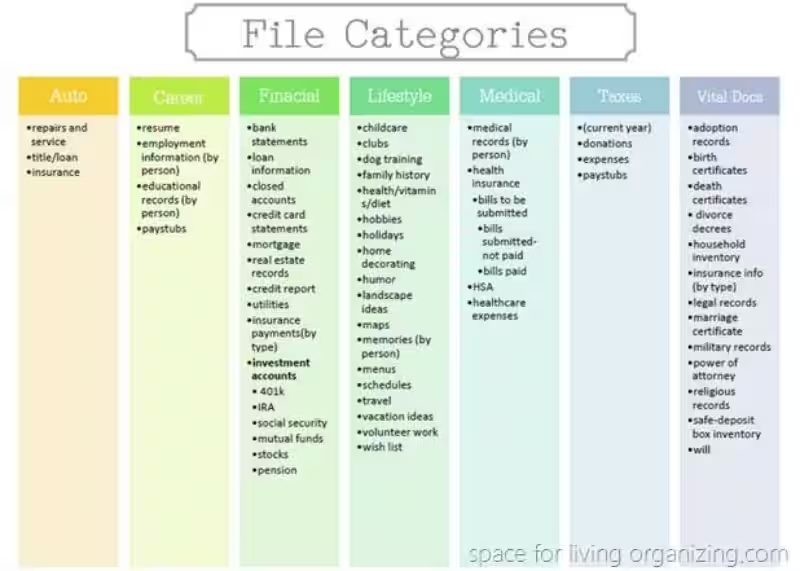
Office organization can be approached functionally (project-based) or by item type (pens, files, technology items, mailing supplies). Consider utilizing separate systems for paper organization, perhaps employing a filing system or other robust methods.
Garage organization depends heavily on your garage's use. Create zones for different activities: sports equipment, tools, car maintenance items, seasonal decorations, gardening supplies, etc.
How can I organize my bathroom effectively?
The bathroom can be organized functionally (hair care, skincare, body care) and by item type (towels, toiletries, medications). This helps optimize space and streamline daily routines.
What about items that don't fit neatly into other categories?
For miscellaneous items like pet supplies, cleaning products, craft supplies, or home decor, create broad, overarching categories to keep them organized and easily accessible.
Is this method flexible?
Absolutely! The "like with like" method is not a rigid system. It's a guideline to help you create a personalized organization system that works best for your specific needs and lifestyle. Experiment and adjust as needed.
Do I need to buy special containers?
While containers can be helpful, they are not essential. The core of this method is about thoughtful categorization, not the specific tools you use. Focus on creating effective categories first, then consider containers to enhance your system.
How often should I review my organization system?
Periodically review your categories and adjust as needed. Your needs and habits may change over time, so regular review ensures your system remains efficient and effective. A seasonal review (every 3-6 months) is a good starting point.
What if I have a small space?
The "like with like" method is equally effective in small spaces. Careful categorization ensures you maximize the space you have. Vertical storage and multi-functional furniture can also help.
Can I apply this method to digital organization?
Yes! The principles of "like with like" apply to digital files as well. Create folders and subfolders based on the type or function of your digital documents.
What if I'm overwhelmed by the amount of stuff I have?
Start small, focusing on one area at a time. Don't try to tackle everything at once. Tackling one room or even one drawer can be a satisfying start. Gradually expand your organization efforts.
This FAQ provides a comprehensive overview of the “like with like” organizing method. Remember, the key is to create a system that works for you, not a system that you force yourself to work for.