Understanding K3Fe(CN)6: Applications and Safety of Potassium Ferricyanide
Understanding K3Fe(CN)6: Applications and Safety of Potassium Ferricyanide
Potassium ferricyanide, also known as K3Fe(CN)6, is a fascinating chemical compound with a wide range of applications across various scientific and industrial fields. Its bright red color and unique chemical properties make it a valuable reagent in diverse processes, from photography to analytical chemistry. However, understanding its properties and handling precautions is crucial for safe and effective use.
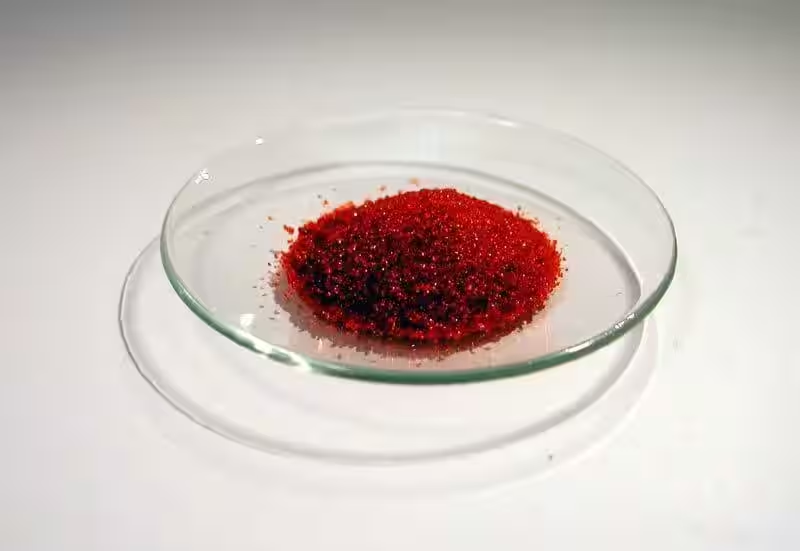
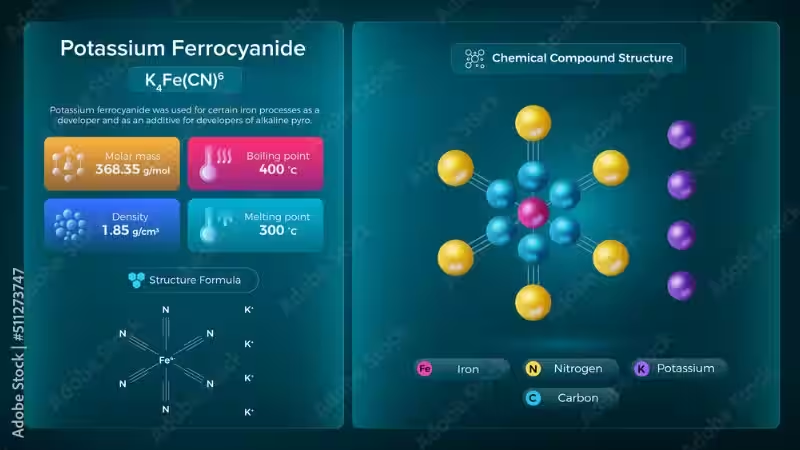
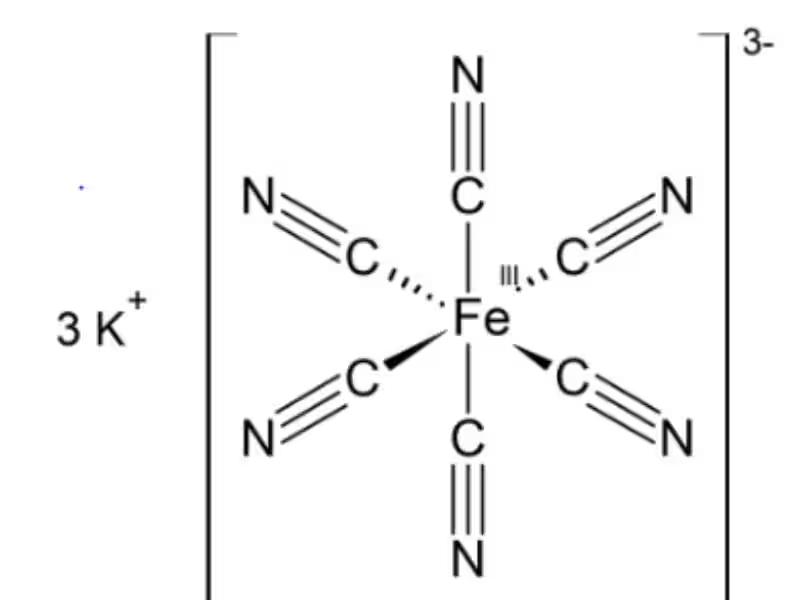
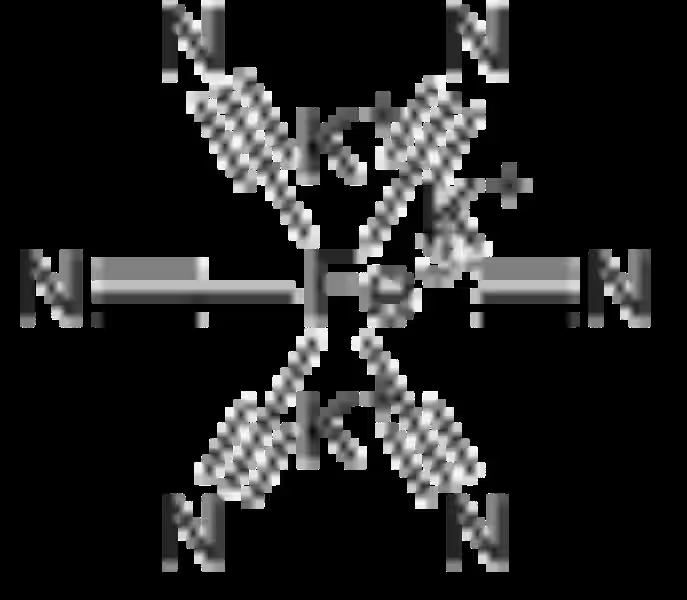
Potassium ferricyanide is a bright red, water-soluble salt characterized by the presence of the octahedrally coordinated [Fe(CN)₆]³⁻ ion. Its solutions exhibit a noteworthy green-yellow fluorescence, a characteristic that has found use in certain specialized applications.
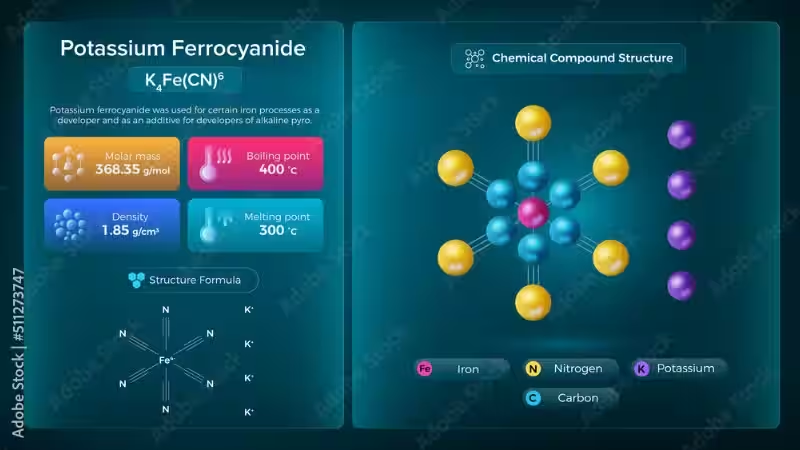
The synthesis of K3Fe(CN)6 typically involves the chlorination of potassium ferrocyanide (K₄[Fe(CN)₆]). This reaction, discovered long ago, offers an efficient pathway to produce this important compound. The chemical equation for this process is:
2 K₄[Fe(CN)₆] + Cl₂ → 2 K₃[Fe(CN)₆] + 2 KCl
In its solid state, potassium ferricyanide displays a complex polymeric structure. This structure features K⁺ ions cross-linking the [Fe(CN)₆]³⁻ octahedra, creating a three-dimensional network. Interestingly, these cross-links break upon dissolving the compound in water, resulting in the formation of free ions in solution. This change in structure upon dissolution influences its behavior in various applications.
Industrial and Chemical Applications of K3Fe(CN)6
The versatility of K3Fe(CN)6 is evident in its diverse industrial applications. It plays a vital role in:
Metallurgy: Hardening iron and steel.
Electroplating: Contributing to the deposition of metals onto surfaces.
Dyeing: Used as a dye for wool and other textiles.
Beyond these applications, K3Fe(CN)6 is a valuable reagent in organic chemistry. Its mild oxidizing properties make it suitable for various reactions; a notable example is its use in Sharpless dihydroxylations, where it acts as an essential catalyst regenerator. This ability to facilitate catalytic cycles highlights its importance in efficient and selective organic synthesis.
Potassium ferricyanide has a long and significant history in photography, particularly in:
Cyanotype (Blueprint) Process: A crucial component in creating the classic blue prints.
Photographic Toning: Used in various toning techniques to modify the color and appearance of photographs.
Density Reduction: As a mild bleach solution (typically 10 g/L), it reduces the density of film or prints, allowing for adjustments in contrast and overall image appearance.
Farmer's Reducer: Used in conjunction with sodium thiosulfate, it forms a solution which enables precise control over negative or print density in black-and-white photography.
Color Lithography: Plays a crucial role in dot etching, a manual color correction technique.
While historically used extensively in bleaching color negatives and positives, the risk of releasing toxic hydrogen cyanide gas under acidic conditions has led to the adoption of safer alternatives like ferric EDTA.
Analytical and Biological Applications of K3Fe(CN)6
The analytical power of K3Fe(CN)6 is undeniable. It is a key component in:
Ferroxyl Indicator Solution: Used to detect Fe²⁺ ions through the formation of Prussian blue, allowing for quantitative analysis.
Determination of Ferric Reducing Power: A valuable reagent in assessing the antioxidant capacity of samples.
Amperometric Biosensors: Acts as an electron transfer agent, often replacing oxygen in systems such as glucose oxidase-based blood glucose meters.
Physiological Studies: Increases solution redox potential, enabling the oxidation of reduced cytochrome c in experimental settings.
Metallography: A component of Murakami's etchant, used to enhance the contrast between binder and carbide phases in cemented carbides. In histology, it's used to detect ferrous iron in tissue samples via the Turnbull's blue reaction, producing a similar result to the Prussian blue reaction.
Although generally considered a low-toxicity compound, K3Fe(CN)6 requires careful handling. Its primary hazard lies in the potential for the release of highly toxic hydrogen cyanide gas (HCN) under strongly acidic conditions. This reaction however can be avoided by using concentrated sulfuric acid, which promotes different hydrolysis and dehydration products instead. Consequently, the safe use of K3Fe(CN)6 demands strict adherence to safety protocols, especially when dealing with acidic environments. Appropriate personal protective equipment (PPE), including gloves and eye protection, should always be worn. Proper ventilation is crucial to mitigate the risk of HCN exposure.
In conclusion, understanding the diverse applications and safety protocols associated with K3Fe(CN)6 is paramount for its effective and responsible use in various scientific and industrial settings. Its unique chemical properties and versatility continue to make it a valuable reagent across numerous fields.
Frequently Asked Questions about Potassium Ferricyanide (K₃[Fe(CN)₆])
What is Potassium Ferricyanide?
Potassium ferricyanide, K₃[Fe(CN)₆], is a bright red, water-soluble salt. It contains the [Fe(CN)₆]³⁻ ion, where iron is octahedrally coordinated to six cyanide ligands. Its solutions exhibit a green-yellow fluorescence. In solid form, it has a complex polymeric structure, but this breaks down into individual ions when dissolved in water.
How is Potassium Ferricyanide Produced?
It's produced industrially by chlorinating potassium ferrocyanide: 2 K₄[Fe(CN)₆] + Cl₂ → 2 K₃[Fe(CN)₆] + 2 KCl.
What are the Industrial Applications of Potassium Ferricyanide?
Potassium ferricyanide has several industrial uses. It's used in hardening iron and steel, in electroplating processes, and as a dye for wool. Its mild oxidizing properties make it valuable in various industrial chemical processes.
What are the Applications of Potassium Ferricyanide in Photography?
It plays a crucial role in cyanotype (blueprint) processes and various photographic toning techniques. As a mild bleach, a 10g/L solution can reduce film or print density. It's a component of Farmer's reducer (with sodium thiosulfate) for adjusting negative or print density in black-and-white photography and is used in color lithography for dot etching. Historically used in bleaching color negatives and positives, safer alternatives are now preferred.
What are the Analytical Applications of Potassium Ferricyanide?
Potassium ferricyanide is a key component of ferroxyl indicator solution for detecting Fe²⁺ ions (forming Prussian blue), enabling quantitative analysis. It's used to determine the ferric reducing power (antioxidant capacity) of samples and acts as an electron transfer agent in amperometric biosensors (e.g., glucose meters). In physiology, it increases solution redox potential, oxidizing reduced cytochrome c. In metallography, it's part of Murakami's etchant for contrasting phases in cemented carbides.
What are the Applications of Potassium Ferricyanide in Histology?
In histology, it's used with acids to detect ferrous iron in biological tissue, producing Prussian blue via the Turnbull's blue reaction (which produces the same compound as the Prussian blue reaction using potassium ferrocyanide and ferric salts).
What are the Safety Precautions when Handling Potassium Ferricyanide?
While generally of low toxicity (mainly a mild skin and eye irritant), caution is necessary. Under strongly acidic conditions, it reacts to produce highly toxic hydrogen cyanide gas (HCN). This reaction is avoided with concentrated sulfuric acid, leading to different hydrolysis and dehydration products. Always handle with appropriate safety precautions, especially in acidic environments.

![Understanding K₃[Fe(CN)₆]: Properties, Applications, and Safety of Potassium Ferricyanide](https://laboraprevencion.com/en/wp-content/uploads/k3-fe-cn-6.avif "Understanding K₃[Fe(CN)₆]: Properties, Applications, and Safety of Potassium Ferricyanide")