Understanding Your Temp Work Contract: A Comprehensive Guide
Understanding Your Temp Work Contract: A Comprehensive Guide
Finding the right employee for a short-term project or during a busy period can be a challenge. A temp work contract offers a solution, providing flexibility for both employer and employee. But navigating the legal nuances and practicalities of these contracts can be tricky. This guide will help you understand the key aspects of temp work contracts, ensuring you're well-informed and protected.
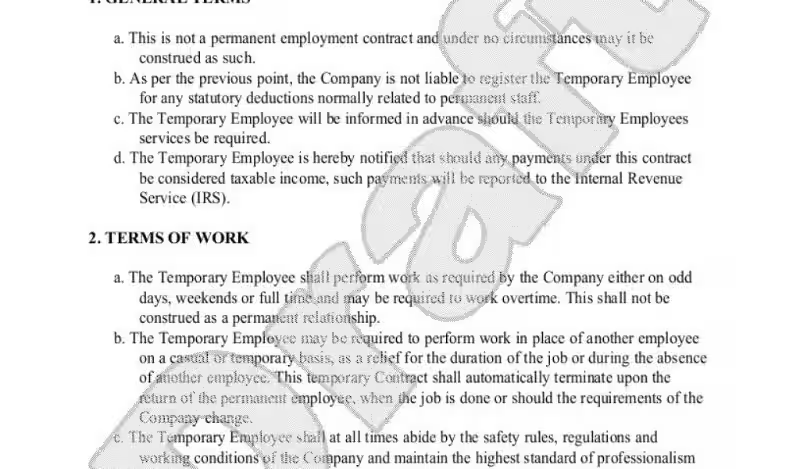
A temp work contract, also known as a temporary employment contract, is a legally binding agreement between an employer and a temporary employee. It outlines the terms and conditions of employment for a defined period, typically shorter than a permanent contract. These contracts offer a flexible solution for businesses with fluctuating workloads or specific, short-term needs. They offer a chance to test a potential employee's skillset before making a permanent hiring decision.
The duration of a temp work contract can vary greatly, from a few days to several months. The specifics are detailed within the contract itself and are crucial for both parties to understand before signing. It's equally important to understand the difference between a temp employee and an independent contractor, as this distinction significantly impacts legal responsibilities and tax implications.
Temp Employees vs. Independent Contractors: Key Differences
The distinction between a temporary employee and an independent contractor is crucial and often legally significant. Misclassifying a worker can lead to hefty fines and legal battles. Here's a breakdown of the key differences:
Employee Status and Legal Obligations
Temporary Employees: These individuals are considered employees of the company, either directly or through a staffing agency. The employer is responsible for withholding taxes, providing a W-2 form at the end of the year, and potentially offering employee benefits. They are subject to the Fair Labor Standards Act (FLSA) and other employment laws.
Independent Contractors: These individuals are self-employed and operate as separate business entities. They receive payments and are responsible for their own taxes. The employer issues a 1099-NEC form if payments exceed $600. The employer has less control over their work schedule and methods than with a temporary employee.
Control and Work Relationship
Control over work: This is a key factor in determining worker classification. Employers exert significant control over the "how" and "when" of temporary employee work, whereas with independent contractors, the focus is on the "what" – the final deliverable.
Employer-Employee vs. Business-to-Business Relationship: Temporary employees have a traditional employer-employee relationship, while independent contractors operate on a business-to-business basis. This difference influences numerous aspects, including liability, benefits, and tax obligations.
Benefits and Compensation Structures
Benefits: Temporary employees might receive some employee benefits, depending on the company's policies and the length of the contract. Independent contractors generally don't receive benefits.
Compensation: Temporary employees are typically paid hourly, while independent contractors may be paid hourly, by project, or via a flat fee.
Essential Clauses in a Temp Work Contract
A well-drafted temp work contract protects both the employer and the employee. Here are some essential clauses to include:
Job Description: A clear and concise description of the responsibilities and tasks.
Start and End Dates: The precise start and end dates of the contract.
Compensation and Payment Schedule: Details on hourly rate, payment frequency, and method.
Confidentiality Clause: Protecting sensitive company information.
Intellectual Property Rights: Clarifying ownership of any work created during the contract period.
Termination Clause: Conditions under which the contract can be terminated by either party.
Governing Law: Specifying which state's laws govern the contract.
Dispute Resolution: A mechanism for resolving any disagreements.
Failure to include these crucial elements can lead to ambiguity and potential disputes later on. Consult with legal counsel to ensure your contract is comprehensive and legally sound.
Navigating the Legal Landscape of Temp Work Contracts
The legal aspects of temp work contracts are complex and vary by state. Several legal tests are used to determine worker classification, including:
The Fair Labor Standards Act (FLSA): This federal law defines the criteria for classifying workers as employees or independent contractors.
The IRS Common Law Test: This test examines factors like behavioral control, financial control, and the relationship between the parties.
State-Specific Tests: Some states, like California, have their own tests (e.g., the ABC test), which are often more stringent than federal laws.
It's vital to understand these legal tests and ensure your classification accurately reflects the worker's status to avoid potential legal repercussions.
The Benefits and Drawbacks of Using Temp Work Contracts
Utilizing temp work contracts offers several advantages:
Flexibility: Easily adjust staffing levels to meet fluctuating demands.
Cost-effectiveness: Lower costs compared to permanent hires, especially considering benefits.
Access to Specialized Skills: Quickly obtain expertise for specific projects.
Trial Period: Evaluate potential employees before offering permanent positions.
Careful planning and management are crucial to maximize the benefits and mitigate the drawbacks of using temporary employees.
Leveraging Technology for Effective Temp Work Contract Management
As an organization grows, managing numerous temp work contracts can become challenging. Contract management software can streamline the process significantly by:
Centralized Storage: Store all contracts in one secure location.
Automated Reminders: Receive automated alerts for renewals, payments, and other critical dates.
Improved Efficiency: Reduce administrative errors and save time.
Enhanced Compliance: Ensure compliance with legal regulations.
Investing in contract management software is a strategic move for organizations relying heavily on temporary staff, providing a more efficient and less error-prone system. The use of such software can considerably reduce the administrative burden associated with managing a multitude of temp work contracts.
In conclusion, temp work contracts are a valuable tool for businesses needing flexible staffing solutions. However, understanding the legal implications, defining clear contract terms, and leveraging technology for efficient management are critical for success. Remember to always seek professional advice when navigating the complexities of temp work contracts to ensure compliance and avoid potential legal issues.
What is a temp work contract?
A temp work contract is a legally binding agreement between an employer and a temporary employee. It outlines the terms of employment for a specific period, typically shorter than a permanent position. This type of contract provides flexibility for both parties, allowing employers to address short-term needs and employees to gain experience or supplemental income. It differs from a contract with an independent contractor, primarily in the employer-employee relationship and the associated legal and tax obligations.
What are the key differences between a temporary employee and an independent contractor?
The main distinction lies in the nature of the working relationship. Temporary employees are considered employees, either directly hired or through a staffing agency, subject to the employer's control regarding "how" and "when" the work is done. Independent contractors, on the other hand, are self-employed, operating as separate business entities. The employer generally dictates the "what" (the final product) for a contractor, but not the "how" or "when." This difference significantly impacts tax obligations (W-2 vs. 1099-NEC), benefits eligibility, and legal protections. Misclassifying a worker can lead to serious legal and financial repercussions.
What are the typical terms included in a temp work contract?
A comprehensive temp work contract should include:
Job description: A detailed outline of responsibilities and tasks.
Start and end dates: The specific timeframe of the employment.
Compensation: Hourly rate, payment schedule, and any applicable bonuses or incentives.
Benefits (if any): Details of any benefits provided, such as health insurance or paid time off. Temporary employees may or may not receive benefits, unlike permanent employees.
Confidentiality clauses: Protecting sensitive business information.
Intellectual property rights: Clarifying ownership of any work created during the contract period.
Termination clause: Specifies the conditions under which the contract can be terminated by either party.
Dispute resolution: Outlines the process for resolving any conflicts that may arise.
What are the advantages and disadvantages of using temp workers?
Advantages:
Flexibility: Easily adjust workforce to meet fluctuating demands.
Cost-effectiveness: Reduced overhead costs compared to permanent employees (fewer benefits).
Access to specialized skills: Quickly acquire expertise for short-term projects.
Trial period: Assess potential employees before offering permanent positions.
Disadvantages:
Training costs: Time and resources required to train temporary staff.
Potential for lower loyalty: Temporary workers may be less committed than permanent employees.
Potential for decreased morale: Permanent staff may feel undervalued if heavily reliant on temporary workers.
Administrative overhead: Managing multiple short-term contracts can be administratively burdensome.
How can I ensure I am correctly classifying workers as temporary employees or independent contractors?
Correct classification is crucial to avoid legal and financial penalties. Several legal tests exist, including the Fair Labor Standards Act (FLSA), the IRS Common Law Test, and state-specific tests (like California's ABC test). The "economic realities" test, used by the Department of Labor, considers factors like the degree of control exerted by the employer, the worker's opportunity for profit or loss, and the worker's investment in the business. The level of control the hiring entity maintains over the work is a key factor. If unsure, always consult with legal and tax professionals to ensure compliance with all applicable laws and regulations. Maintaining detailed records of your classification rationale is also vital for legal protection. Remember that state and local laws can further influence worker classification.