Understanding Sodium Formate: A Versatile Chemical Compound
Understanding Sodium Formate: A Versatile Chemical Compound
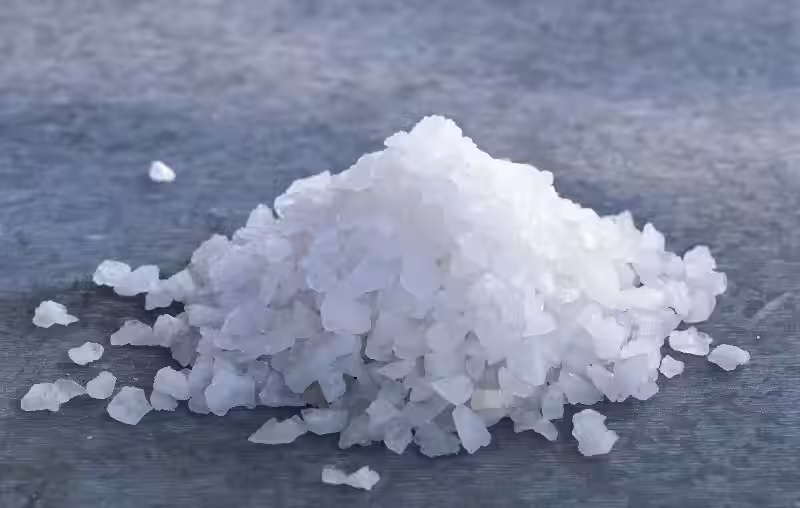
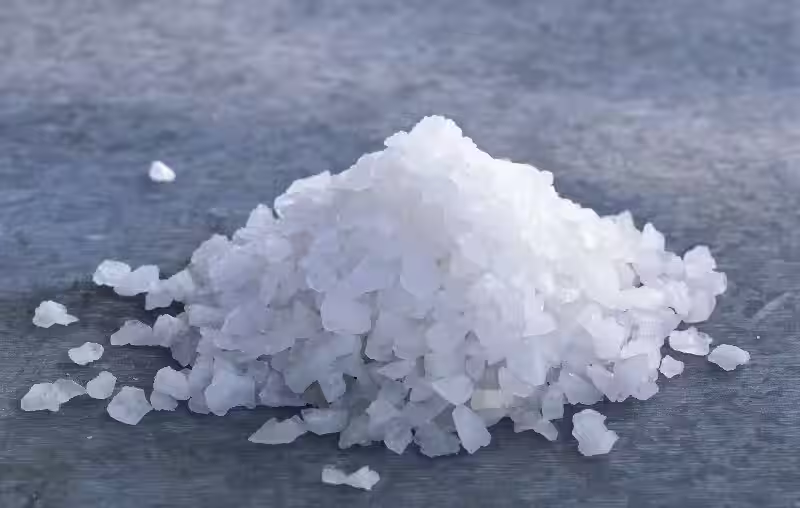
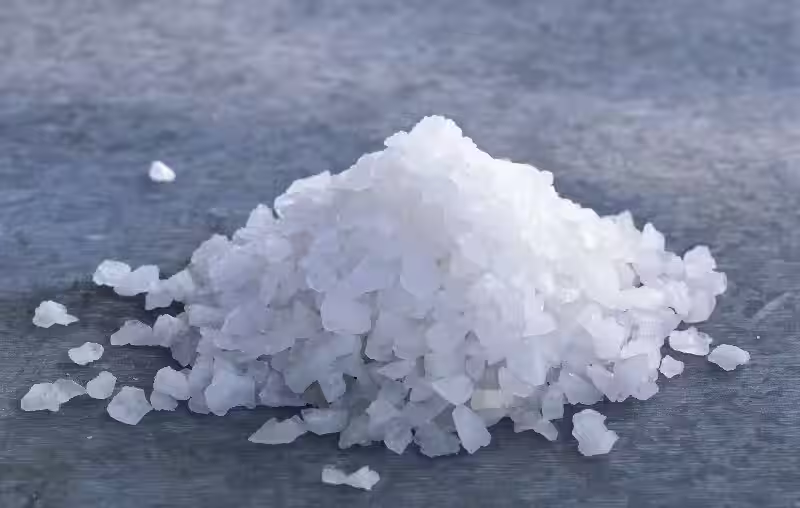
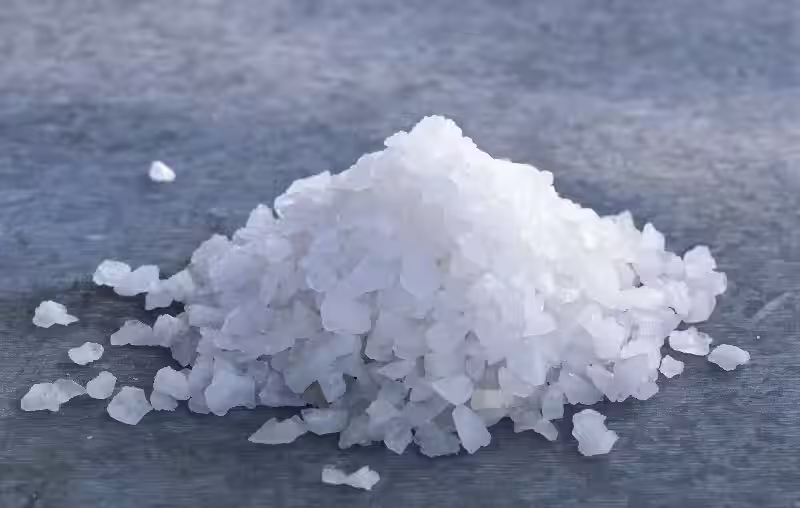
Sodium formate, with the chemical formula HCOONa, is a fascinating chemical compound with a surprisingly wide range of applications. This white, crystalline powder, often appearing as a deliquescent substance (meaning it readily absorbs moisture from the air), plays a crucial role in various industries, from de-icing to preserving protein crystals. Let's delve deeper into its properties, production methods, and diverse uses.
Sodium formate's commercial production primarily relies on two methods. The first involves the high-pressure absorption of carbon monoxide into solid sodium hydroxide at elevated temperatures (around 130°C and 6-8 bar). This process requires specialized equipment and careful control of reaction parameters.
The second, and often preferred method, utilizes the neutralization of formic acid with sodium hydroxide. This approach is particularly attractive because sodium hydroxide is a readily available byproduct of methanol carbonylation, a widely used industrial process. This makes the production more cost-effective and sustainable.
Beyond industrial-scale production, sodium formate can also be synthesized in a laboratory setting through several methods. These include the neutralization of formic acid with sodium carbonate, the reaction of chloroform with alcoholic sodium hydroxide, or the reaction of sodium hydroxide with chloral hydrate. The latter is often preferred due to the relatively easier separation of chloroform from the resulting sodium formate solution.
Sodium formate crystallizes in a monoclinic system and exhibits several key properties. In aqueous solution, it acts as a weak base due to the hydrolysis of the formate ion, leading to the formation of formic acid and hydroxide ions. This weak basicity is exploited in its use as a buffering agent. Upon heating, sodium formate decomposes in a two-step process, first forming sodium oxalate and hydrogen, and then, at higher temperatures, sodium carbonate and carbon monoxide.
Key Physical and Chemical Characteristics Summary:
Appearance: White, crystalline powder
Solubility: Highly soluble in water
Hygroscopic: Absorbs moisture from the air
Weak base: Hydrolyzes in water, forming formic acid and hydroxide ions
Thermal Decomposition: Decomposes upon heating to sodium oxalate, hydrogen, sodium carbonate, and carbon monoxide.
Applications of Sodium Formate Across Industries
The versatility of sodium formate stems from its unique chemical properties, making it valuable across a multitude of industries.
De-icing and Antifreeze Applications
One of the most significant applications of sodium formate is as a de-icing agent, particularly for airport runways and roads. Its effectiveness comes from its ability to lower the freezing point of water significantly, surpassing that of urea while being more environmentally benign due to its biodegradability. Formulated with corrosion inhibitors and other additives, sodium formate solutions efficiently remove ice, even at temperatures well below -15°C. The de-icing effect can be further enhanced by combining it with potassium formate or acetate solutions. Its low chemical oxygen demand (COD) compared to other de-icers further reinforces its environmental benefits.
In the textile industry, sodium formate plays a vital role in dyeing and printing processes. It acts as a buffering agent, maintaining a stable pH during dyeing, which ensures consistent color and prevents damage to the fabric fibers. It also serves as a reducing agent in some dyeing processes, assisting in the reduction of certain dyes to achieve the desired shades.
Food Industry Applications
Sodium formate is also used as a food preservative (E237), helping to inhibit microbial growth and extend the shelf life of certain food products. Its use is strictly regulated and adheres to specific guidelines concerning permitted concentrations.
Other Notable Applications
Structural Biology: Sodium formate serves as a cryoprotectant, preserving protein crystals during X-ray diffraction experiments, crucial for determining protein structures.
Chemical Industry: It's a key intermediate in the synthesis of formic acid, reacting with sulfuric acid to produce formic acid and sodium sulfate.
Oil and Gas Industry: Saturated sodium formate solutions, often mixed with other alkali metal formates, are used as high-density drilling and stabilizing fluids in oil and gas wells. Their high density allows for controlling fluid density without resorting to less environmentally friendly solid fillers. In concentrated forms, they exhibit biocidal properties, but are readily biodegradable upon dilution, enabling recovery and recycling at drilling sites.
Leather Industry: Used in tanning processes to neutralize acids and improve the quality and durability of leather.
Environmental Considerations
Compared to many other similar chemicals used in de-icing or industrial processes, sodium formate presents a significant environmental advantage. Its biodegradability minimizes its negative impact on ecosystems, unlike some harsh salts. While concentrated solutions can exhibit some toxicity, diluted concentrations are easily biodegradable. This makes sodium formate a more environmentally responsible choice in many applications.
Sodium formate, a seemingly simple chemical compound, displays remarkable versatility across various industries. Its unique properties, combined with its relatively low environmental impact, make it a valuable and increasingly important substance in modern chemical processes and applications. Its future usage will likely expand as research continues to uncover new and innovative applications for this remarkable chemical.
Frequently Asked Questions about Sodium Formate (HCOONa)
What is sodium formate?
Sodium formate (HCOONa) is the sodium salt of formic acid. It's a white, deliquescent (moisture-absorbing) powder with a wide range of applications. It's commercially produced primarily by absorbing carbon monoxide under pressure in sodium hydroxide, or by neutralizing formic acid with sodium hydroxide.
How is sodium formate produced?
The primary commercial method involves reacting carbon monoxide with solid sodium hydroxide under high pressure and temperature. Alternatively, it can be produced by neutralizing formic acid with sodium hydroxide, a byproduct of methanol carbonylation. Laboratory synthesis methods include neutralizing formic acid with sodium carbonate, reacting chloroform with alcoholic sodium hydroxide, or reacting sodium hydroxide with chloral hydrate.
What are the physical properties of sodium formate?
Sodium formate is a white crystalline powder that crystallizes in a monoclinic system. It is readily soluble in water and exhibits hygroscopic properties (absorbs moisture from the air). Upon heating, it decomposes, first to sodium oxalate and hydrogen, and then to sodium carbonate and carbon monoxide. In aqueous solution, it acts as a weak base.
How does sodium formate behave in aqueous solution?
In water, sodium formate acts as a weak base due to the hydrolysis of the formate ion, producing formic acid and hydroxide ions. This weak basicity allows its use in buffer solutions to control pH.
What are the environmental implications of sodium formate?
Sodium formate exhibits low toxicity to some bacteria but is biodegradable by others, making it environmentally preferable to some other de-icing agents. It has a low chemical oxygen demand (COD) compared to many alternatives.
What are the main applications of sodium formate?
Sodium formate has diverse applications, including:
De-icing: Its high freezing point depression makes it effective for de-icing runways and roads.
Textile industry: Used in dyeing and printing processes as a buffering agent and reducing agent.
Food additive (E237): Acts as a preservative.
Cryoprotectant: Preserves protein crystals during X-ray diffraction experiments.
Chemical intermediate: Used in the synthesis of formic acid.
Oil and gas industry: Used in high-density drilling fluids.
Buffering agent: Raises the pH of strong acids.
How is sodium formate used as a de-icing agent?
Sodium formate's effectiveness as a de-icer comes from its ability to lower the freezing point of water more effectively than many other agents, while being less corrosive and more environmentally friendly. Mixtures with corrosion inhibitors and other additives improve performance at low temperatures.
What is the role of sodium formate in the textile industry?
In the textile industry, it acts as a buffering agent to maintain a stable pH during dyeing, and as a reducing agent to aid in dye reduction processes thereby ensuring consistent color and preventing fabric damage.
Is sodium formate safe?
Sodium formate exhibits low toxicity compared to some other salts. However, like any chemical, appropriate handling and safety precautions are necessary. Refer to the Safety Data Sheet (SDS) for detailed information.
How is sodium formate used in the oil and gas industry?
Saturated sodium formate solutions, often mixed with other alkali metal formates, are used as high-density drilling fluids. Their high density helps control fluid density in wells, replacing less environmentally friendly solid fillers.
Is sodium formate biodegradable?
Yes, sodium formate is biodegradable, making it a more environmentally friendly alternative to some other chemicals used in similar applications. Biodegradability varies depending on conditions and microbial populations.
What is the role of sodium formate in structural biology?
Sodium formate acts as a cryoprotectant, protecting protein crystals from damage during the freezing process required for X-ray diffraction studies.
How does sodium formate compare to other de-icing agents?
Sodium formate offers environmental advantages over many other de-icing agents due to its biodegradability and lower corrosiveness. While its cost may be higher, the environmental benefits often outweigh this consideration.
Can sodium formate be recycled?
In some applications, such as in the oil and gas industry, diluted sodium formate solutions can be recovered and recycled.
What are the decomposition products of sodium formate?
Upon heating, sodium formate decomposes, initially forming sodium oxalate and hydrogen gas. At higher temperatures, it further decomposes into sodium carbonate and carbon monoxide.
What is the chemical formula for sodium formate?
The chemical formula for sodium formate is HCOONa.
Does sodium formate have any food applications?
Yes, sodium formate is used as a food preservative (E237) in some countries, subject to regulatory approvals and usage limitations.
What is the toxicity of sodium formate?
Sodium formate exhibits relatively low toxicity, but as with any chemical, appropriate safety precautions should be taken. Consult the relevant SDS for detailed information.