Understanding Sodium Tetrahydroborate: A Versatile Reducing Agent
Understanding Sodium Tetrahydroborate: A Versatile Reducing Agent
Sodium tetrahydroborate, also known as sodium borohydride (NaBH₄), is a fascinating chemical compound with a wide range of applications across various industries. Its unique properties and reactivity make it a cornerstone in organic synthesis and beyond. This article will explore the properties, synthesis, reactivity, and applications of this important chemical, offering a comprehensive overview for both students and professionals.
Properties and Structure of Sodium Tetrahydroborate
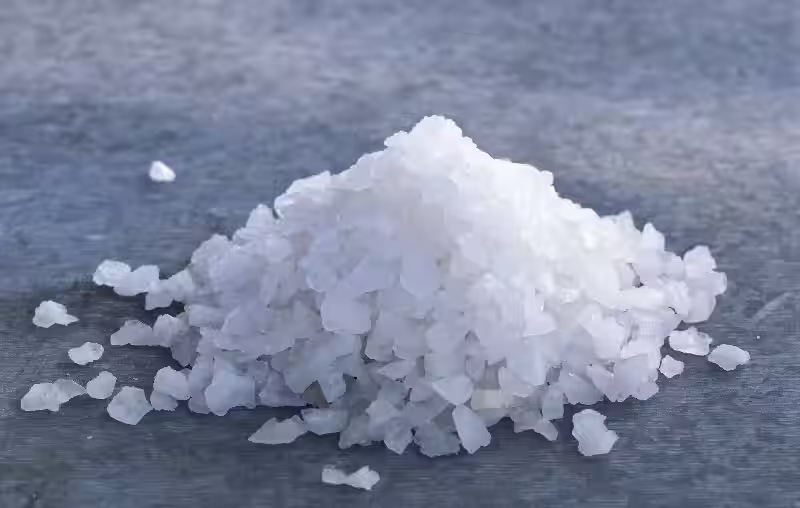
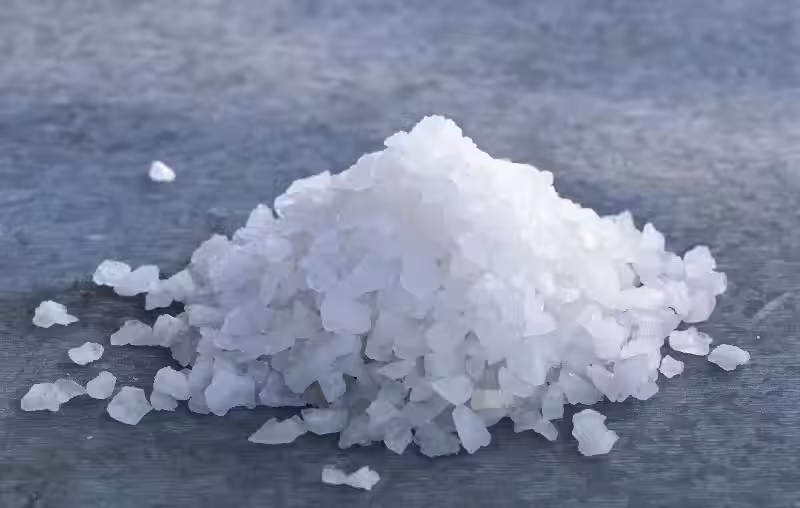
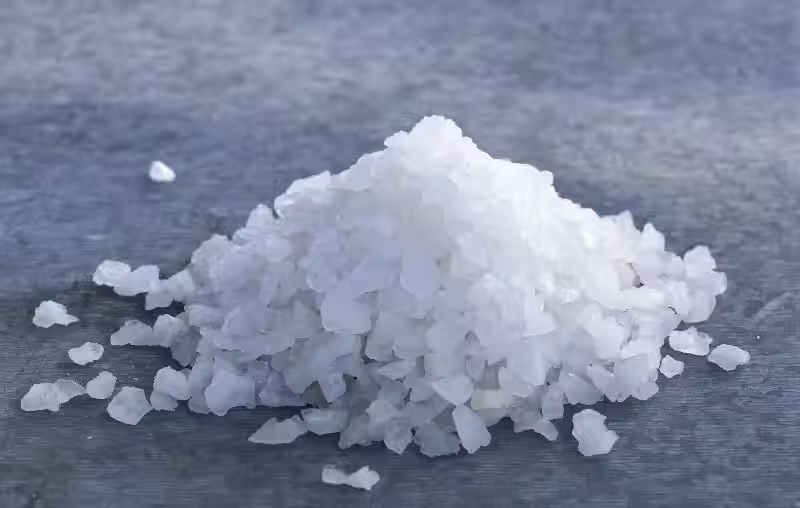
Sodium tetrahydroborate is a white, crystalline, inorganic compound that exists in three main polymorphs (α, β, and γ), each with a slightly different crystal structure dependent on the pressure under which it is formed. These structural differences can subtly influence its reactivity.
The key structural feature of NaBH₄ is the tetrahedral [BH₄]⁻ anion. This anion is the active reducing species and is responsible for its characteristic reactivity. The relatively high hydride ion (H⁻) concentration within the tetrahedral structure makes it a powerful reducing agent, despite being milder than alternatives such as lithium aluminum hydride. Its solubility varies depending on the solvent; it is soluble in some alcohols and ethers, but also slightly soluble in water, though it reacts in water to produce hydrogen, a characteristic that needs careful consideration when working with this compound.
Synthesis of Sodium Tetrahydroborate
Industrial production of sodium tetrahydroborate relies primarily on two main methods: the Brown-Schlesinger process and the Bayer process. Both methods result in the production of millions of kilograms annually, highlighting the vast scale of its industrial importance.
The Brown-Schlesinger process is the more commonly used industrial route. It involves reacting sodium hydride (NaH) and trimethyl borate ((CH₃O)₃B) under specific conditions. The Bayer process, on the other hand, uses readily available inorganic borates such as borax as starting materials, offering an alternative route for production. Understanding these synthesis methods gives insight into the cost-effectiveness and scalability of NaBH₄ production.
Reactivity and Applications of Sodium Tetrahydroborate
The primary application of sodium tetrahydroborate is in organic chemistry as a selective reducing agent. It efficiently reduces a variety of carbonyl compounds, including aldehydes and ketones, converting them into their corresponding alcohols. This reduction is remarkably selective; it generally does not reduce esters, carboxylic acids, or amides under typical reaction conditions.
This selectivity is a crucial aspect of its value in organic synthesis, allowing chemists to perform reductions in complex molecules without affecting other functional groups. The mechanism of reduction is complex, involving hydrogen bonding and an open transition state. It's not a simple four- or six-membered ring transition state as sometimes depicted, but rather a more sophisticated interaction. The addition of reagents like cerium chloride (Luche reduction) can further enhance the selectivity of the reduction.
Specific Applications in Various Industries
Beyond organic synthesis, sodium tetrahydroborate finds practical applications in a number of industrial settings:
Paper and Dye Industries: It plays a significant role in the production of sodium dithionite, a crucial bleaching agent used in the paper and textile industries. This contributes to the production of high-quality paper and vibrant textiles.
Pharmaceutical Industry: Sodium tetrahydroborate is used in the synthesis of various pharmaceuticals, including several antibiotics (chloramphenicol, dihydrostreptomycin, and thiophenicol), steroids, and vitamin A.
Hydrogen Storage: While the use of sodium tetrahydroborate for hydrogen storage remains largely in the research and development phase, it shows promising potential. Its high hydrogen content and relative stability make it an attractive candidate. However, the current lack of a cost-effective method for recycling the sodium metaborate byproduct (from hydrolysis) has been a significant hurdle. Recent advancements, particularly in the realm of nanostructures, are showing promise in addressing this challenge.
Document Restoration: Conservators utilize sodium tetrahydroborate to gently reduce foxing, the unsightly brown spots that mar aged documents, preserving historical artifacts for future generations.
Derivatives and Modifications of Sodium Tetrahydroborate
The versatility of sodium tetrahydroborate is further enhanced by the existence of numerous derivatives. These derivatives offer modified reactivity, allowing for fine-tuning of the reduction process to suit specific synthetic needs.
Some notable examples include sodium triacetoxyborohydride (a milder reducing agent), sodium triethylborohydride (a stronger reducing agent), and sodium cyanoborohydride (used in reductive aminations). Other related compounds, such as lithium borohydride and lithium aluminum hydride (LiAlH₄), possess even stronger reducing capabilities. The careful selection of the appropriate derivative is vital for achieving the desired outcome in a given chemical reaction.
Safety Considerations When Handling Sodium Tetrahydroborate
While sodium tetrahydroborate is generally considered less hazardous than other strong reducing agents like lithium aluminum hydride, it's essential to handle it with care. It can react vigorously with strong acids and oxidizing agents, potentially generating flammable hydrogen gas. Proper personal protective equipment (PPE) must be used, and reactions should be conducted in well-ventilated areas to mitigate the risk of fire or explosion. Understanding the reactivity and safety protocols is paramount for safe and effective use of this compound.
In conclusion, sodium tetrahydroborate is a powerful and versatile reducing agent with a wide array of applications across numerous fields. The compound's unique properties and the availability of various derivatives offer chemists and industrial users considerable flexibility in its application. While challenges remain in certain areas—like hydrogen storage—the continued research and development surrounding this important compound ensure its continued relevance in both academic and industrial settings.
Frequently Asked Questions about Sodium Tetrahydroborate (NaBH₄)
What is sodium tetrahydroborate (NaBH₄)?
Sodium tetrahydroborate, also known as sodium borohydride, is a white crystalline inorganic compound primarily used as a reducing agent in various industrial and chemical applications. It's a valuable reagent in organic chemistry due to its selective reduction capabilities.
What are the key properties of NaBH₄?
NaBH₄ is a white to gray-white, odorless powder that's soluble in certain alcohols, ethers, and water. However, it slowly hydrolyzes (reacts with water). It exists in three polymorphs (α, β, and γ) with different structures depending on the pressure. Its structure features a tetrahedral [BH₄]⁻ anion.
How is NaBH₄ synthesized?
Industrial production mainly uses the Brown-Schlesinger process, reacting sodium hydride (NaH) and trimethyl borate. The Bayer process, starting from inorganic borates like borax, provides an alternative. Both methods produce millions of kilograms annually.
NaBH₄'s primary use is in organic synthesis, selectively reducing ketones and aldehydes to alcohols. It's also effective with acyl chlorides and anhydrides. Esters require more forcing conditions, and carboxylic acids and amides are generally unreactive. It also finds use in producing sodium dithionite (a bleaching agent). Other applications include document restoration and the synthesis of some antibiotics and steroids.
How does NaBH₄ work as a reducing agent?
NaBH₄ reduces compounds through a nucleophilic attack by the hydride ion (H⁻) on the electrophilic carbon of the molecule being reduced (like a carbonyl). The mechanism is complex, involving hydrogen bonding and an open transition state, not the often-depicted ring transition states. The addition of certain compounds, like cerium chloride (Luche reduction), can modify its reactivity and selectivity.
What are some limitations of NaBH₄?
While versatile, NaBH₄ doesn't reduce esters, carboxylic acids, or amides under typical conditions. Its use in hydrogen storage is hampered by the lack of a cost-effective recycling process for the byproduct sodium metaborate, although recent nanostructured approaches show promise.
What are some derivatives of NaBH₄?
Several derivatives alter NaBH₄'s reactivity. Sodium triacetoxyborohydride is milder, sodium triethylborohydride is stronger, and sodium cyanoborohydride is milder and useful for reductive aminations. Lithium borohydride and lithium aluminum hydride are even stronger reducing agents. These derivatives allow for fine-tuning reductions for specific applications.
Is NaBH₄ safe to handle?
While generally less hazardous than some other reducing agents, NaBH₄ can react vigorously with strong acids and oxidizing agents, releasing flammable hydrogen gas. Appropriate safety precautions, including personal protective equipment and careful handling in a well-ventilated area, are crucial.
Can NaBH₄ be used for hydrogen storage?
NaBH₄'s high hydrogen content makes it promising for hydrogen storage. However, the lack of a cost-effective recycling method for the hydrolysis byproduct (sodium metaborate) currently limits large-scale adoption. Research into nanostructures is improving hydrogen storage and release under moderate conditions, offering potential for future applications.