Understanding Sodium Hexafluorosilicate: Uses, Safety, and Controversies
Understanding Sodium Hexafluorosilicate: Uses, Safety, and Controversies
Sodium hexafluorosilicate (Na₂[SiF₆]), also known as sodium fluorosilicate, is a chemical compound with a surprisingly diverse range of applications. Its unique properties, primarily its low water solubility and fluoride content, make it valuable in industries ranging from water treatment to glass manufacturing. However, its use, particularly in water fluoridation, remains a subject of ongoing debate. This article will explore the multifaceted world of sodium hexafluorosilicate, examining its properties, uses, and the controversies surrounding its application.
Properties and Production of Sodium Hexafluorosilicate
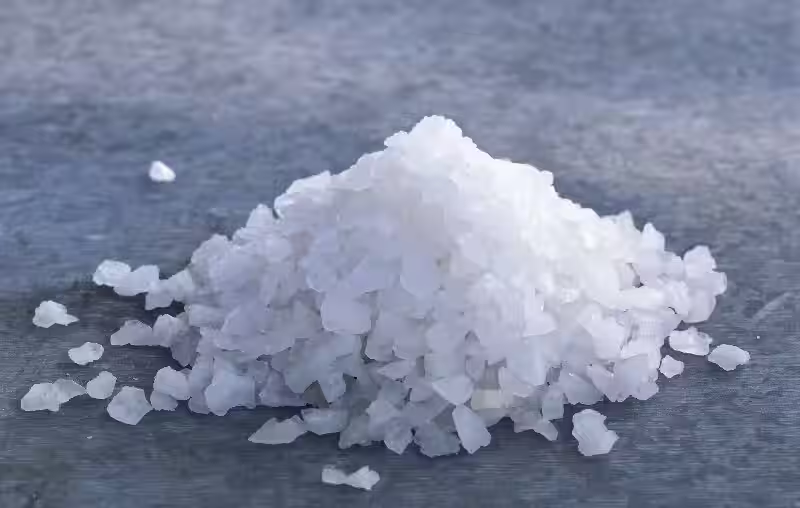
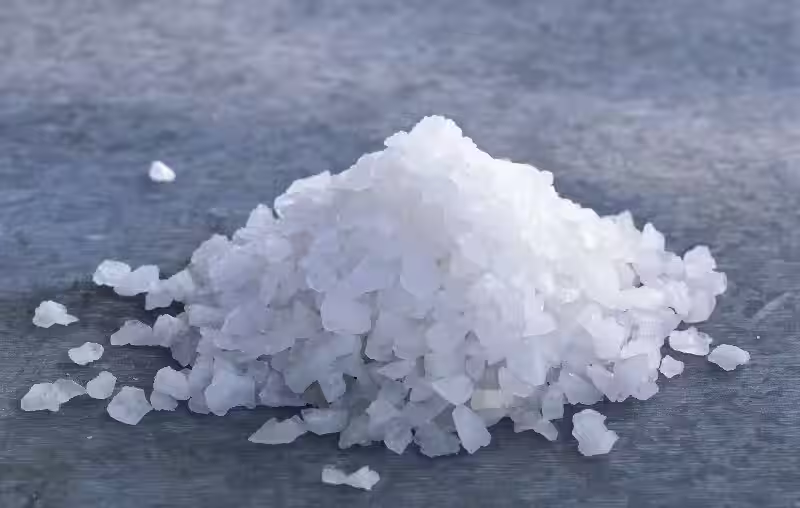
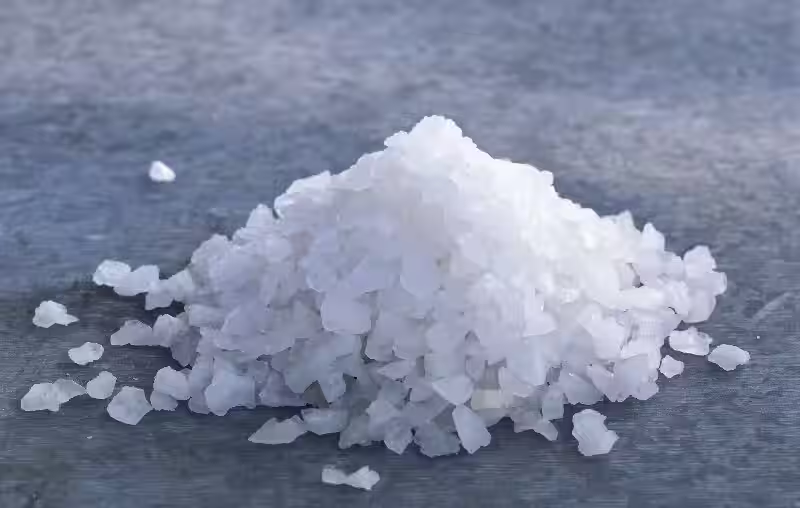
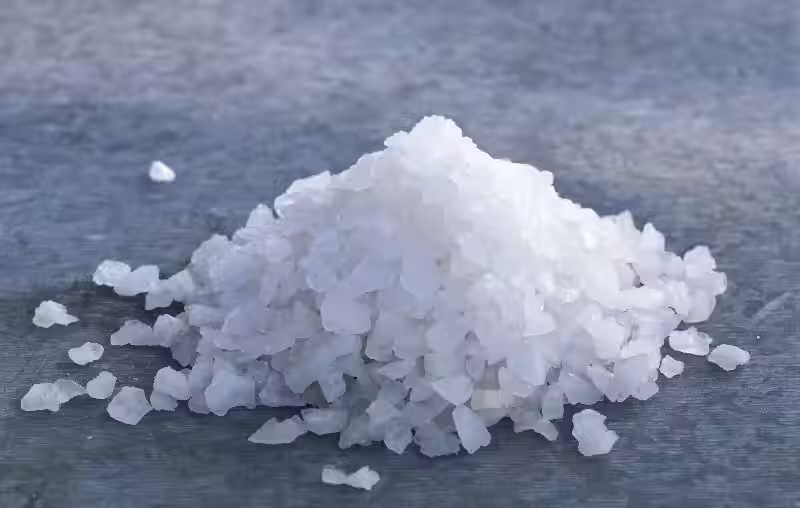
Sodium hexafluorosilicate is a white, crystalline solid. Its most notable characteristic is its relatively low solubility in water compared to other sodium salts. This low solubility is crucial to many of its applications, as it allows for controlled release of fluoride ions.
The compound is relatively stable under normal conditions but can hydrolyze in aqueous solutions, meaning it reacts with water to form other compounds. This hydrolysis process is key to understanding its behavior and applications, as it dictates how and when it releases fluoride ions. Most sodium hexafluorosilicate isn't mined as a naturally occurring mineral (malladrite is a rare exception found in volcanic areas). Instead, it's primarily manufactured synthetically. This usually involves a neutralization reaction between fluorosilicic acid (H₂[SiF₆]) and either sodium chloride (NaCl) or sodium sulfate (Na₂SO₄). The reaction with sodium chloride is shown below:
H₂[SiF₆] + 2NaCl → Na₂[SiF₆] + 2HCl
This reaction produces sodium hexafluorosilicate and hydrochloric acid, a byproduct that requires careful handling and disposal.
Applications of Sodium Hexafluorosilicate: A Diverse Range
The applications of sodium hexafluorosilicate are remarkably varied, directly linked to its unique properties.
Water Fluoridation: A Controversial Application
One of the most well-known, yet controversial, uses of sodium hexafluorosilicate is in water fluoridation. Many municipalities add this compound to drinking water to increase fluoride levels, aiming to improve public dental health by strengthening tooth enamel and reducing tooth decay.
However, this practice has sparked considerable debate. Concerns exist regarding potential adverse health effects associated with long-term exposure to fluoride, leading to ongoing scientific research and public discussion on the optimal fluoride levels and the safety of this method. The benefits and risks must be carefully weighed, considering the potential benefits for dental health against any possible negative consequences.
Industrial Applications Beyond Water Treatment
Beyond water fluoridation, sodium hexafluorosilicate plays a vital role in several industrial processes.
Opal Glass Manufacturing: It's used as a component in the production of opal glass, contributing to its characteristic translucent properties. The compound's interaction with the glass matrix influences the opacity and light scattering within the glass.
Ore Refining: In the mining industry, it’s employed in ore refining processes, particularly in the extraction of beryllium. The high temperatures involved in this process (700-750 °C) facilitate the reaction with beryl ore, enabling the efficient separation of beryllium.
Precursor in Fluoride Synthesis: It serves as a starting material for the synthesis of other fluoride chemicals, such as sodium fluoride, magnesium silicofluoride, cryolite, and aluminum fluoride. These compounds have widespread applications across diverse industries.
Ceramic Cements: Sodium hexafluorosilicate also finds niche application as a component in certain ceramic cements, enhancing some of their desirable material properties.
Safety and Environmental Considerations
The handling and use of sodium hexafluorosilicate require careful consideration of safety and environmental implications. Hydrolysis in aqueous solutions can lead to the formation of hydrofluoric acid (HF), a highly corrosive and toxic substance. Therefore, appropriate personal protective equipment (PPE), including gloves, eye protection, and respiratory protection, is crucial when handling this compound. Proper ventilation is also essential to minimize exposure to potentially harmful fumes.
Furthermore, the disposal of sodium hexafluorosilicate and its byproducts needs careful management to avoid environmental contamination, particularly of water sources and soil. Regulations regarding handling, storage, and disposal vary based on location and should be strictly followed.
Conclusion: A Versatile Compound with Ongoing Scrutiny
Sodium hexafluorosilicate, despite its low natural abundance, is a significant industrial chemical with a diverse range of applications. Its unique properties, particularly its low solubility and fluoride content, make it valuable in various industries. However, its use, especially in water fluoridation, remains a point of contention, highlighting the importance of ongoing research and responsible use to balance its benefits with potential risks. Understanding its properties and handling it correctly is crucial for harnessing its industrial value while mitigating any potential hazards to human health and the environment.
What is sodium hexafluorosilicate?
Sodium hexafluorosilicate (Na₂[SiF₆]), also known as sodium fluorosilicate, is an inorganic compound. It's a white crystalline solid with notably low water solubility compared to other sodium salts. While it occurs naturally as the rare mineral malladrite, most sodium hexafluorosilicate is synthetically produced.
How is sodium hexafluorosilicate produced?
It's primarily produced industrially through a neutralization reaction between fluorosilicic acid (H₂[SiF₆]) and either sodium chloride (NaCl) or sodium sulfate. A common reaction involves fluorosilicic acid and sodium chloride: H₂[SiF₆] + 2 NaCl → Na₂[SiF₆] + 2 HCl. This yields sodium hexafluorosilicate and hydrochloric acid as a byproduct.
What are the main applications of sodium hexafluorosilicate?
Sodium hexafluorosilicate has diverse applications driven by its unique properties:
Water fluoridation: (Controversial) It's used in some regions to add fluoride to drinking water, aiming to improve dental health. However, the safety and efficacy of this practice are debated.
Opal glass production: It's a raw material contributing to the translucent properties of opal glass.
Ore refining: It plays a crucial role in beryllium extraction from beryl ore.
Precursor for other fluoride chemicals: It's used to synthesize other fluoride compounds like sodium fluoride, magnesium silicofluoride, cryolite, and aluminum fluoride, which have widespread industrial uses.
Ceramic cements: It's a component in some ceramic cements, enhancing their properties.
What are the safety concerns associated with sodium hexafluorosilicate?
The use of sodium hexafluorosilicate in water fluoridation is a subject of ongoing debate, with concerns raised about potential long-term health effects of fluoride exposure. Additionally, it's important to handle it carefully as it can hydrolyze in water, potentially releasing hydrofluoric acid (HF), a highly corrosive and toxic substance. Appropriate personal protective equipment and controlled handling procedures are crucial. Environmental concerns include potential fluoride contamination of water sources and soil.
Is sodium hexafluorosilicate environmentally friendly?
The environmental impact of sodium hexafluorosilicate is a concern, particularly regarding its use in water fluoridation and the potential for fluoride contamination. Responsible handling, storage, and disposal practices are vital to minimize environmental risks. The decline in its use as a wood preservative reflects broader efforts to find more environmentally friendly alternatives.
What are the physical properties of sodium hexafluorosilicate?
Sodium hexafluorosilicate is a white crystalline solid. Its most notable physical property is its low water solubility, which differentiates it from many other sodium salts and influences its applications. It is relatively stable under normal conditions.