Understanding the hazards associated with chemicals is crucial for workplace safety. This article focuses on a specific chemical, methyl chloride, and how to interpret its Material Safety Data Sheet (MSDS). We'll break down key sections of a typical MSDS for methyl chloride, helping you understand its risks and how to handle it safely. Knowing how to interpret an MSDS, specifically an MSDS methyl chloride document, is a vital skill for anyone working with this or similar chemicals.
Methyl chloride, also known as chloromethane, is a colorless, flammable gas with a slightly sweet odor. It's widely used in various industrial applications, including the production of silicones, as a refrigerant, and as a solvent. Its volatility and flammability necessitate careful handling and thorough understanding of its properties.
This seemingly simple chemical poses significant health and safety risks if not handled properly. The information contained within its MSDS is paramount to mitigating those risks and ensuring a safe working environment.
Key Sections of an MSDS Methyl Chloride
The MSDS for methyl chloride, like any MSDS, is a comprehensive document outlining the chemical's properties, hazards, and safety precautions. Let's explore some crucial sections:
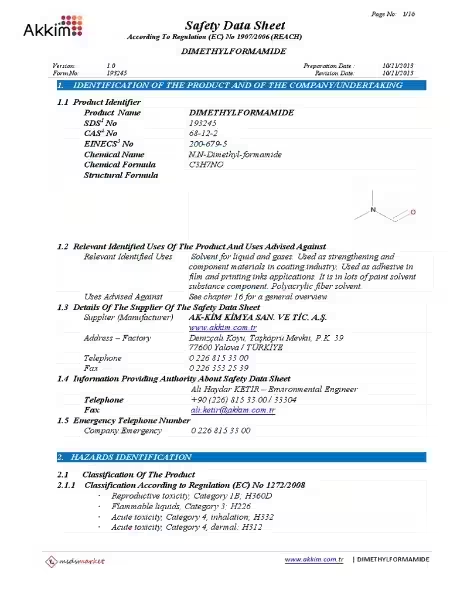
Identification
This section provides basic information about the chemical, including its name, synonyms (like chloromethane), chemical formula (CH₃Cl), and the manufacturer's contact details. This is crucial for accurate identification and in emergency situations where rapid identification is necessary.
It also usually includes relevant CAS Registry Numbers, which are unique identifiers used by chemical databases for unambiguous identification.
Hazard Identification
This section details the potential health hazards associated with methyl chloride exposure. This is often the most crucial section of the MSDS, highlighting dangers such as:
Acute Health Hazards: These are immediate effects, often from short-term exposure, and may include dizziness, headache, nausea, and even loss of consciousness. High concentrations can be fatal.
Chronic Health Hazards: These are long-term effects from prolonged exposure, potentially leading to neurological damage, liver and kidney problems, and increased cancer risk. The MSDS will detail the specific potential long-term health effects based on research and testing.
Flammability: Methyl chloride is highly flammable, posing a significant fire and explosion risk. The MSDS will specify its flammability limits, ignition temperature, and other relevant fire hazards.
This section lists the components of the mixture, including their percentages. Since pure methyl chloride is often the only ingredient, this section might be simple. However, for mixtures containing methyl chloride, this part is essential for understanding the overall hazard profile.
First Aid Measures
This section provides crucial guidance on what to do in case of accidental exposure. It outlines specific steps for:
Inhalation: This may involve moving the victim to fresh air and administering oxygen.
Skin Contact: This often requires immediate washing with soap and water.
Eye Contact: This often involves flushing eyes with copious amounts of water for several minutes.
Ingestion: This is usually addressed by seeking immediate medical attention.
It is crucial to know these procedures before working with the chemical. Familiarizing yourself with these steps is a non-negotiable part of safe handling.
Fire-Fighting Measures
This section details appropriate extinguishing methods for methyl chloride fires. Remember, due to its flammability, appropriate fire suppression techniques, such as using a specific type of fire extinguisher, are critical. The MSDS will clearly state the recommended extinguishing agents and precautions to take during a fire.
This section will also advise on protective measures for firefighters.
Accidental Release Measures
This section provides instructions on how to handle spills or leaks of methyl chloride. These guidelines often include evacuation procedures, containment strategies (such as using absorbent materials), and disposal methods. The procedures outlined here are vital for preventing environmental contamination and protecting personnel.
Proper ventilation is also essential to dilute any released gas.
This section details proper handling procedures, including personal protective equipment (PPE) requirements (e.g., respirators, gloves, eye protection) and safe storage practices. Appropriate storage conditions, including temperature and ventilation requirements, are usually specified to prevent degradation or accidental release. Adhering to these guidelines is essential for maintaining a safe working environment.
Exposure Controls/Personal Protection
This section focuses on controlling exposure to methyl chloride, outlining the necessary PPE and engineering controls to minimize risk. This may include ventilation systems, local exhaust ventilation, and the use of specific types of respirators, depending on the concentration levels encountered.
Physical and Chemical Properties
This section lists the physical properties of methyl chloride, such as its boiling point, melting point, density, and vapor pressure. This information is essential for understanding its behavior and handling characteristics. Understanding these properties aids in predicting its behavior under different conditions.
Stability and Reactivity
This section discusses the chemical stability of methyl chloride and potential hazards associated with its reactivity. It might list incompatible materials and conditions to avoid to prevent potentially hazardous reactions.
Toxicological Information
This part expands on the health hazards mentioned previously, presenting more detailed toxicological data about short-term and long-term exposures. It often includes information from animal studies and human exposure studies, providing a more complete picture of the potential health risks.
This section is crucial for assessing the severity of potential exposures and the necessary medical treatment.
Ecological Information
This section discusses the environmental impact of methyl chloride and its potential effects on aquatic life and other organisms. It's important for understanding the environmental responsibility associated with handling and disposing of this chemical. Understanding its environmental impact underscores the necessity of responsible handling and disposal.
This section outlines the proper disposal methods for methyl chloride waste, including regulations and recommended procedures. This section is crucial for compliance with local, regional, and national environmental regulations.
Proper disposal minimizes environmental contamination and prevents potential health risks.
By carefully reviewing and understanding the information contained within an MSDS methyl chloride document, individuals can significantly reduce the risk of accidents and exposure-related health problems. Always remember that safety is paramount when working with any chemical, and the MSDS is your primary guide.