The Ultimate Facilitator's Guide: Your Key to Successful Training Sessions
The Ultimate Facilitator's Guide: Your Key to Successful Training Sessions
Are you ready to transform your training sessions from mundane lectures into engaging, impactful learning experiences? The answer lies in a well-crafted facilitator's guide. This comprehensive resource is the secret weapon for any trainer looking to deliver consistently excellent results. This article will explore the vital components of a successful facilitator's guide, guiding you towards creating a tool that will empower your facilitators and elevate your training programs.
A facilitator's guide is far more than just a script; it's a meticulously planned roadmap for successful training delivery. It serves as a comprehensive resource, equipping facilitators with the tools and information they need to confidently lead engaging and productive sessions. It's not about dictating every word, but rather providing a structured framework that allows facilitators to adapt and shine, showcasing their unique expertise and personality.
This guide empowers facilitators to navigate the complexities of the training material, breaking down complex concepts into easily digestible chunks. It provides the support structure needed to manage time effectively, foster interactive discussions, and cater to the diverse learning styles of participants.
Key Components of an Effective Facilitator’s Guide
Creating a truly effective facilitator's guide requires careful consideration of several critical components. Think of it as building a house: you need a solid foundation and well-defined rooms to ensure a comfortable and functional space. Here's what your facilitator's guide needs:
Clear Training Goals and Objectives
Before diving into content, clearly define the learning objectives. What should participants know, understand, or be able to do by the end of the session? This clarity ensures focus and provides a measurable benchmark for success. The objectives should be SMART (Specific, Measurable, Achievable, Relevant, and Time-bound).
This clarity is crucial not only for the facilitators but also for the participants. A clear understanding of goals ensures everyone is on the same page and helps them actively participate in the learning process.
Organized Structure and Navigation
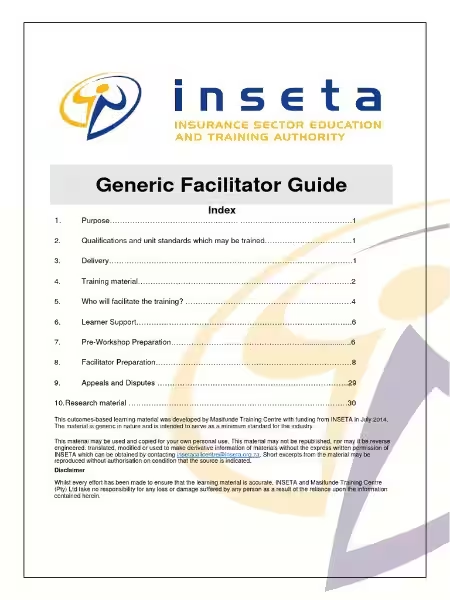
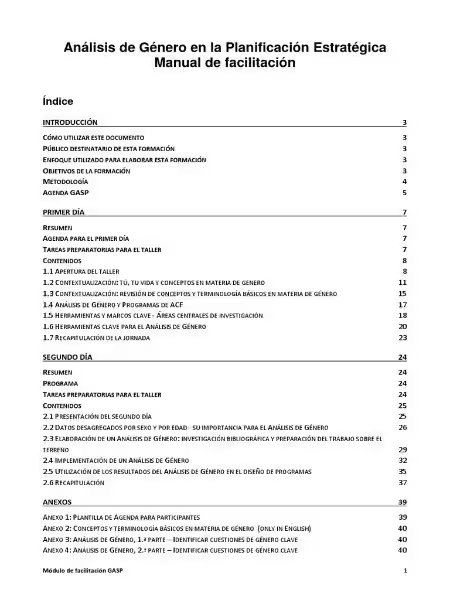
A well-organized guide is intuitive and easy to navigate. A comprehensive table of contents, clear section headings, and logical flow of information are essential. Think about using visual cues like color-coding or bold text to highlight important information. This will help facilitators quickly locate the information they need during the session.
This ease of navigation reduces stress and allows facilitators to focus on engaging participants rather than searching for information. A clear structure is also beneficial for facilitators preparing before the session, allowing them to quickly grasp the overall context and flow of the training.
Contextualization and Background Information
Don't assume prior knowledge. Provide a concise overview that places the training within a broader context. This prevents redundancy and ensures all participants have the necessary background information. Consider including relevant background information or linking to supplementary resources.
This contextualization helps set the stage for the training and enhances understanding. It ensures everyone is on the same page before diving into the core material, preventing confusion and allowing for a smoother learning experience.
Time Management and Detailed Agenda
Include a detailed agenda with time allocations for each segment. This helps facilitators manage the session's pace and keeps participants informed about the schedule. The agenda should be realistic, allowing for flexibility and unexpected discussions. Each section description should clearly define its purpose.
This detailed timing prevents the session from running over or falling short, ensuring a balanced and effective learning experience for all. It also manages participant expectations and allows for a smoother flow throughout the training.
Discussion Prompts and Talking Points
Provide suggestions for discussion prompts and talking points, especially helpful for less experienced facilitators. Emphasize that these are suggestions, not scripts, encouraging facilitators to adapt them to the group's dynamics and engagement levels.
These prompts are not meant to limit the facilitator's creativity but to provide a starting point and ensure all key topics are covered. They also help to guide conversations, leading to more productive and engaging discussions.
Supplemental Resources and Materials
Include links to supplemental resources, such as videos, articles, or online tools, that participants can explore further. This enhances the learning experience and allows for more in-depth exploration of topics.
This added resource ensures that participants have access to additional information and that their learning experience extends beyond the confines of the training session. It caters to different learning styles and facilitates self-paced learning.
Facilitator Checklist and Pre-Session Preparation
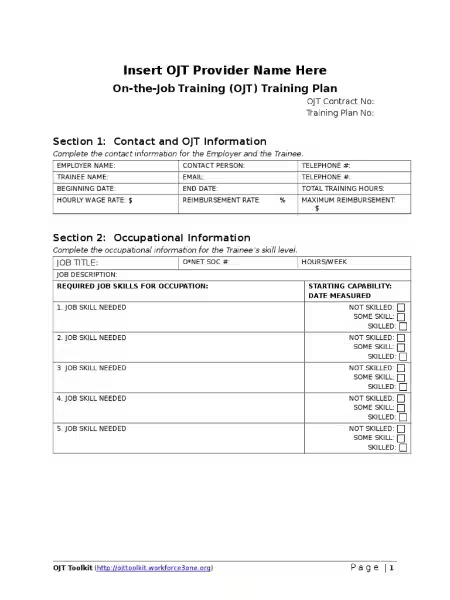
Create a checklist of pre-session preparations, ensuring facilitators have everything they need before the session begins. This includes technical setup, materials gathering, and any other logistical considerations.
A comprehensive checklist helps prevent last-minute scrambling and ensures a smooth session start. It promotes efficiency and reduces stress for the facilitator, letting them focus on delivering the training effectively.
Beyond the Guide: Training the Trainer and Continuous Improvement
A facilitator's guide is only as good as the training behind it. Invest in "train-the-trainer" sessions to equip facilitators with the skills they need. Practice runs with experienced facilitators are invaluable.
Continuously refine your facilitator's guide based on feedback from both facilitators and participants. This iterative process ensures the guide remains relevant, effective, and adaptable to evolving needs. Remember, a visually appealing, easy-to-read guide, utilizing color-coding and clear headings, is key to maximizing its usability and impact. Prioritize selecting facilitators based on their leadership qualities—empathy, patience, adaptability—and supplement their skills with technical support from other experts as needed. A great facilitator's guide, combined with well-trained facilitators, is the recipe for consistently successful training programs.
Here's an FAQ section about facilitator guides, based on the provided information.
What is a facilitator guide?
A facilitator guide is a comprehensive resource designed to equip trainers with everything they need to deliver effective and engaging training sessions. It outlines the session's goals, content, delivery methods, and provides practical tools to support the facilitator throughout the process, both in preparation and during the session itself. It's not a rigid script, but rather a flexible framework that allows for the facilitator's personality and expertise to shine through.
Why is a facilitator guide important?
Effective instructor-led training (ILT) depends heavily on the facilitator's skills and preparation. A well-crafted facilitator guide ensures consistency in training delivery, reduces preparation time, and helps facilitators deliver engaging and impactful learning experiences. It supports facilitators in managing time effectively, guiding discussions, and utilizing supplemental resources. It also standardizes the training process, ensuring a consistent experience for all participants.
What are the key components of a good facilitator guide?
A strong facilitator guide includes: clear training goals and objectives; an organized structure with a table of contents and logical flow; contextualization within a broader curriculum; time management guidelines for each section; discussion prompts and talking points; links to supplemental resources; a facilitator checklist for pre-session preparation; and a detailed agenda with timings for each activity.
Who benefits from using a facilitator guide?
Both facilitators and training program organizers benefit. Facilitators gain a clear structure and support for delivering the training. Organizers ensure consistent quality and effectiveness across all training sessions. The guide minimizes the reliance on the facilitator's memory, freeing them to focus on participant engagement.
How is a facilitator guide created?
The guide should be created after the training materials are finalized to ensure alignment between learning objectives and content. Ideally, the facilitator should be involved in its creation process to leverage their insights and experience. The guide should be visually appealing, easy to read and navigate, using formatting elements like color-coding and clear headings.
How can a facilitator guide be improved over time?
Continuous improvement is key. Feedback from both facilitators and participants after each session should be used to refine the guide's content and structure. "Train-the-trainer" sessions and practice runs with experienced facilitators can also significantly enhance the guide's effectiveness and ensure it remains a valuable and up-to-date resource.
What qualities should a facilitator possess?
While subject matter expertise is helpful, strong communication, active listening, group presentation skills, and leadership qualities (empathy, patience, adaptability) are crucial. Technical questions can often be addressed by other experts within the organization. The facilitator's role is to guide the learning process and create an engaging environment.