Understanding Amendment Letter Format: A Comprehensive Guide
Understanding Amendment Letter Format: A Comprehensive Guide
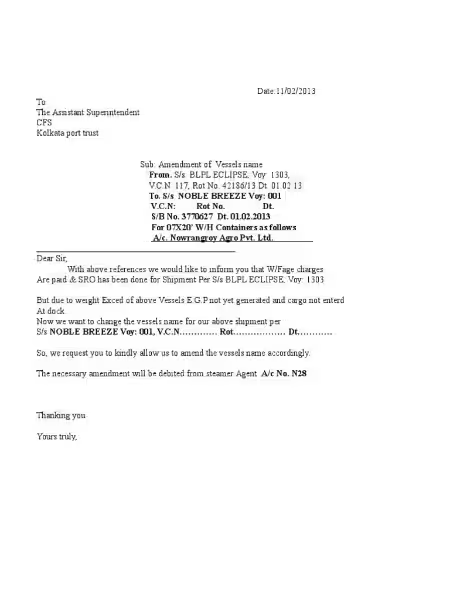
Many legal agreements require modification over time. This necessitates the use of an amendment letter, a crucial document ensuring all parties are on the same page regarding changes to the original contract. Understanding the amendment letter format is therefore vital for both legal professionals and those involved in business transactions. This article will guide you through the essential components and considerations for drafting and interpreting amendment letters.
A well-structured amendment letter should clearly articulate the changes being made to the original agreement. It's not merely a casual note; it's a legally binding document. Ambiguity can lead to disputes, so precision is paramount.
The core elements typically include the date, identification of the original agreement, clear and concise description of the amendments, and the signatures of all authorized parties.
A crucial aspect often overlooked is cross-referencing with specific clauses in the original contract. By explicitly stating, for example, "This amendment modifies Section 3.2 of the original contract," you leave no room for misinterpretation. This precise referencing eliminates any confusion about the scope of the changes.
Structuring Your Amendment Letter: A Step-by-Step Approach
Creating an effective amendment letter involves a systematic approach. While the exact format can vary slightly depending on the context and the jurisdiction, certain steps remain consistent.
First, clearly identify the original agreement. State the date of the original contract and the parties involved. Then, explicitly state that this document serves as an amendment. Avoid vague language; use clear, concise wording to avoid any confusion.
Next, meticulously detail the changes. Number each amendment for clarity and easy reference. Use precise language, avoiding jargon where possible. If referencing specific clauses, provide the exact section and paragraph numbers in the original agreement. This level of detail is crucial for minimizing ambiguity and potential disputes later on. Finally, include clear signature lines for all parties involved, along with a date of signing.
Essential Information to Include
Date: The date the amendment is executed.
Identification of Original Agreement: Clearly identify the original agreement by date, parties involved, and any relevant reference numbers.
Statement of Amendment: A clear statement that this document amends the original agreement.
Specific Amendments: Detailed and numbered list of changes, referencing specific clauses in the original agreement when applicable.
Signatures: Signatures of all authorized parties.
Effective Date: The date the amendment takes effect. This might be the date of signing or a future date.
Illustrative Example: An Amendment to a Supply Agreement
Consider a scenario involving a supply agreement between two companies. The original agreement outlined specific pricing and supply terms. However, due to market fluctuations, the parties agree to change the pricing structure. An amendment letter would be necessary to formalize these changes. This letter would reference the original agreement’s date and parties, state that it is an amendment, and then proceed to detail the new pricing structure. It would explicitly state which clauses of the original agreement are being modified and how.
The amendment letter format, in this instance, would follow the steps outlined above, ensuring clarity and legal soundness. The precise amendment letter format might include numbered sections describing each modification, ensuring the changes are easily traceable and understood. The use of clear and unambiguous language is crucial throughout this process.
Incorporating Legal Considerations
Remember that all amendments must comply with relevant laws and regulations. Professional legal advice is always recommended for complex agreements or those involving significant financial implications. In the case of our supply agreement example, legal counsel could ensure that the new pricing structure remains compliant with all applicable antitrust laws.
Amendment Letter Format and Confidentiality
Sometimes, parts of an amendment might be confidential, such as specific financial details or sensitive business strategies. In these situations, the amendment letter format might incorporate redactions or clearly marked confidential sections, usually with a clear statement about the reason for the confidentiality, and any legal basis for it. This ensures transparency while protecting sensitive information.
For instance, in the supply agreement example, the exact pricing adjustments might be redacted for reasons of commercial confidentiality. A clear statement to this effect would be included in the amendment letter. This approach ensures that the amendment remains legally sound while safeguarding sensitive information.
The complexities of amendment letter format can extend beyond the core elements. Depending on the nature of the original agreement and the amendments being made, additional considerations might include:
Witness signatures: While not always required, witness signatures can add an extra layer of legal security.
Notarization: In some jurisdictions or for specific types of agreements, notarization might be necessary.
Counterparts: The original agreement and the amendment might be executed in multiple counterparts, each considered original.
In conclusion, understanding the amendment letter format is crucial for anyone involved in legal or business agreements. By following a systematic approach and paying attention to detail, you can ensure that your amendment letter is clear, concise, and legally sound. Remember to seek legal counsel when necessary, especially for complex agreements or situations involving significant financial implications. A well-drafted amendment letter protects all parties involved and avoids potential future disputes.
Amendment Letter Format FAQ
Here are some frequently asked questions regarding the format and content of an amendment letter, based on a sample amendment to a supply agreement:
What is the purpose of an amendment letter?
An amendment letter formally modifies an existing agreement. It clarifies, updates, or adds to the original contract's terms and conditions. In our example, the amendment letter modifies a supply agreement between Invibio Inc. and Alphatec Spine, Inc., altering pricing, supply terms, and the definition of key clauses.
What key elements should an amendment letter include?
A well-structured amendment letter should clearly identify the original agreement being amended, specify the changes being made (with precise references to the original clauses if applicable), and confirm the agreement of all parties involved. It should also include the date of the amendment, signatures from authorized representatives of each party, and any necessary updated exhibits (as seen in our example with Exhibits A and E). Legal language should be precise and unambiguous.
How should pricing changes be handled in an amendment letter?
Pricing changes should be clearly stated, including effective dates and any relevant formulas or calculations. In our example, the amendment introduced a revised pricing structure with tiers based on annual forecasts, including a mechanism for price adjustments based on actual order volume differences. Confidentiality concerns might necessitate redaction of specific pricing details.
How are changes to supplier restrictions addressed?
Changes concerning the use of third-party suppliers require precise language, outlining conditions under which exceptions to the restriction can be made. The example amendment revised such a clause, clarifying when Alphatec Spine could use third-party polyaryletherketone and detailing record-keeping requirements to ensure compliance.
What about the handling of confidentiality in an amendment letter?
When dealing with sensitive information such as pricing details or specific elements of contractual obligations, sensitive information can be redacted to protect confidentiality. This should be explicitly stated in the letter. Our example letter redacted pricing details and elements of the "Failure to Supply" clause citing regulations such as Rule 24b-2 of the Securities Exchange Act of 1934.
How does an amendment letter handle the addition of new exhibits?
New exhibits, such as lists of affiliates or updated product part numbers, are referenced and included as part of the amendment process. The amendment clearly states the need for updating Exhibit A (part numbers) and the creation of Exhibit E (list of affiliates).
What legal considerations are essential for an amendment letter?
It's crucial to ensure the amendment letter is legally sound and complies with all relevant laws and regulations. The governing law should be specified, and the amendment should be drafted to ensure clarity and prevent ambiguity. In our example, Colorado law governs the agreement. Legal counsel is highly recommended when drafting or reviewing such documents.
What is the significance of dated signatures?
Dated signatures from authorized representatives of all parties involved are essential to legally bind all parties to the amended agreement. Our example shows signatures dated March 3, 2011, and March 17, 2011, respectively, signifying acceptance by both parties.
This FAQ provides a general understanding of amendment letter formats. Specific requirements may vary depending on the original agreement and relevant jurisdictions. Always seek legal advice to ensure your amendment letter is legally compliant and effectively protects your interests.