Understanding Temporary Contracts: A Guide for Employers and Employees
Understanding Temporary Contracts: A Guide for Employers and Employees
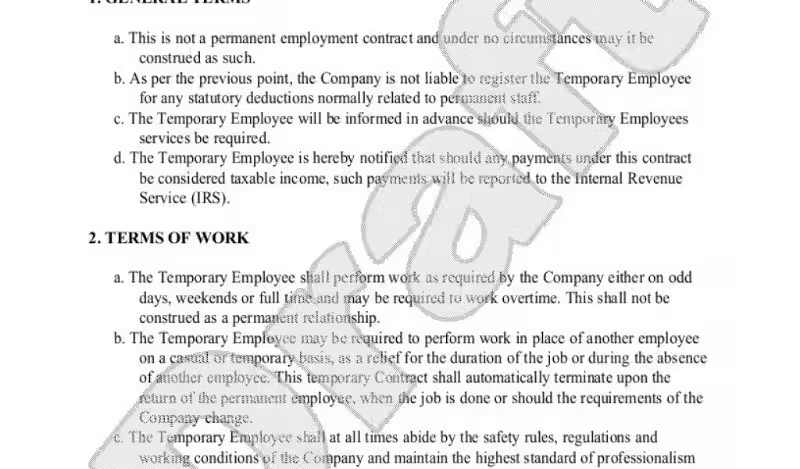
A temporary contract, also known as a fixed-term contract or temporary employment contract, is a legally binding agreement between an employer and employee. This agreement outlines the terms of employment for a specific, limited time. It's a crucial aspect of the modern workforce, offering flexibility for both parties but also presenting unique considerations. This article explores the advantages, disadvantages, and legal implications of temporary contracts.
For employers, a temporary contract offers significant benefits, primarily increased flexibility. This allows for easier management of fluctuating workloads, accommodating seasonal demands or covering absences.
The ability to test a candidate's suitability before committing to a permanent role is a major advantage. This minimizes the risk of a long-term commitment to an employee who may not be a good fit for the company culture or the specific role.
Furthermore, temporary contracts often prove more cost-effective in the short-term. They reduce financial obligations compared to permanent employees, lessening the costs associated with benefits packages, redundancy payments, and other long-term commitments.
For the employee, a temporary contract can serve as a valuable stepping stone. It offers the opportunity to gain experience within a company or industry, potentially leading to future permanent employment.
This kind of contract can also be beneficial for those seeking to balance other commitments or bridge gaps between jobs. The experience gained on a temporary contract can significantly enhance a candidate's resume, showcasing acquired skills and broadening their network. It’s a great way to explore different career paths or industries without committing to a long-term position.
Disadvantages of Temporary Contracts
While offering substantial advantages, temporary contracts also present potential drawbacks. For employers, the short-term nature often leads to increased recruitment and training costs.
The frequent turnover associated with temporary contracts can disrupt workflow and productivity as new employees are constantly being onboarded and trained. Retention of valuable temporary workers can also be a challenge, as they may be attracted to more permanent positions elsewhere.
From the employee's perspective, job insecurity is a major concern. The uncertainty surrounding future employment after the contract expires can create stress and anxiety.
Temporary employees may also miss out on the benefits and security afforded to permanent employees. This can include lower compensation, limited access to employee benefits, and fewer opportunities for career progression within the company. Therefore, a thorough understanding of the contract's terms is paramount.
Key Considerations within a Temporary Contract
A well-structured temporary contract should explicitly define several key aspects to avoid misunderstandings and potential disputes. These include:
Duration: The precise start and end dates of the contract must be clearly stated.
Responsibilities: A detailed description of the employee's roles and duties should be included.
Compensation: The salary, payment schedule, and any additional benefits (e.g., paid time off) need to be clearly laid out.
Termination Clause: The conditions under which the contract can be terminated by either party should be explicitly defined. This might include clauses for performance issues or unforeseen circumstances.
Confidentiality: If handling sensitive information, a confidentiality clause is essential.
Intellectual Property Rights: If the employee will be creating intellectual property, the ownership rights should be clearly defined within the contract.
Ignoring these details can lead to conflict and legal complications. Both employers and employees should seek legal advice when drafting or reviewing a temporary contract to ensure compliance with relevant laws and regulations.
Legal Implications of Temporary Contracts
Temporary contracts are subject to all relevant employment laws, including those concerning minimum wage, overtime pay, and non-discrimination. Compliance with these regulations is crucial for both employers and employees. Failure to comply can result in hefty fines and legal action.
The Fair Labor Standards Act (FLSA) in the United States, along with state-specific labor laws, dictate the minimum standards for wages and working conditions. These laws apply equally to temporary and permanent employees.
Therefore, both parties should thoroughly understand their rights and responsibilities under the law. Seeking legal counsel can help clarify these obligations and ensure the contract is legally sound and protects the interests of all involved. This is particularly important when dealing with complex issues like termination, benefits, or intellectual property rights.
Temporary Contract vs. Permanent Contract: Key Differences
It's important to differentiate between a temporary contract and a permanent contract. While both are legally binding agreements, the key difference lies in the duration of employment. A permanent contract signifies ongoing employment with no predetermined end date, while a temporary contract has a defined, limited duration.
This difference impacts several aspects, including job security, benefits, and career progression opportunities. Permanent employees generally have greater job security and access to a broader range of employee benefits, while temporary employees are often limited to the terms specified in their contract.
Choosing between a temporary or permanent contract depends on the individual circumstances of both the employer and employee. A temporary contract might be suitable for short-term projects or seasonal work, while a permanent contract is more appropriate for long-term commitments. Careful consideration of the advantages and disadvantages of each type of contract is essential before making a decision. The nature of the work, the project's timeline, and the individual's career goals all play significant roles in determining the best contract type.
In conclusion, temporary contracts offer flexibility and opportunities for both employers and employees. However, understanding the legal implications, advantages, and disadvantages is crucial before entering into such an agreement. Careful consideration of the contract's terms, along with seeking legal counsel when necessary, will help ensure a positive and legally compliant experience for all parties involved.
Temporary Contract FAQ
What is a temporary contract?
A temporary contract, also known as a fixed-term contract or temporary employment contract, is a legally binding agreement between an employer and an employee for a specific, limited period. Unlike a permanent contract, it has a predefined end date, typically a year or less, but this can vary depending on the job and location.
What are the advantages of a temporary contract for employers?
Temporary contracts offer employers flexibility in managing staffing needs, especially for short-term projects or seasonal work. They allow for a trial period to assess employee suitability before offering permanent employment, minimizing the risk of long-term commitments to unsuitable candidates. They can also be more cost-effective in the short term due to reduced financial obligations like benefits packages and redundancy payments.
What are the advantages of a temporary contract for employees?
For employees, a temporary contract can be a valuable stepping stone into a company or industry, providing experience and the potential for future permanent employment. It can offer income while seeking long-term employment or balancing other commitments. It can also add valuable skills and experience to a resume.
What are the disadvantages of a temporary contract for employers?
The short-term nature of temporary contracts can lead to higher recruitment and training costs for employers. There's also the potential for workflow disruption during transitions and the challenge of retaining valuable temporary workers who may be sought after by other companies.
What are the disadvantages of a temporary contract for employees?
The biggest disadvantage for employees is the uncertainty of employment after the contract ends. Temporary employees may lack the job security and benefits of permanent employees, including long-term career progression opportunities and potentially lower compensation for similar roles.
What should a temporary contract clearly outline?
A temporary contract should clearly define the duration of employment, employee responsibilities, compensation, benefits (if any), termination clauses, and any other relevant details. This ensures a clear understanding for both parties and helps mitigate potential disputes.
What legal implications should I be aware of regarding temporary contracts?
Both employers and employees should understand the legal implications and rights associated with temporary employment in their specific jurisdiction. This includes adhering to all relevant employment laws concerning minimum wage, overtime, discrimination, and other employment rights.
How do temporary contracts differ from permanent contracts?
The key difference lies in the duration of employment. Permanent contracts offer ongoing employment, while temporary contracts have a predetermined end date. This impacts job security, benefits, and long-term career prospects. Permanent employees generally have greater job security and access to a wider range of benefits.
Is legal advice recommended when creating or entering into a temporary contract?
Yes, seeking legal counsel is strongly recommended for both employers and employees to ensure the contract complies with all applicable laws and protects the interests of both parties. A lawyer can help ensure the contract is clear, comprehensive, and legally sound.
What happens after the temporary contract expires?
The contract's expiration signifies the end of the employment relationship. Unless explicitly stated otherwise within the contract or a new agreement is reached, the employee is no longer employed by the company.