Understanding Your Temporary Job Contract: A Comprehensive Guide
Understanding Your Temporary Job Contract: A Comprehensive Guide
Finding the right job can be challenging, and understanding the terms of your employment is crucial, especially when it comes to a temporary job contract. This guide will walk you through the key aspects of temporary employment contracts, helping you navigate the process with confidence.
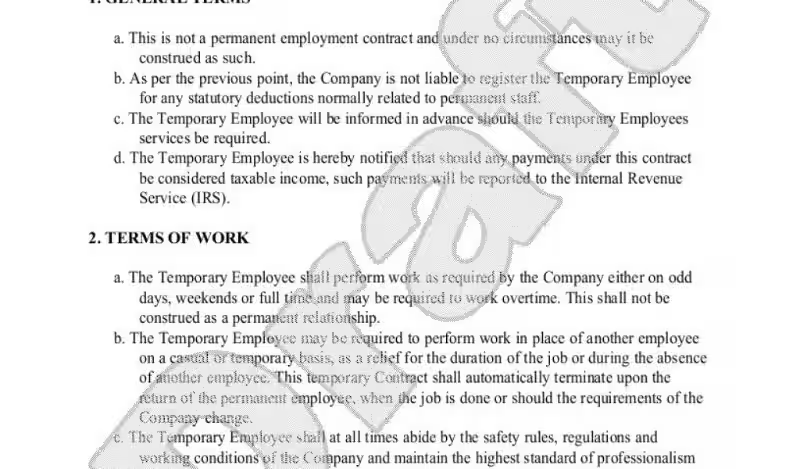
A temporary job contract is a legally binding agreement between you and your employer that outlines the terms of your employment for a predefined period. Unlike permanent contracts, temporary contracts have a specific start and end date, although this date might be subject to renewal. They offer flexibility for both the employer and the employee, making them a popular option in many industries. The specific terms, however, will vary greatly depending on the nature of the work and the industry.
The duration of a temporary job contract can range from a few weeks to several months or even a year, depending on the project or the employer's needs. It's vital to thoroughly read and understand the terms before signing any contract to avoid misunderstandings or disputes down the line.
Types of Temporary Employment Contracts
There are several types of temporary employment contracts, each with its own characteristics:
Internships: These are often short-term, unpaid or low-paid positions designed to provide practical experience and on-the-job training to students or recent graduates.
Part-time employment: This involves working fewer hours per week than a full-time employee, offering flexibility for those with other commitments or those seeking a work-life balance.
Freelance/Contractor arrangements: This type of temporary job contract involves working independently on specific projects for an employer, often with more autonomy and control over your work schedule.
Understanding the specific type of temporary job contract you're considering is vital because each carries different implications for your rights and responsibilities.
Advantages of Temporary Employment
Temporary employment contracts offer several advantages for both employers and employees:
Flexibility: Employers can easily adjust their workforce to meet fluctuating demands, while employees can choose assignments that suit their skills and availability.
Trial period: Temporary contracts can act as a trial period for both parties, allowing for an assessment of fit before committing to a long-term arrangement.
Skill acquisition: Employees can gain valuable experience and skills that boost their career prospects.
Access to diverse talent pools: Employers can tap into a broader talent pool, including individuals who may not be available for full-time positions.
It is important to note that while the advantages are numerous, it's important to carefully weigh these benefits against the potential drawbacks as well.
Disadvantages of Temporary Employment
While temporary jobs offer many benefits, there are also some potential drawbacks to consider:
Job security: The temporary nature of the contract means there's less job security compared to permanent positions.
Limited benefits: Temporary employees often receive fewer benefits compared to permanent employees, such as health insurance, paid time off, or retirement contributions.
Potential for exploitation: There's a risk of exploitation if the contract isn't clearly defined and legally sound.
Lower pay: In some cases, temporary employees might be paid less than their permanent counterparts for the same work.
Being aware of these potential drawbacks is essential to ensure that you are adequately protected and compensated for your work.
Key Clauses in a Temporary Job Contract
A well-drafted temporary job contract should include several key clauses to protect both the employer and the employee:
Job description: A clear and concise description of your responsibilities and duties.
Compensation: Details on your salary, payment schedule, and any other forms of compensation (e.g., bonuses).
Duration: The specific start and end dates of the contract.
Confidentiality: Clauses protecting the employer's confidential information.
Termination: The conditions under which the contract can be terminated by either party.
Intellectual property rights: Clarity on who owns the intellectual property created during the contract period.
Governing law: The state or jurisdiction whose laws govern the contract.
These clauses, along with others such as non-compete agreements, are very important to ensure you understand the terms of your employment fully.
Effective Management of Temporary Contracts
For employers, effectively managing temporary contracts is crucial. This involves:
Centralized record-keeping: Maintaining accurate records of all contracts, including start and end dates, payment information, and performance reviews.
Automated reminders: Using software to set up reminders for key dates, such as contract renewals or payment deadlines.
Clear communication: Maintaining open and clear communication with temporary employees throughout the contract period.
Ongoing performance evaluation: Conducting regular performance evaluations to ensure the employee is meeting expectations.
Effective management ensures smooth operations, minimizes risks, and optimizes the benefits of using temporary staff.
Utilizing Contract Management Software
Managing a large number of temporary job contracts can be complex and time-consuming. Contract management software can significantly streamline this process by providing tools to:
Automate tasks: Such as sending reminders, generating reports, and tracking payments.
Centralize information: Storing all contract documents in a secure, centralized repository.
Improve collaboration: Facilitating communication and approvals between employees, managers, and other stakeholders.
Investing in such software can significantly reduce the administrative burden and improve the overall efficiency of managing temporary contracts.
In conclusion, understanding your temporary job contract is essential for both employers and employees. By carefully reviewing the terms, understanding your rights and responsibilities, and implementing effective management strategies (where applicable), you can ensure a positive and productive temporary employment experience. Remember to always seek legal counsel if you have any doubts or concerns about the terms of your contract.
A temporary job contract is a legally binding agreement between an employer and an employee that specifies a defined period of employment. This contrasts with permanent employment contracts which are indefinite. Temporary contracts offer flexibility for businesses and employees, allowing for short-term engagements for specific projects or to cover fluctuating workloads.
What are some common types of temporary contracts?
Common types include internships, part-time employment, and freelance/contractor arrangements. Each type offers different levels of commitment and responsibilities.
What are the advantages of using temporary employees?
Advantages include access to a pre-screened pool of skilled workers, a trial period before permanent hire, reduced employment costs (benefits, paid time off), and flexibility to adjust staffing based on need. Internships offer low-cost assistance and fresh perspectives, while freelancers provide specialized expertise.
What are the disadvantages of using temporary employees?
Disadvantages can include the need for additional training, potentially lower company loyalty, and potential negative impact on permanent staff morale. There's also the possibility of lower commitment or inconsistent work quality from part-time employees, and challenges in tracking progress and ensuring quality with freelancers.
How can I effectively manage temporary contracts, especially a large number of them?
Effective management is crucial. Utilize contract management software to streamline the process. This software automates reminders for key dates (renewals, payments), provides a centralized repository for all contracts, and facilitates communication and approval workflows. This helps ensure compliance and prevents missed deadlines.
What should a temporary employment contract include?
A comprehensive temporary contract should clearly define the job title, responsibilities, duration, compensation, intellectual property ownership, termination clauses (including grounds for termination and notice periods), governing law, and standard legal clauses (entire agreement, severability, amendment, and waiver clauses). It should also address communication protocols (typically requiring written notices).
What are the key clauses in a temporary employment contract?
Essential clauses include: a clear definition of the job and responsibilities; the start and end dates of the contract; compensation details; intellectual property rights; termination provisions outlining the rights and responsibilities of both parties; governing law; and standard legal clauses such as entire agreement, severability, amendment and waiver clauses.
What happens if I violate my temporary contract?
The consequences of violating your temporary contract depend on the specifics outlined in the contract itself. Typically, it could lead to termination of the contract, possibly without notice, and may limit your compensation to only what's been earned up to the termination date. Always consult the contract and relevant labor laws.
How is intellectual property handled in a temporary contract?
The contract should clearly state who owns any intellectual property created during the contract period. Usually, the employer retains ownership of work products created by the employee during employment.
What if I need to terminate a temporary contract early?
The process for early termination depends on the contract terms and applicable labor laws. Generally, both employer and employee may have the right to terminate, but this may require providing notice (the specifics of which should be detailed in the agreement).
What happens at the end of a temporary contract?
At the end of the contract, employment ceases. Unless there's a provision for automatic renewal, no further employment exists unless a new contract is signed. Any outstanding payments or deliverables should be settled.
Can a temporary contract be renewed?
Yes, a temporary contract can be renewed, but this requires a new agreement to be made between the employer and employee. The terms of the renewal may or may not be the same as the original contract.
What is the role of contract management software?
Contract management software streamlines the process of managing temporary contracts, particularly when dealing with many contracts simultaneously. It automates tasks like sending reminders for renewal dates and payments, centralizes contract storage, tracks versions, and facilitates communication.
How does a temporary contract differ from a permanent contract?
The main difference is the duration. A temporary contract has a defined end date, while a permanent contract is indefinite. Temporary contracts often have different provisions regarding benefits, notice periods, and termination rights.
What are the legal implications of a temporary contract?
Temporary contracts are still legally binding agreements. They must comply with all relevant labor laws and regulations concerning employment, compensation, termination, and other aspects of the employee-employer relationship.
Are benefits included in a temporary contract?
Benefits are not automatically included in temporary contracts. Whether benefits are offered depends on the specific terms of the contract and the employer's policies. They are often less comprehensive than those offered in permanent positions.
What if there's a dispute related to a temporary contract?
In case of a dispute, consult the contract itself first. If the issue is not resolved, seeking advice from a legal professional specializing in employment law is recommended.
Can a temporary contract be modified after it's signed?
Modifications to a signed temporary contract typically require a written agreement between both employer and employee. The original contract should specify the process for amendments.
What is a severability clause in a temporary contract?
A severability clause ensures that if a part of the contract becomes unenforceable, the remaining parts remain valid and enforceable. This helps to protect the overall agreement.
What is the role of a waiver clause in a temporary contract?
A waiver clause states that a single instance of non-compliance with the contract does not automatically void the entire agreement. It prevents one minor breach from rendering the whole contract null and void.