Understanding Your Temporary Work Agreement: A Comprehensive Guide
Understanding Your Temporary Work Agreement: A Comprehensive Guide
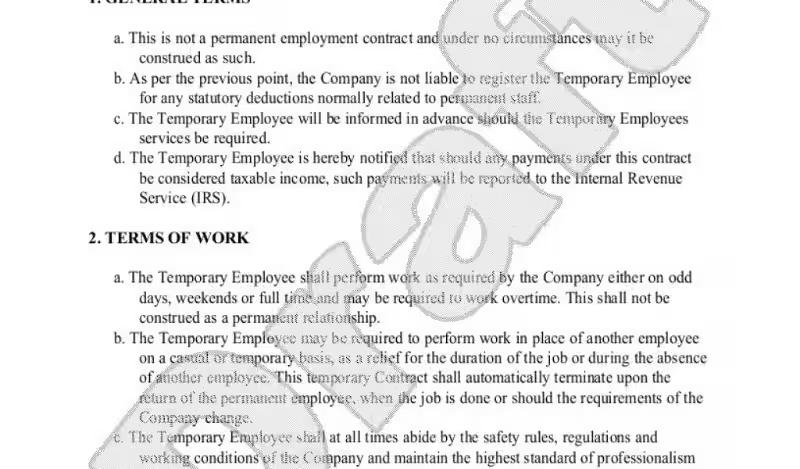
A temporary work agreement is a legally binding contract outlining the terms of a short-term employment relationship. It's a crucial document protecting both the employer and the employee, offering clarity and avoiding potential disputes down the line. This guide will delve into the essential elements of a robust temporary work agreement, helping you understand your rights and responsibilities.
A temporary employment contract differs from a permanent contract in its defined (or definable) timeframe. While there's no single legal definition of "temporary," a general guideline suggests a duration of less than 1000 hours or one year. Beyond this timeframe, converting the agreement to a permanent contract is usually advisable.
This contrasts with a fixed-term contract, which has a predetermined end date. A temporary contract, however, might not have a specific end date, instead concluding when the need for the employee's services ends. Think of a seasonal retail worker or someone hired to cover a maternity leave—these are ideal scenarios for a temporary work agreement. The flexibility offered by temporary contracts benefits both employers and employees, providing access to talent for short-term needs and offering work opportunities for individuals seeking flexible arrangements.
Key Components of a Comprehensive Temporary Work Agreement
Creating a thorough and legally sound temporary work agreement requires careful attention to detail. Here are the essential components:
1. Identifying Information
This section should clearly state the full legal names and contact details (addresses, phone numbers, email addresses) of both the employer and the employee. Accuracy is paramount to avoid confusion later.
This information forms the foundational basis of the agreement and helps ensure that all communication and legal actions are directed to the correct parties. Any discrepancies in this section could lead to complications.
2. Job Description
A detailed, precise job description is crucial. This should list all duties and responsibilities, using measurable terms whenever possible. For instance, instead of "assist with marketing," the description could say "create and schedule three social media posts per week, manage email marketing campaigns, and track website analytics."
Avoid setting long-term goals unsuitable for a short-term role. Focus on the immediate tasks and deliverables expected during the temporary employment period.
Clearly specify the payment method (hourly rate, daily rate, or salary), the payment frequency (weekly, bi-weekly, monthly), and any applicable taxes or deductions. This section should leave no room for misinterpretations regarding compensation.
Transparency in this section prevents potential disputes. Consider including details about overtime pay, if applicable, and any bonuses or incentives tied to performance.
4. Work Pattern and Hours
Detail the expected working hours, including days, times, and any expectations regarding weekends, holidays, or shift patterns. Clarify whether the work is "as and when needed" or if a set number of hours is required weekly.
This section establishes clear expectations regarding work availability and ensures both parties understand the required commitment. Any flexibility should be clearly defined.
5. Start and End Dates (or Conditions for Ending)
Clearly state the commencement date. For temporary work agreements, while a precise end date is ideal, it might not always be possible. In such cases, clearly define the conditions under which the agreement will terminate. For example, the contract might end upon completion of a specific project or when a permanent replacement is found.
This section is pivotal in managing expectations for both parties and preventing future disagreements concerning contract duration.
6. Notice Period
Specify the notice period required by both the employer and the employee before terminating the agreement. This is usually shorter than for permanent employees but should still be clearly defined.
This protects both parties, allowing for a managed transition and minimizing disruption. This reduces the risk of abrupt terminations.
7. Benefits (if any)
List any non-financial benefits offered, such as paid time off, health insurance (if applicable), subsidized meals, or childcare assistance. If no benefits are offered, explicitly state this to avoid future misunderstandings.
Including this section ensures transparency and manages expectations. The absence of benefits needs to be just as clear as their presence.
8. Confidentiality and Non-Solicitation Clauses
Include clauses protecting the employer’s confidential information and preventing the employee from soliciting other employees or clients.
These clauses are crucial for protecting the employer's intellectual property and business interests.
9. Work for Hire and Agency Provisions
Essential clauses to prevent the employee from misappropriating company products or information and from entering into agreements on behalf of the organization without written consent.
These clauses are essential for protecting the employer's interests and maintaining the integrity of the business.
10. Termination Clause
Outline acceptable conduct and grounds for termination, including procedures for dismissal if the employee doesn't meet expectations or violates company policies. This should be fair and reasonable and comply with all applicable employment laws.
A well-defined termination clause helps prevent disputes and ensures a fair and legally sound process.
Using a Temporary Work Agreement Template
Using a template can simplify the process of creating a comprehensive temporary work agreement. Many readily available templates can be found online, but ensure the template complies with all applicable laws and regulations in your jurisdiction. Remember, consulting with a legal professional is always recommended to ensure compliance and to address any specific circumstances. A well-drafted temporary work agreement, incorporating all these elements, provides a clear framework for a successful and legally sound temporary employment relationship.
Temporary Work Agreement FAQ
Here are some frequently asked questions about temporary work agreements:
What is a temporary employment contract?
A temporary employment contract is a legally binding agreement between an employer and an employee for a short-term work arrangement. It outlines the rights, responsibilities, and compensation for both parties, offering legal protection and clarity throughout the employment period. Unlike permanent contracts, it has a defined start date and either a defined end date or a defined project completion date.
What is the typical duration of a temporary work agreement?
While there's no legally defined maximum duration, a common guideline is less than 1000 hours or one year. Extending beyond this period typically necessitates converting the contract to a permanent one.
How does a temporary contract differ from a fixed-term contract?
A temporary contract is generally open-ended within its timeframe (e.g., "until further notice" within the year), whereas a fixed-term contract has a pre-determined end date, usually tied to a specific project or event. Both offer flexibility, but the lack of a precise end date in a temporary contract requires careful management of expectations.
What are the key elements of a comprehensive temporary employment contract?
A comprehensive contract should include:
Identifying Information: Employer and employee names and contact details.
Job Description: Clear, measurable responsibilities specific to the short-term role.
Compensation: Payment method (hourly, daily, salary) and schedule.
Work Pattern: Hours, days, shifts, and any expectations regarding weekends or holidays.
Start Date: Clearly defined commencement date.
Contract Term: While undefined legally, a one-year maximum is best practice. An end date or conditions for extension are crucial.
Notice Period: The required notice before termination by either party.
Benefits: Any offered non-financial perks (e.g., vacation time, health insurance).
Confidentiality and Non-Solicitation: Clauses protecting employer information and preventing employee from soliciting colleagues.
Work for Hire Clause: Prevents employee from misappropriating company property or information.
Agency Provision: Prevents the employee from entering agreements on behalf of the organization without written consent.
Termination Clause: Acceptable conduct and grounds for termination.
What are the benefits of using a temporary employment contract?
Temporary contracts offer flexibility for employers to meet short-term needs (seasonal work, project-based roles, covering absences) and provide employees with opportunities for short-term engagements. They offer legal protection for both parties, reducing the potential for disputes.
What are some common challenges associated with temporary contracts?
Ambiguity in job duration, disputes over payment, early termination issues, and unclear legal compliance are common challenges. Clear communication and a well-drafted contract can mitigate these risks.
Can a temporary contract be converted to a permanent one?
Yes, depending on performance, company needs, and internal policies, a temporary contract can often be converted to a permanent position.
What happens if the temporary work ends before the agreed-upon time?
The contract should specify notice periods and any compensation for premature termination, compliant with local labor laws.
What legal considerations should be addressed in a temporary employment contract?
The contract must comply with all applicable employment and tax laws in the relevant jurisdiction. This includes minimum wage, overtime pay, and other relevant regulations.
Where can I find a sample template for a temporary employment contract?
While I cannot provide specific legal advice or templates, searching online for "temporary employment contract template" will yield numerous resources. It is highly advisable to seek legal counsel to ensure the contract complies with all applicable laws and regulations in your jurisdiction.