Building Your Business: A Comprehensive Business Plan Checklist
Building Your Business: A Comprehensive Business Plan Checklist
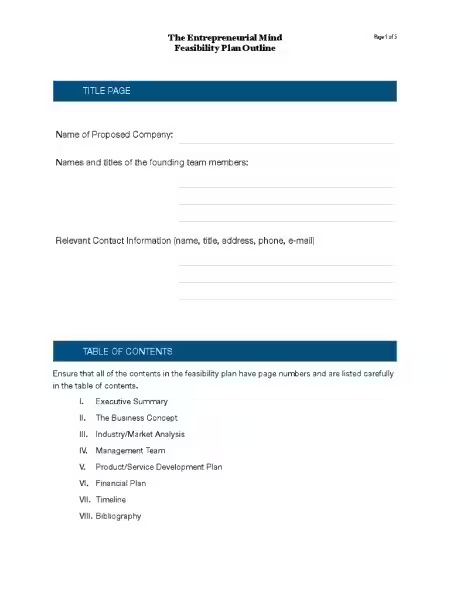
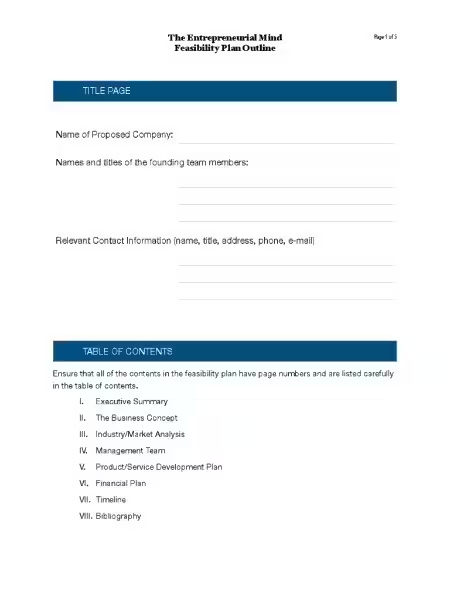
Starting a business is exciting, but it requires careful planning. A well-structured business plan acts as your roadmap to success, guiding your decisions and attracting investors. But where do you begin? This article provides a practical business plan checklist, walking you through the key components and helping you create a document that's both comprehensive and tailored to your specific needs. Remember, while a detailed plan is beneficial, flexibility is key.
This is your elevator pitch, a concise overview of your entire business plan. Think of it as a highlight reel, capturing the essence of your business in a brief, compelling narrative. It's the first thing people will read, so make it count!
It should include your mission statement, a brief description of your products or services, information about your leadership team, your business location, and key financial highlights—especially important if you're seeking funding. Focus on growth projections and the overall potential of your venture. This section should be written last, after you've completed the rest of the plan.
2. Company Description: Defining Your Business
This section delves into the specifics of your business, painting a detailed picture for potential investors or lenders. Clearly articulate the problem your business solves and the target audience you're addressing—are you targeting individual consumers, other businesses, or specific organizations?
Highlight your unique selling propositions (USPs). What makes your business stand out from the competition? Is it your expert team, a unique location, or a revolutionary product? Showcase your competitive advantages and explain why customers should choose you.
3. Market Analysis: Understanding Your Landscape
A thorough market analysis is crucial. This involves researching your industry and target market to understand the existing landscape. Identify your key competitors and analyze their strengths and weaknesses. What are their market shares? What are their strategies?
Equally important is market research—exploring trends, identifying opportunities, and understanding customer needs and preferences. This understanding will inform your marketing and sales strategies and help you identify potential challenges and opportunities for growth.
4. Organization and Management: The Team Behind the Dream
This section outlines your business structure (sole proprietorship, LLC, corporation, etc.) and introduces your management team. Include an organizational chart clearly showing roles and responsibilities, highlighting the expertise and experience each team member brings to the table.
Consider including resumes or CVs of key personnel to showcase their qualifications and relevant experience. This section helps demonstrate the credibility and capability of your team to execute your business plan.
5. Service or Product Line: What You Offer
Here, you provide a detailed description of your products or services. Focus on the benefits to your customers and explain how your offerings meet their needs. Consider the product lifecycle—from development to eventual obsolescence.
Include information on any intellectual property protection measures you've implemented (patents, copyrights, trademarks) and outline your research and development plans. This detailed description will help potential investors understand the value proposition of your offerings.
6. Marketing and Sales: Reaching Your Customers
This section outlines your marketing and sales strategies, emphasizing a flexible approach to reach your target audience. Describe how you plan to attract and retain customers, detailing your sales process—from initial contact to closing the deal.
This is critical for supporting your financial projections. A clear marketing and sales plan demonstrates your understanding of how you will generate revenue and achieve your business goals. Remember that you may need to adapt your approach as the business evolves.
If you're seeking funding, this section details your financial needs over the next five years. Specify how you plan to use the funds—equipment purchases, salaries, operating costs, etc.
Clearly state your preferred funding type (debt or equity), the terms you're offering, and your repayment plan. Also, outline your long-term financial strategy, including plans for debt payoff or potential exit strategies like selling the business.
8. Financial Projections: Demonstrating Viability
This section presents financial forecasts to showcase the financial health and growth potential of your business. For established businesses, include historical financial statements (income statements, balance sheets, cash flow statements).
For startups, focus on future projections (at least five years), including forecasted statements and capital expenditure budgets. Provide more granular detail (quarterly or monthly) for the first year. Visual aids like charts and graphs can greatly enhance readability and understanding.
9. Appendix: Supporting Documentation
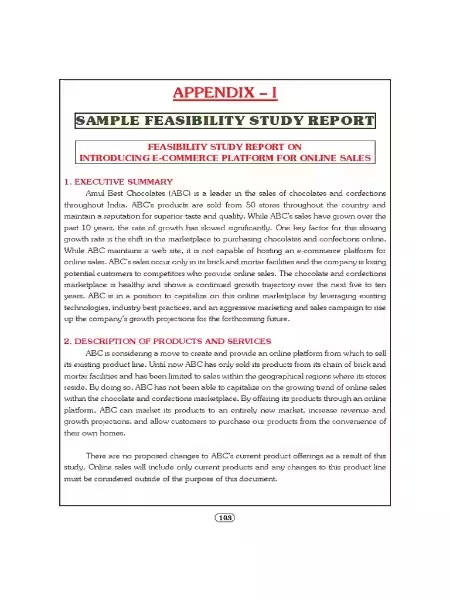
This section houses supporting documents that substantiate the claims made in your business plan. Include items such as credit histories, resumes (if not already included in the main body), product images, references, licenses, permits, patents, legal documents, and contracts. The appendix provides further evidence to support your plan.
Creating Your Business Plan Checklist: A Step-by-Step Approach
Now that you understand the components, let's create a practical checklist to guide your business plan creation:
[ ] Executive Summary: Complete overview of the business.
[ ] Company Description: Detailed explanation of your business and its unique selling points.
[ ] Market Analysis: In-depth research of your industry and target market.
[ ] Organization and Management: Business structure and team details.
[ ] Service or Product Line: Comprehensive description of your offerings.
[ ] Marketing and Sales: Detailed marketing and sales strategies.
[ ] Funding Request (if applicable): Clear outline of your funding needs and plans.
[ ] Financial Projections: Financial forecasts, including historical data (if available) and future projections.
[ ] Appendix: Supporting documents to validate your claims.
Remember, this business plan checklist provides a framework, not a rigid structure. Adapt it to your specific needs and business stage. Review example business plans to see how others have approached this process. With careful planning and a well-structured business plan, you'll increase your chances of success.
Business Plan Checklist FAQ
What is a business plan checklist, and why is it important?
A business plan checklist is a tool to help you organize and track the creation of your business plan. It ensures you include all the essential components, regardless of your business's size or stage. A well-structured business plan is crucial for securing funding, guiding your business decisions, and tracking progress. While a comprehensive plan is best, the checklist helps you prioritize sections based on your needs.
What are the core sections of a typical business plan?
A typical business plan includes: an Executive Summary (a concise overview), Company Description (detailing your business and its unique selling points), Market Analysis (research on your industry and competitors), Organization and Management (business structure and team), Service or Product Line (detailed description of offerings), Marketing and Sales (strategies to attract and retain customers), Funding Request (if seeking funding), Financial Projections (forecasted financial statements), and an Appendix (supporting documents).
Do I need to include *every* section in my business plan?
No. While a comprehensive plan is beneficial, especially for securing funding, you can tailor your plan to your specific needs and circumstances. For example, a newly established startup might not have historical financial statements for the Financial Projections section, focusing instead on future projections. The checklist allows you to prioritize sections relevant to your current stage.
Your market analysis should be thorough enough to demonstrate your understanding of the industry, your target market, and your competition. Identify key competitors, analyze their strengths and weaknesses, and research market trends. The goal is to show how your business will succeed in this context by identifying opportunities and presenting a viable strategy.
What should I include in the "Organization and Management" section?
This section outlines your business structure (sole proprietorship, LLC, etc.), and details your management team's experience and expertise. Include an organizational chart illustrating roles and responsibilities. Resumes or CVs of key personnel are highly recommended to showcase their qualifications.
How do I create compelling financial projections?
Financial projections demonstrate your business's financial health and potential for success. For established businesses, include historical financial statements (income statement, balance sheet, cash flow statement). For all businesses, project future financial performance (at least five years), including forecasted income statements, balance sheets, and cash flow statements. More granular detail (monthly or quarterly) is recommended for the first year. Use visual aids such as graphs and charts to enhance understanding.
What kind of supporting documents should I include in the appendix?
The appendix is for supplementary materials that support your plan. This might include resumes, market research data, letters of support, permits and licenses, contracts, intellectual property documentation (patents, copyrights), and other relevant documents. Only include documents that add credibility and substantiate claims made elsewhere in the plan.
How long should my business plan be?
There's no single "correct" length. The ideal length depends on your business, its complexity, and your intended audience. However, clarity and conciseness are always preferable to excessive length. Focus on presenting the most relevant information effectively.
Where can I find examples of good business plans?
Searching online for "sample business plans" or "business plan templates" will yield many examples. Reviewing these examples can help you understand how different sections are structured and the level of detail typically included. Remember that these are only examples; you should always tailor your plan to your specific business.
What if my business is in a rapidly changing industry?
Even in rapidly changing industries, a business plan remains crucial. However, acknowledge the inherent uncertainty and focus on adaptability. Highlight your strategies for responding to change, such as agile development processes or flexible marketing strategies. Your plan should show how you intend to navigate uncertainty and capitalize on opportunities.