Unlocking Project Success: Your Guide to the Feasibility Plan Template
Unlocking Project Success: Your Guide to the Feasibility Plan Template
Are you considering a new project, but unsure if it's truly viable? A feasibility plan is your roadmap to answering this critical question. This article will guide you through the essential components of a feasibility plan template, helping you determine whether your project is worth pursuing.
A feasibility plan is more than just a document; it's a rigorous assessment of your project's viability. It examines whether your project is realistically achievable, given the available resources, market conditions, and potential risks. This isn't about wishful thinking; it's about evidence-based decision-making.
A well-structured feasibility plan provides a clear and concise overview of your project's potential for success. It helps you identify potential roadblocks early on, saving you time, money, and frustration. By conducting this analysis before significant resources are committed, you can make informed decisions and avoid costly mistakes.
Essential Components of a Feasibility Plan Template
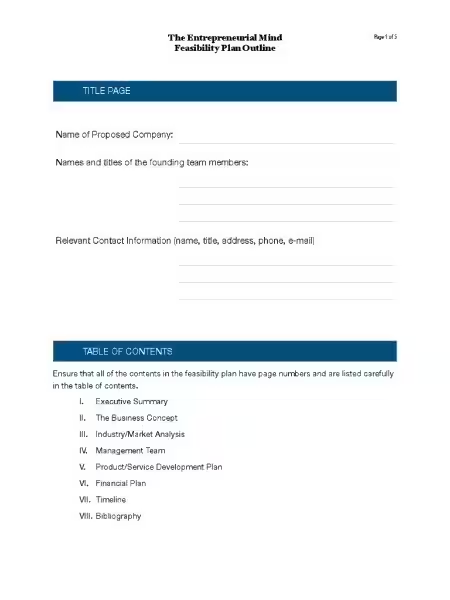
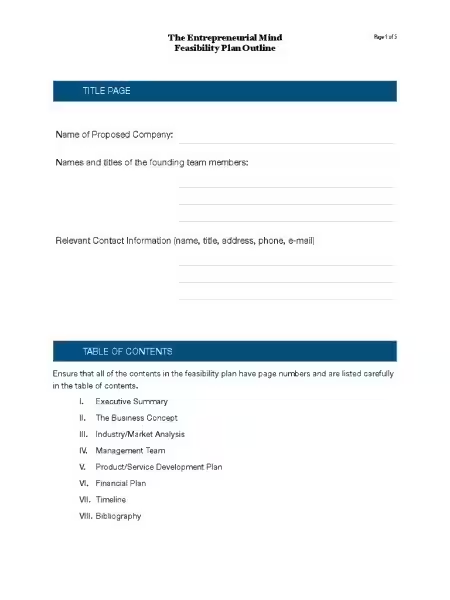
A comprehensive feasibility plan template typically includes the following key sections:
1. Executive Summary
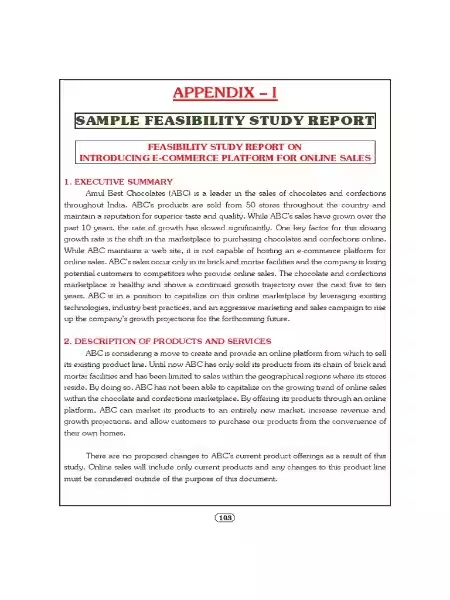
This section is the concise overview of your entire feasibility plan. It should highlight the project's goals, key findings, and recommendations. Think of it as the elevator pitch of your feasibility study. It should grab the attention of busy stakeholders and provide a quick summary of your assessment's conclusion.
The executive summary should not be written first, but rather, last. Only after you have completed the detailed analysis of the other sections can you effectively summarize the key findings and recommendations.
2. Product/Service Description
Clearly define your product or service. What problem does it solve? What are its unique features and benefits? Describe your target market and the overall value proposition. This section provides a clear picture of what you're proposing, setting the stage for the rest of the analysis.
Remember to be specific. Vague descriptions will lead to a weak feasibility analysis. Use this section to establish the "what" of your project, and lay a solid foundation for analyzing its potential viability.
3. Technical Feasibility
This section assesses the technical aspects of the project. Do you have the necessary technology, equipment, and expertise? Are there any potential technical challenges? This often includes a detailed analysis of the technology stack, infrastructure requirements, and potential integration issues.
Addressing this early avoids unexpected technical hurdles. Detailed analysis identifies potential bottlenecks and mitigates risk factors associated with the project's technological components.
4. Market Analysis: Competition and Demand
This is arguably the most critical section. You need to demonstrate a clear understanding of your target market. How large is it? What is the current market demand? Who are your main competitors, and what are their strengths and weaknesses?
A robust market analysis requires thorough research. Use this section to justify your project's potential for success, backing your claims with data and evidence.
5. Marketing Strategy
How will you reach your target market? What marketing channels will you use? What is your pricing strategy? A well-defined marketing strategy is critical to the success of any project. It's essential to highlight the marketing plan's alignment with the overall project's goals.
This section outlines the steps involved in raising awareness and driving sales of your product or service.
6. Financial Feasibility: Costs, Revenue, and ROI
This section analyzes the financial aspects of your project. What are the projected costs? What is the potential revenue? What is the expected return on investment (ROI)? You'll likely need to create financial projections based on your market analysis and marketing strategy.
Financial projections need to be realistic and defendable. They should incorporate potential risks and uncertainties.
7. Organizational and Staffing Needs
Does your organization have the necessary resources to execute the project? Will you need to hire additional staff? What are the organizational implications of the project? This section addresses the internal capabilities required for project execution.
This section also assesses the human resources needed and the potential impact on existing staff.
8. Schedule and Timeline
Outline a realistic project timeline. What are the key milestones? What are the potential risks and challenges to the timeline? A thorough schedule helps in managing expectations and anticipating potential bottlenecks.
This is not just about laying out dates, but also about outlining the activities, dependencies, and potential delays.
This is the culmination of your feasibility study. Based on your analysis, do you recommend proceeding with the project? If so, what are the next steps? If not, why not? Your recommendations should be clearly justified and supported by the evidence you've presented.
This section should offer a clear and concise answer to the central question: is this project feasible?
Using a Feasibility Plan Template
While there's no single "perfect" feasibility plan template, the key is to use a structured approach that addresses all the crucial aspects outlined above. Many templates are available online, but remember to adapt them to your specific project needs. Remember, while templates provide a framework, the quality of your feasibility plan depends on the rigor of your research and analysis. The goal is not just to complete the template, but to create a valuable document that informs sound decision-making.
Feasibility Plan Template FAQ
Here are some frequently asked questions about feasibility plan templates:
What is a feasibility plan template, and why is it important?
A feasibility plan template is a structured document that guides the creation of a feasibility study. It provides a consistent framework for assessing the viability of a project, ensuring all crucial aspects are considered. Its importance lies in its ability to streamline the process, ensuring thoroughness and reducing the risk of overlooking key factors that could lead to project failure. A well-executed feasibility study, using a template, minimizes wasted resources on unviable projects.
What key areas does a feasibility plan template typically cover?
A comprehensive feasibility plan template typically includes sections covering: an executive summary; a detailed product or service description; technical considerations (materials, technology, logistics); a thorough market analysis (including competitor analysis, pricing strategies, and market share projections); a robust marketing strategy; organizational and staffing needs; a realistic project schedule; and, finally, conclusive findings and recommendations.
What types of projects benefit from using a feasibility plan template?
Feasibility plan templates are beneficial for a wide range of projects, including new product launches, business acquisitions, expansion into new markets, bidding on large projects, and even internal initiatives. Essentially, any project with a significant investment of time, resources, or financial capital can benefit from the structured approach a template provides.
Ideally, a feasibility study should be conducted by an unbiased individual or team with relevant expertise and experience. While internal team members often contribute, having an external consultant can provide a more objective perspective, minimizing bias and ensuring a more rigorous analysis.
What is the role of financial assessment in a feasibility plan?
Financial assessment is crucial. This section analyzes projected costs, potential revenue streams, return on investment (ROI), and potential financial risks. It helps determine the project's financial viability and informs decision-making about whether to proceed. Methods like cost-benefit analysis are often employed.
How does market analysis fit into the feasibility plan?
Market analysis is a critical component, evaluating market demand, identifying target audiences, analyzing competition, and assessing the potential for market penetration. This analysis helps determine the project's market viability and informs marketing and pricing strategies.
When should a feasibility study be conducted?
A feasibility study should be conducted before a project is formally approved and work commences, not after. It serves as a crucial "go/no-go" decision point, preventing the investment of resources into unviable projects. This typically occurs after initial project proposals but before any significant work begins.
What is the difference between a feasibility study and a business plan?
While related, a feasibility study focuses specifically on the viability of a single project, answering whether it's realistically achievable. A business plan, on the other hand, is a broader document outlining the overall goals, strategies, and operational plans of an entire business or organization. A feasibility study might be a component within a larger business plan.
What are the key findings and recommendations section of a feasibility plan?
The final section summarizes all findings from the analysis across all areas (technical, financial, market, etc.). Based on these findings, concrete recommendations are presented, advising whether to proceed with the project and outlining the suggested next steps. This section guides decision-makers towards an informed choice regarding project approval.