Understanding Programme Monitoring: A Key to Effective Program Success
Understanding Programme Monitoring: A Key to Effective Program Success
Programme monitoring is often misunderstood as a simple after-the-fact evaluation. However, its true power lies in its capacity to transform a program from a static entity into a dynamic, adaptable system capable of continuous improvement. This article will explore the core principles of effective programme monitoring, explaining why it's not merely a box-ticking exercise, but a vital ingredient for success.
The Three Pillars of Effective Programme Monitoring
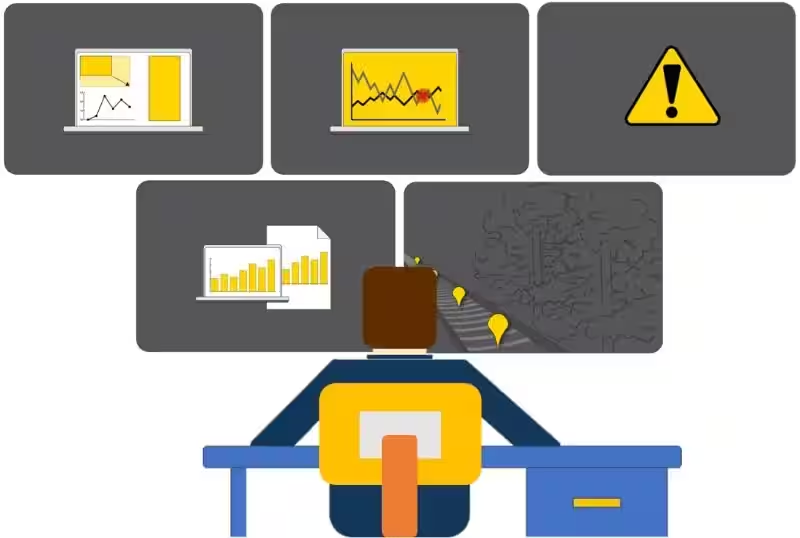
The process of effective programme monitoring rests on three interconnected pillars: collection, analysis, and application. These three stages form a cyclical process, constantly informing and refining the program's trajectory.
The collection phase involves systematically gathering relevant data throughout the program's lifecycle. This isn't about collecting vast amounts of data for data's sake; it's about identifying key indicators that directly reflect the program's effectiveness and impact. This might include quantitative measures like participation rates, service utilization, or cost-effectiveness, as well as qualitative data gathered through interviews, focus groups, or feedback surveys. The key here is to design a data collection strategy that is both efficient and provides meaningful insights.
Following data collection, the analysis phase focuses on making sense of the gathered information. This involves identifying trends, patterns, and anomalies that might indicate areas for improvement or potential problems. Sophisticated statistical analysis might be needed for large datasets, but even simple visual representations can reveal crucial insights. This stage is about moving beyond raw data to understand the 'story' the data is telling about the program's performance.
Finally, the application phase is where the rubber meets the road. The insights gained from data analysis must be actively translated into concrete actions. This might involve adjusting program strategies, refining service delivery methods, or even reallocating resources. This phase requires strong leadership and a willingness to adapt the program based on evidence, rather than sticking rigidly to the initial plan. This iterative process is at the heart of effective programme monitoring.
Beyond Evaluation: Embracing a Learning-Oriented Approach
Traditional program evaluations often focus solely on measuring whether a program achieved its predetermined outcomes. However, effective programme monitoring takes a broader perspective. It's not just about whether the program worked, but how it worked. This learning-oriented approach allows for a deeper understanding of the program's strengths and weaknesses, leading to more informed decisions and ultimately, greater impact.
By focusing on the process of implementation, programme monitoring allows for early detection of problems or unexpected challenges. This proactive approach allows for timely interventions, preventing minor issues from escalating into significant setbacks. This is far more efficient and cost-effective than reacting to problems only after they have caused substantial damage. For example, if monitoring reveals low participation rates among a specific demographic, adjustments can be made to address the underlying barriers before a significant portion of the target population is left underserved.
The Vital Role of Feedback Loops
Effective programme monitoring isn't a one-way street. It necessitates the establishment of robust feedback loops, ensuring that the data collected informs ongoing program improvements. This requires a clear mechanism for translating monitoring data into actionable strategies. The feedback should be communicated transparently to all stakeholders, including program staff, management, funders, and even program beneficiaries. This transparency fosters a culture of continuous learning and improvement.
Imagine a program aiming to reduce youth unemployment. Regular programme monitoring might reveal that a key component, job skills training, is not engaging participants effectively. This feedback, fed back into the programme, could lead to changes in training methods, potentially incorporating more interactive elements or tailoring the curriculum to better reflect local industry needs. This iterative process ensures that the program remains responsive to the evolving needs of its target population and the changing context in which it operates.
Conclusion: Programme Monitoring as a Dynamic Process
In conclusion, programme monitoring is not simply a necessary evil or a bureaucratic hurdle. It's a dynamic and iterative process that transforms a program from a static plan into a living, learning organism. By systematically collecting, analyzing, and applying data, programs can adapt to changing circumstances, maximize their impact, and ultimately achieve their goals more effectively. Embracing this continuous improvement cycle is essential for ensuring both the effectiveness and long-term sustainability of any program. The shift from a rigid, pre-defined approach to a flexible, data-driven model, fueled by robust programme monitoring, is crucial for achieving lasting and meaningful change.
What is program monitoring within the context of the Prevention Collaborative?
Program monitoring, within the Prevention Collaborative framework, is not a simple end-of-program evaluation. It's a dynamic, ongoing process of data collection, analysis, and application designed to continuously improve and adapt programs throughout their lifecycle. It's about understanding how a program works, not just whether it "worked," allowing for proactive adjustments based on real-time data. This iterative approach ensures the program remains flexible and responsive to changing circumstances.
Why is continuous monitoring important?
Continuous monitoring allows for early detection of problems or gaps, enabling proactive interventions instead of reactive responses after significant setbacks. This minimizes wasted resources and maximizes the program's impact. It shifts the focus from solely achieving predetermined outcomes to a learning-oriented approach, fostering a deeper understanding of program effectiveness and identifying areas for improvement. A robust monitoring system enables a program to adapt to real-world conditions and remain relevant and effective.
What are the key stages of the monitoring process?
The process involves three key stages: collection, analysis, and application. First, relevant data is systematically collected throughout the program's implementation. This data is then analyzed to identify trends, patterns, and areas needing improvement. Finally, and most crucially, the findings are actively applied to refine program activities and address challenges. This iterative cycle forms the core of the collaborative's approach.
How does the feedback loop work in program monitoring?
The monitoring system is not a one-way street; it emphasizes strong feedback loops. Data is not just collected and analyzed; it's actively fed back into the program's design and execution. This requires a clear mechanism for translating monitoring data into actionable strategies. This ensures the program remains flexible and responsive, adapting dynamically based on ongoing evidence. Program adjustments are not viewed as contingency plans but as an essential, iterative part of successful prevention.
What is the overall goal of program monitoring within the Prevention Collaborative?
The overarching goal is to maximize the program's effectiveness and achieve long-term success. This involves a paradigm shift from a rigid, pre-defined approach to a flexible, data-driven model. By continuously learning and adapting, the program optimizes its impact and increases the likelihood of achieving the desired outcomes. It's about building a robust system for ongoing learning and improvement, enabling proactive adjustments and maximizing the chances of success. The emphasis is on a proactive, learning-oriented approach, rather than a reactive, post-hoc assessment.