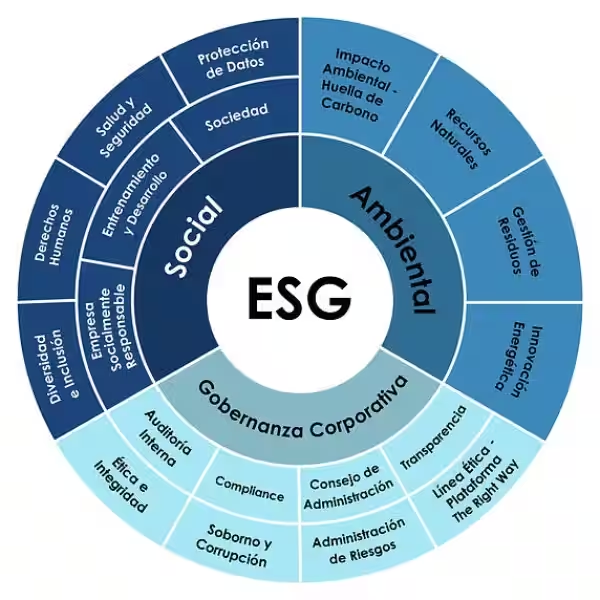
What does it truly mean to be an ESG leader in today's rapidly evolving business landscape? It's more than just a buzzword; it's a fundamental shift in how organizations operate and interact with the world. This article explores the crucial role of ESG leadership, its key principles, and the practical steps businesses can take to embrace this transformative approach.
ESG leadership represents a paradigm shift from traditional leadership models that primarily focused on short-term profit maximization. It acknowledges the interconnectedness of economic success, environmental sustainability, and social responsibility. Instead of viewing these as separate entities, ESG leadership integrates them into a unified, holistic strategy. This means aligning an organization's environmental, social, and governance (ESG) goals with its core values, vision, and overall strategic direction.
The framework of ESG itself provides a structured approach to evaluating a company's impact on society and the environment. While distinct from the broader concept of sustainability, there is significant overlap. Sustainability is the overarching goal, while ESG provides a framework for measuring progress and accountability toward that goal. ESG leadership is the driving force behind the implementation and execution of this framework.
The Growing Importance of ESG Leadership
Several factors are driving the increasing importance of ESG leadership. Climate change, arguably the most pressing global challenge, is directly impacting businesses across various sectors, creating operational disruptions and vulnerabilities. Furthermore, consumer preferences are shifting; more and more consumers are prioritizing sustainability and willing to pay a premium for products and services from companies demonstrating a strong commitment to ESG principles.
This consumer shift goes hand-in-hand with the changing expectations of employees. Top talent is increasingly drawn to organizations with robust ESG performance, making it a critical factor in recruitment and employee retention. This creates a competitive advantage for companies that successfully integrate ESG into their operations.
Key Principles of Effective ESG Leadership
Effective ESG leadership rests on several core principles:
Systemic Thinking
ESG leaders need to adopt a systemic perspective, understanding the broader ecological and social context within which their organization operates. This means considering the wider implications of their decisions, both positive and negative, extending beyond immediate financial outcomes.
This holistic view allows for proactive risk management and the identification of opportunities for innovation and growth that are often missed by a more narrow, profit-focused approach.
Long-Term Strategy
Short-term gains should not overshadow long-term sustainability. An effective ESG strategy prioritizes enduring success and positive impact, setting ambitious goals that extend beyond quarterly earnings reports.
This necessitates a shift in mindset, moving away from immediate gratification towards a more patient approach that fosters resilience and adaptability in the face of future challenges.
Stakeholder Inclusion
ESG leadership necessitates a commitment to inclusivity, ensuring that diverse voices are heard throughout the strategic decision-making process. This includes engaging with employees, customers, suppliers, local communities, and investors.
By considering the perspectives of all stakeholders, companies can develop more effective and equitable solutions that address a wider range of concerns and create lasting value.
Diversity-Driven Innovation
Embracing diversity in all its forms fosters creativity and innovation. By incorporating diverse perspectives and experiences, organizations can reimagine business models to create solutions that are both profitable and sustainable.
This principle recognizes that diverse teams are better equipped to anticipate and address the needs of diverse markets, leading to improved outcomes for all stakeholders.
Transparency and Accountability
Open communication about sustainability goals and progress is paramount. Transparency builds trust with stakeholders and helps avoid the pitfalls of “greenwashing”—making misleading or unsubstantiated claims about environmental performance.
Accountability mechanisms ensure that organizations are held responsible for their commitments and progress towards achieving their ESG goals.
Social Equity
ESG leadership is not just about environmental sustainability; it's also about social equity. Prioritizing fair and inclusive practices within the organization and its broader sphere of influence is crucial for creating a just and equitable society.
This involves addressing issues like fair wages, equal opportunities, and ethical sourcing, ensuring that the benefits of business are shared broadly and not concentrated in the hands of a few.
Practical Applications and Examples of ESG Leadership
The practical applications of ESG leadership vary across industries, but common strategies include: implementing robust emissions reduction metrics, dedicating resources to sustainability initiatives, fostering a culture of sustainability within the organization, and implementing seemingly small but ultimately impactful changes such as recycling programs. Companies like Intrepid Travel (prioritizing local hiring and minimizing plastic waste), Westpac (integrating ESG into corporate policies), and Boody (using sustainable materials and supporting environmental causes) exemplify successful ESG leadership.
The Growing Demand for ESG Leaders
The demand for skilled ESG leaders is rapidly increasing, driven by both consumer and employee pressure, as well as impending government regulations such as mandatory climate reporting. Developing ESG leadership skills requires a strong understanding of global trends, effective ESG strategies, and the ability to navigate the complex interplay of environmental, social, and governance considerations. Dedicated educational programs are emerging to equip leaders with the necessary knowledge and competencies to drive sustainable change within their organizations. The future of business is inextricably linked to ESG leadership – it’s not just an option, but a necessity for long-term success and a positive impact on the world.
Here's an FAQ section on ESG leadership, based on the provided information. I've aimed for clarity and conciseness, avoiding direct quotes to prevent plagiarism.
Frequently Asked Questions: ESG Leadership
What is ESG leadership?
ESG leadership represents a fundamental shift in business leadership. It moves beyond a sole focus on short-term profits to encompass a balanced approach that considers environmental stewardship, social responsibility, and good governance alongside economic success. It’s about aligning a company's values, vision, and strategy with its environmental, social, and governance (ESG) goals, reflecting the growing urgency of climate action and evolving stakeholder expectations. The ESG framework itself evaluates a company's impact on society and the environment.
Why is ESG leadership important?
Several factors drive the importance of ESG leadership. Climate change poses significant risks and disruptions to businesses across all sectors. Consumers are increasingly prioritizing sustainability, often willing to pay more for sustainable products. Top talent is increasingly drawn to companies with strong ESG performance, impacting recruitment and retention. Furthermore, growing regulatory pressure, such as mandatory climate reporting, is making strong ESG performance a necessity.
What are the key principles of effective ESG leadership?
Effective ESG leadership hinges on several core principles. These include systemic thinking (considering the broader context of decisions), the development of a long-term strategy (focused on enduring value creation), stakeholder inclusion (ensuring diverse perspectives inform decision-making), diversity-driven innovation (creating both profitable and sustainable solutions), transparency and accountability (openly communicating sustainability goals and progress), and a commitment to social equity (prioritizing fair and inclusive practices).
How can companies implement ESG leadership?
Practical applications vary across industries but commonly involve implementing emissions reduction metrics, dedicating resources to sustainability initiatives, fostering a culture of sustainability within the organization, and implementing impactful changes, such as recycling programs. This might include integrating ESG considerations into core business strategies, supply chain management, and product development.
What are some examples of companies demonstrating ESG leadership?
Numerous companies are demonstrating effective ESG leadership. Examples include businesses prioritizing local hiring and reducing plastic waste, integrating ESG into corporate policies and strategies, and using sustainable materials while contributing to environmental causes. These actions demonstrate a commitment to both profitability and positive social and environmental impact.
What are the challenges of implementing ESG leadership?
Implementing ESG leadership presents challenges, including measuring and reporting on ESG performance accurately, navigating the complexities of different ESG standards and frameworks, balancing short-term financial pressures with long-term sustainability goals, and ensuring genuine commitment across the organization. Overcoming these challenges requires strong leadership, commitment from all levels of the organization, and ongoing learning and adaptation.
How can I develop ESG leadership skills?
Developing ESG leadership skills requires a solid understanding of global sustainability trends, effective ESG strategies, and the ability to integrate these principles into organizational decision-making. Dedicated educational programs and professional development opportunities are emerging to equip leaders with the necessary knowledge and competencies to drive sustainable change within their organizations. Continuous learning and engagement with relevant resources are also crucial.