Understanding Ethanol UN 1170: A Guide to Safety and Transportation
Understanding Ethanol UN 1170: A Guide to Safety and Transportation
Understanding the nuances of transporting and handling hazardous materials is crucial for safety and compliance. This article focuses on ethanol UN 1170, clarifying its classification, safety protocols, and the information available from key resources like CAMEO Chemicals. We'll explore the vital distinctions between emergency response guidelines and shipping regulations for this flammable liquid.
The Emergency Response Guidebook (ERG) provides initial guidance for first responders at transportation incidents involving hazardous materials. For ethanol UN 1170, the ERG offers a somewhat reassuring picture.
Specifically, the ERG notably does not recommend any immediate isolation distances or protective actions upon encountering a spill of ethanol UN 1170 during transportation. This lack of specified isolation distances indicates that, in the initial phases of an incident, the immediate dangers associated with the release of this quantity of ethanol are relatively low. However, this does not mean there are no hazards; appropriate caution is still paramount.
Further, the ERG does not predict the significant generation of toxic-by-inhalation gases upon contact with water. This is important because it reduces the complexity of initial emergency response, focusing efforts on the primary hazard: its flammability. Remember, this information pertains solely to initial response in transportation incidents and does not encompass larger-scale industrial spills or other scenarios.
Limitations of the ERG
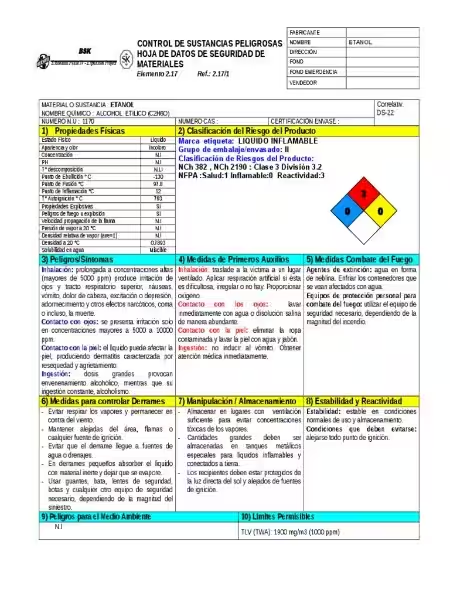
It's crucial to understand the ERG's limitations. It offers initial, broad guidance, not a complete risk assessment. The absence of specific isolation distances doesn't negate the inherent flammability of ethanol. First responders should still exercise caution, use appropriate personal protective equipment (PPE), and ensure adequate ventilation. The ERG is a starting point, not the final word in emergency response planning. For a comprehensive understanding, always refer to the complete safety data sheet (SDS).
Transportation Regulations: The 49 CFR 172.101 Hazmat Table
In contrast to the ERG's focus on initial response, the Hazardous Materials Table (49 CFR 172.101) dictates the regulations for safe transportation of hazardous materials. This is where the specifics of shipping ethanol UN 1170 become clear.
The CAMEO Chemicals datasheet, drawing from this table, classifies ethanol UN 1170 as a flammable liquid (Hazard Class 3). This classification dictates specific handling, packaging, and labeling requirements for transportation, both domestically and internationally. The proper shipping names are clearly defined, including variations like "Ethanol," "Ethyl alcohol," "Ethanol solutions," and "Ethyl alcohol solutions."
Understanding Hazard Class 3 and Shipping Requirements
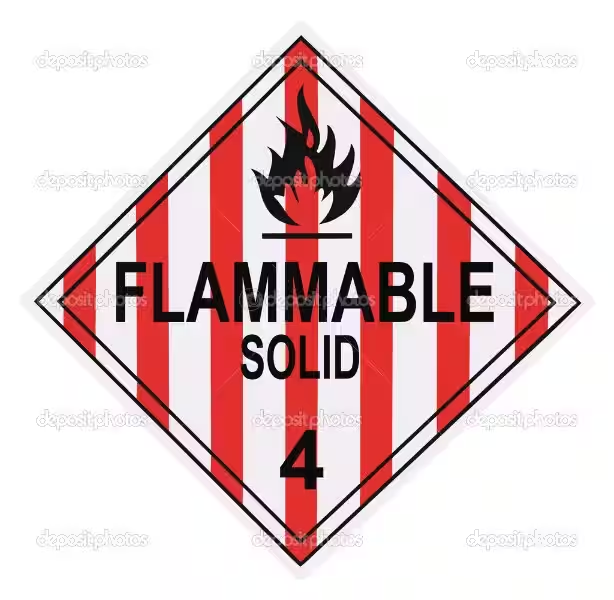
The Hazard Class 3 designation for flammable liquids highlights the primary risk associated with ethanol UN 1170: its potential for ignition and fire. This classification necessitates adherence to specific packaging standards, labeling requirements, and transportation protocols to minimize the risk of accidents. The datasheets will specify the necessary precautions depending on quantity and mode of transport.
The detailed datasheet will provide information on whether certain shipping names require technical name specifications in parentheses, clarifying any ambiguities in identification for customs and transportation authorities. Additionally, the information will indicate whether the material presents an inhalation hazard, again emphasizing the necessity of consulting the complete document.
Synthesizing the Information: A Holistic Approach
The CAMEO Chemicals datasheets for ethanol UN 1170 effectively synthesize two critical perspectives: emergency response and transportation regulations. The ERG offers immediate, general guidance for first responders to transportation accidents, while the 49 CFR 172.101 Hazmat Table provides the legally mandated requirements for safe shipment.
Understanding both is vital for complete safety. The absence of specific details in the ERG summary concerning other materials possibly covered under UN/NA 1170 underscores the importance of referring to the complete CAMEO Chemicals datasheets. This holistic approach ensures preparedness for both emergency situations and routine transport of this important chemical.
While this article focuses on the core information, it's crucial to remember that managing the risks associated with ethanol UN 1170 extends beyond the ERG and Hazmat Table. Factors like storage conditions, personal protective equipment, and spill response procedures all play vital roles in ensuring safety. Always refer to the complete SDS. This will provide additional information such as potential health effects, exposure limits, and detailed spill response protocols. Never hesitate to consult with trained professionals for specific situations or questions. Safe handling of ethanol UN 1170 requires a comprehensive understanding of its properties and the relevant regulations.
UN1170 Ethanol: Frequently Asked Questions
Here are some frequently asked questions regarding UN1170, Ethanol:
What is UN1170?
UN1170 refers to the United Nations number for ethanol, also known as ethyl alcohol or ethanol solutions. This number is used internationally to identify this substance for transportation and safety purposes. The UN number itself doesn't fully describe the specific composition, so always refer to complete safety data sheets for precise details.
What are the hazard classifications for UN1170?
UN1170, ethanol, is classified as a flammable liquid (Hazard Class 3). This classification dictates specific handling, storage, and transportation regulations.
What are the proper shipping names for UN1170?
The proper shipping names for UN1170 include "Ethanol," "Ethyl alcohol," "Ethanol solutions," and "Ethyl alcohol solutions." The exact name used may depend on the specific concentration and intended use, as detailed in complete safety data sheets.
Does the Emergency Response Guidebook (ERG) provide specific isolation distances for UN1170 incidents?
No, the ERG for UN1170 does not specify initial isolation or protective action distances. The ERG provides general guidance for initial response to transportation incidents, not facility spills. Its recommendations are intended for first responders in the early stages of an emergency.
Does contact with water create significant inhalation hazards with UN1170 according to the ERG?
No, the ERG does not indicate that contact with water will produce significant toxic-by-inhalation gases for UN1170.
Where can I find more detailed information on the safe handling and transportation of UN1170?
Complete safety data sheets (SDS) from sources like CAMEO Chemicals provide comprehensive information beyond the scope of the ERG and the 49 CFR 172.101 Hazmat Table. These SDSs will detail specific hazards, handling precautions, and emergency response procedures. It is crucial to consult the complete SDS for the specific ethanol product being handled.
Does the UN1170 classification include information about inhalation hazards?
While the ERG doesn't indicate a significant inhalation hazard from water contact, the complete SDS for the specific UN1170 material should be consulted to determine if other inhalation hazards exist. The information provided in 49 CFR 172.101 will clarify if an inhalation hazard is present for shipping purposes.
What is the difference between the information provided by the ERG and the 49 CFR 172.101 Hazmat Table?
The ERG focuses on immediate emergency response to transportation incidents, providing general guidance for first responders. The 49 CFR 172.101 Hazmat Table details the regulations and classifications for the safe transportation of hazardous materials, including proper shipping names and hazard classes. Both are important, but serve different purposes.
Are there other substances besides ethanol that might be classified under UN1170?
Potentially. The UN number might encompass other related materials. Always refer to the complete CAMEO Chemicals datasheets for a full list of substances covered under UN1170 and their specific properties. Relying solely on the UN number is insufficient for comprehensive hazard identification.