Understanding Your Poison Gas Placard: A Guide to Safe Hazardous Material Transportation
Understanding Your Poison Gas Placard: A Guide to Safe Hazardous Material Transportation
This article aims to clarify the importance and proper use of poison gas placards, specifically focusing on their role in the safe transportation of hazardous materials. While the initial prompt focused on a website's requirement for JavaScript, the context shifted to the crucial safety aspect of properly identifying and handling hazardous materials, making this a more relevant and useful topic.
Hazardous materials, including poisonous gases, pose significant risks during transportation. Accidents can have devastating consequences, impacting human health and the environment. To mitigate these risks, comprehensive regulations mandate the clear and visible identification of hazardous materials using placards. These placards act as immediate visual warnings, alerting emergency responders and the public to the potential dangers involved. The presence of a correctly affixed poison gas placard is not merely a compliance issue but a critical component of public safety. Ignoring these regulations can lead to severe penalties.
The use of standardized placards ensures universally understood communication, regardless of language barriers. This is vital in emergency situations where quick and accurate identification of hazardous materials is paramount for effective response.
Types of Poison Gas Placards and Their Significance
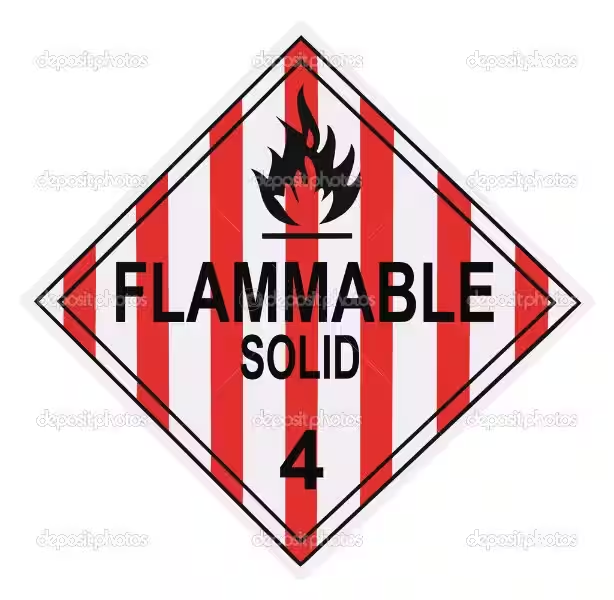
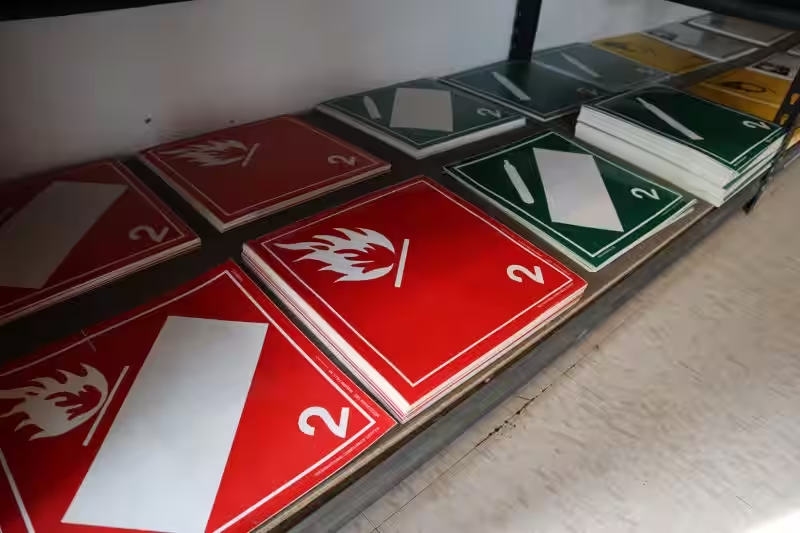
Poison gas placards aren't a single, monolithic entity. They are carefully designed to convey the specific hazard presented. The type of placard used depends on the nature of the poisonous gas being transported, its classification based on the UN system, and the associated risks. Understanding the specific pictogram and hazard class on the placard is crucial for those handling and transporting these materials. Incorrect placarding can lead to severe consequences, hence the importance of accurate identification and proper placement.
Choosing the Right Poison Gas Placard: Materials and Regulations
The choice of placard material significantly impacts durability and longevity, which influences the placard's effectiveness. Common materials include:
Polycoated tagboard: A cost-effective option, suitable for short-term use or when a placard holder is employed. Its water-resistant coating provides some protection against the elements.
Rigid plastic: This durable material offers superior weather resistance, making it ideal for repeated use. Its robustness ensures the placard remains legible and functional for extended periods.
Permanent self-adhesive vinyl: This option offers the most long-lasting solution, particularly for direct application to the vehicle. Its superior outdoor durability is critical for maintaining visibility in harsh weather conditions.
When selecting materials, consider the transportation environment, the duration of the trip, and the potential exposure to adverse weather conditions. Regulations often stipulate minimum durability requirements, which should always be adhered to.
Regulatory Compliance: DOT and Beyond
Compliance with relevant regulations, primarily those set forth by the Department of Transportation (DOT), is non-negotiable. The DOT mandates specific placard sizes, placement requirements, and material specifications to ensure visibility and consistency. These regulations are designed to safeguard public safety and prevent accidents. Failure to comply can result in significant fines and legal repercussions.
Understanding the complexities of DOT regulations concerning the transportation of hazardous materials is crucial. The regulations dictate not just the use of poison gas placards, but also the entire process of labeling, packaging, and handling. Resources like the DOT Chart 15 and 49 CFR should be consulted for detailed information.
Beyond the Placard: A Holistic Approach to Safety
While the poison gas placard is a crucial element in hazardous material transportation, it's only one piece of a larger safety puzzle. Additional measures must be implemented to ensure safe handling and transportation of poisonous gases. These include:
Proper training: Personnel involved in the handling and transportation of hazardous materials must receive comprehensive training on safe practices. This includes understanding placarding regulations, emergency response procedures, and personal protective equipment (PPE).
Emergency preparedness: Contingency plans must be in place to address potential accidents or spills. This encompasses emergency response teams, communication protocols, and containment procedures.
Vehicle maintenance: Vehicles used for hazardous material transportation must be regularly inspected and maintained to ensure they are in optimal condition. This includes checking for any leaks or damage that could compromise the integrity of the load.
Appropriate packaging: The packaging used for poisonous gases must meet stringent safety standards to prevent leakage or accidental release. This is a crucial element in preventing exposure and accidents.
Safe transportation of hazardous materials is a shared responsibility requiring a multifaceted approach. The poison gas placard plays a vital role in alerting others to the potential dangers, but it requires a comprehensive safety strategy to ensure the safety of personnel and the environment.
By understanding the importance of the poison gas placard, choosing the appropriate materials, and adhering to regulations, we can significantly reduce risks associated with the transportation of hazardous materials. A commitment to safety and compliance is crucial for preventing accidents and safeguarding public health and the environment.
Poison Gas Placard FAQ
What is a poison gas placard?
A poison gas placard is a sign used to identify vehicles transporting hazardous materials classified as inhalation hazards (toxic gases), specifically under Division 2.3 of the Department of Transportation (DOT) regulations. These placards are required by law and must be displayed prominently on the front, back, and sides of the vehicle transporting these materials. Failure to properly display these placards can result in serious penalties.
What are the dimensions of a poison gas placard?
Standard DOT-compliant poison gas placards measure 10.75 inches by 10.75 inches.
What materials are poison gas placards available in?
Poison gas placards are typically available in three materials: polycoated tagboard (a cost-effective, single-use option), rigid plastic (durable and weather-resistant for repeated use), and permanent self-adhesive vinyl (a long-lasting outdoor solution). Magnetic versions may be available upon request.
How many placards are typically sold per package?
Placards are usually sold in bulk packages of 25 or 100 units.
Are matching shipping labels available?
Yes, matching shipping labels are often available separately. (Refer to the specific product listing for details on ordering these labels - often identified by a separate item number, such as #03028 as an example.)
Where should I place poison gas placards on my vehicle?
Poison gas placards must be displayed on the front, back, and sides of the vehicle transporting the hazardous materials. Placement must comply with all applicable DOT regulations (HM-206).
What regulations govern the use of poison gas placards?
The use of poison gas placards is governed by the US Department of Transportation (DOT) regulations, specifically 49 CFR (Code of Federal Regulations) Part 172, Subpart F, and associated sections. You should consult DOT Chart 15 for a comprehensive guide on placarding and labeling. Further details on Class 2 classifications (Divisions 2.1, 2.2, and 2.3) and hazard zone assignments can be found in 49 CFR 173.115 and 173.116.
What if I need more information about hazard classifications (e.g., flammable gas, cryogen, LC-50)?
For a more detailed explanation of terminology related to hazardous materials, consult a resource such as the SDS HyperGlossary which provides definitions of common terms used in safety data sheets.
Are there different types of Class 2 placards?
Yes, Class 2, which covers gases, is further subdivided into several divisions (2.1, 2.2, and 2.3) based on the specific hazards of the gas being transported. Division 2.3 specifically addresses toxic gases and requires the use of the appropriate placard.
What happens if I don't use the correct placard?
Failure to properly placard a vehicle transporting hazardous materials, including toxic gases, is a serious violation of DOT regulations and can result in significant fines and penalties. It can also pose serious safety risks.