Understanding Your Safety Placard: A Guide to Hazmat Transportation
Understanding Your Safety Placard: A Guide to Hazmat Transportation
Are you responsible for transporting hazardous materials? Do you understand the crucial role of a safety placard in ensuring safe and legal transport? Navigating the complex world of Department of Transportation (DOT) regulations can be daunting, but understanding the basics of hazard communication, specifically the use of safety placards, is essential for protecting yourself, your crew, and the public. This article will guide you through the key aspects of using safety placards in compliance with DOT regulations.
Before even considering a safety placard, accurate identification of your hazardous materials is paramount. The DOT classifies hazardous materials into nine hazard classes, each representing a unique set of risks. These classes include explosives, flammables, gases, poisons, and more. Each class is further subdivided, adding complexity to the identification process.
Understanding these classifications isn’t just about reading labels; it requires a thorough understanding of the materials’ chemical composition and inherent properties. Misidentification can lead to incorrect placard selection and potentially catastrophic consequences. Resources like the DOT's Hazardous Materials Table are crucial for accurate identification.
Selecting and Placing Your Safety Placard
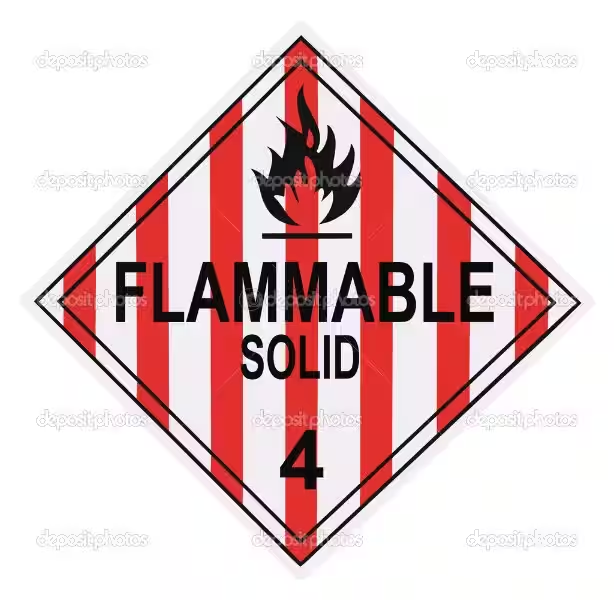
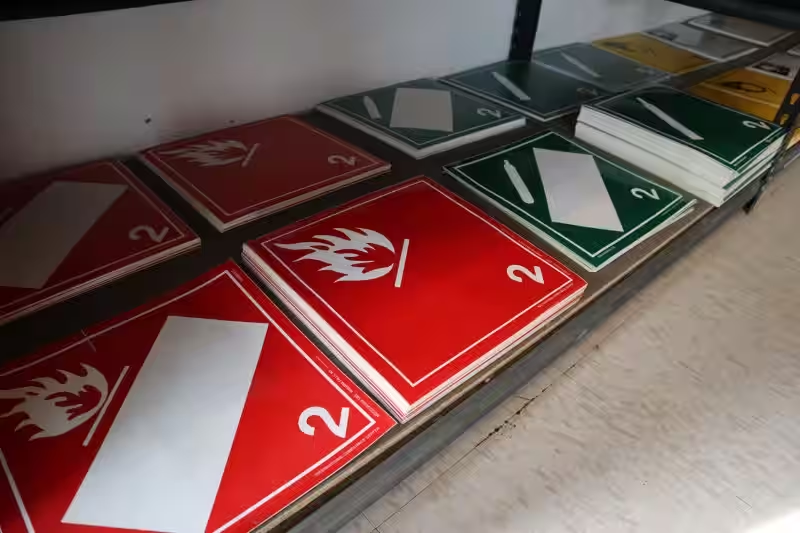
Once your hazardous materials are correctly identified, choosing the right safety placard is the next critical step. The placard itself is a diamond-shaped sign displaying a hazard class symbol and number. Often, more than one placard is required for a single shipment, depending on the presence of multiple hazardous materials. Some shipments might require a primary placard and several subsidiary placards, each indicating a specific hazard present.
Correct placement is as important as correct selection. Placards must be clearly visible and affixed to the outside of the vehicle or container in designated locations, and according to specific size requirements outlined in DOT regulations. Improper placement can render the placards useless, negating their protective purpose.
Quantity and its Impact on Placarding Requirements
The amount of hazardous materials you're transporting significantly impacts placarding requirements. The DOT establishes quantity thresholds that determine whether placards are legally required. Transporting small quantities of a hazardous material might not always necessitate a placard, while larger quantities will almost certainly require one.
Understanding these quantity limits is imperative. Exceeding these limits without proper placarding exposes your operation to serious legal and safety risks. The DOT provides detailed information on these limits, which can be found in their online resources.
Exceptions and Special Considerations in Safety Placard Usage
While the rules are generally straightforward, exceptions exist. Certain materials or transportation methods may have specific exemptions or alternative hazard communication methods permitted by the DOT. For instance, mixed loads containing multiple hazardous materials might require a unique placarding scheme. Understanding these exceptions is crucial to avoid accidental non-compliance.
Detailed guidance on these exceptions is usually found in comprehensive DOT publications and should be consulted before transport. Ignoring these exceptions can lead to serious penalties.
Compliance, Penalties, and the Importance of Ongoing Updates
Compliance with DOT regulations governing safety placards is not merely a suggestion; it's a legal obligation. Failing to comply can result in significant fines, legal repercussions, and even criminal charges. More importantly, improper placarding poses a severe risk to public safety and the environment.
Moreover, DOT regulations are subject to change. Staying informed about updates is crucial for continued compliance. Regularly checking the DOT's website and subscribing to relevant updates is a responsible practice for all hazardous materials handlers.
Resources for Staying Informed
Several organizations provide extensive resources to ensure compliance with DOT hazmat regulations. J.J. Keller & Associates, for instance, offers comprehensive training materials, software solutions, and expert consultation to assist businesses in navigating the complexities of hazard communication and transportation. Utilizing such resources is highly recommended to ensure safety and avoid costly errors. The DOT website itself offers a wealth of free information, including regulations, guides, and forms.
Ultimately, the effective use of a safety placard is about more than just compliance; it's about prioritizing safety. By understanding the nuances of DOT regulations, correctly identifying hazardous materials, selecting and placing the appropriate placards, and staying updated on regulatory changes, you can significantly reduce the risks associated with hazardous materials transportation. Remember, the safety of your personnel, the public, and the environment depends on your thorough understanding and adherence to these vital regulations.
Safety Placard FAQ
Here are some frequently asked questions about safety placards, focusing on compliance with Department of Transportation (DOT) regulations. Remember, this information is for general understanding and should not replace professional guidance or the official DOT regulations. Always consult the latest DOT guidelines and seek expert advice when dealing with hazardous materials.
What is a safety placard?
A safety placard is a diamond-shaped sign displayed on vehicles and containers transporting hazardous materials. It communicates the type and degree of hazard present to emergency responders and the public, enabling them to take appropriate safety precautions. Placards are crucial for preventing accidents and ensuring safe handling of hazardous materials during transport.
How do I identify the correct placard for my shipment?
Correct placard selection depends on the hazardous materials being transported. You must first accurately identify the hazardous materials according to their DOT hazard classes (e.g., explosives, flammables, poisons). Each class has specific placard requirements. The quantity of the hazardous material also influences placard selection. Smaller quantities may have different requirements than larger ones. If you are unsure, consult the DOT's hazardous materials regulations or a qualified hazardous materials expert.
Where should I place the placards on my vehicle or container?
Placards must be displayed prominently on all four sides of the vehicle or container carrying hazardous materials. Specific placement rules are detailed in the DOT regulations. The placards must be easily visible and readable from a reasonable distance. The size of the placards also depends on the size of the vehicle or container.
What happens if I don't use the correct placards?
Failure to properly placard hazardous materials carries serious consequences. Incorrect or missing placards can result in significant fines, legal repercussions, and potential harm to people and the environment. Non-compliance puts everyone at risk and undermines the safety protocols designed to protect them.
Are there exceptions to placarding requirements?
Yes, there may be exceptions for certain materials or transport situations. These exceptions are usually outlined in the DOT regulations. For example, small quantities of some hazardous materials might not require placards. However, it's vital to understand these exceptions thoroughly before assuming they apply to your specific shipment. When in doubt, always err on the side of caution and placard appropriately.
How can I stay updated on changes to DOT regulations?
DOT regulations are subject to change. Staying informed is vital for continued compliance. Resources such as the official DOT website and specialized publications from companies like J.J. Keller & Associates can help you keep abreast of the latest requirements. Regularly reviewing and updating your understanding of these regulations is essential for maintaining safety and avoiding legal issues.
This FAQ provides a general overview. For precise and detailed information, always refer to the official DOT regulations and seek professional guidance when needed. The safety and well-being of the public and those handling hazardous materials depend on strict adherence to these regulations.