Understanding Joint Seal: A Crucial Aspect of Building Integrity
Understanding Joint Seal: A Crucial Aspect of Building Integrity
Building a structure is like constructing a complex puzzle, where each piece must fit perfectly to ensure the overall stability and longevity of the final product. The interfaces between these pieces, known as joints, are points of potential vulnerability. This is where the critical role of joint seal comes into play. A well-sealed joint protects the building from the elements, preventing damage and preserving its structural integrity. This article will explore the importance of effective joint sealing, the factors influencing sealant selection, and the benefits of choosing the right product.
The primary function of a joint seal is to act as a barrier against environmental elements. These elements, including water, air, heat, cold, and vapor, can significantly damage building materials if they penetrate the structure. Water ingress can lead to mold growth, rot, and structural weakening. Air infiltration can reduce energy efficiency, increasing heating and cooling costs. Extreme temperatures can cause expansion and contraction of materials, leading to cracking and damage.
Therefore, proper joint sealing is not just a matter of aesthetics; it's essential for the long-term performance and durability of any building. A compromised joint seal can lead to costly repairs, reduced lifespan, and even structural failure in extreme cases. Imagine the consequences of a leaky roof or foundation – the damage extends far beyond the immediate point of failure.
Factors Affecting Joint Seal Selection
Choosing the right joint seal is a crucial step in ensuring effective protection. Several factors must be considered, including:
Joint width: The size of the gap to be sealed dictates the type and amount of sealant needed.
Building materials: Different materials expand and contract at different rates, requiring sealants with varying degrees of flexibility.
Environmental conditions: Exposure to sunlight, moisture, or extreme temperatures influences the required properties of the sealant.
Movement capabilities: The sealant must be able to accommodate any movement in the joint without compromising the seal. This is especially important in areas prone to seismic activity or thermal expansion.
Aesthetic considerations: In some cases, the appearance of the sealant is a factor, particularly in visible joints.
Ignoring these factors can lead to sealant failure and the subsequent problems mentioned above. A poorly chosen sealant, no matter how well applied, is unlikely to provide adequate protection.
Types of Joint Sealants and Their Applications
The market offers a wide variety of joint sealants, each with specific properties suited to different applications. Some common types include:
Silicone sealants: Known for their excellent flexibility, durability, and weather resistance. Suitable for a wide range of applications, both indoors and outdoors.
Acrylic sealants: Generally less expensive than silicone, but may not be as durable or weather-resistant. Often used for interior applications.
Polyurethane sealants: Offer excellent adhesion and flexibility, making them suitable for joints with significant movement. Often used in exterior applications.
Butyl sealants: Known for their excellent water resistance and ability to adhere to a variety of surfaces. Frequently used in roofing and glazing applications.
The selection process requires a careful assessment of the specific needs of the project. For example, a joint seal in a constantly wet environment would require a sealant with superior water resistance, while a joint in a dry interior space might only require a basic sealant.
Professional Installation is Key
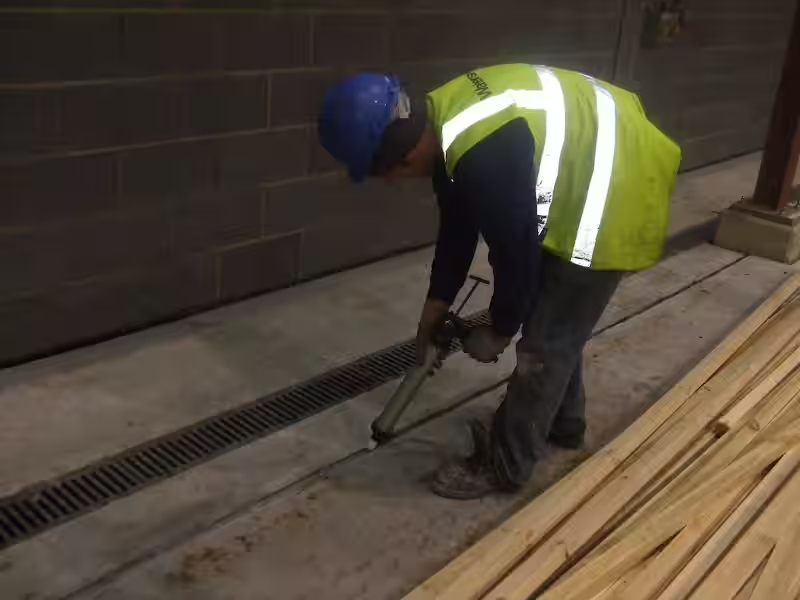
While choosing the right joint sealant is important, professional installation is equally crucial. Skilled professionals have the expertise and experience to ensure proper sealant application, maximizing its effectiveness and longevity. Incorrect application can lead to gaps, voids, and ultimately, sealant failure.
They understand the nuances of different sealant types, application techniques, and the importance of surface preparation. Proper surface preparation is essential for optimal adhesion and preventing premature sealant failure. This may involve cleaning, priming or other treatments depending on the specific materials. Professional installers also have access to specialized tools and equipment that ensure precise and efficient application.
The Long-Term Benefits of Proper Joint Sealing
Investing in high-quality joint sealants and professional installation offers significant long-term benefits. These benefits extend beyond simply preventing water damage or improving energy efficiency. A properly sealed building will:
Increase lifespan: Protecting the building from the elements significantly extends its operational lifespan, reducing the need for costly repairs and replacements.
Reduce maintenance costs: Preventing water damage and other forms of deterioration minimizes the need for ongoing maintenance and repairs.
Enhance energy efficiency: Reducing air infiltration improves insulation, leading to lower energy bills.
Improve structural integrity: Maintaining a strong, watertight structure ensures the building's overall stability and safety.
Increase property value: A well-maintained building with proper joint sealing is more attractive to potential buyers, increasing its resale value.
In conclusion, the importance of a proper joint seal cannot be overstated. From selecting the right sealant to ensuring professional installation, every step contributes to the long-term health and integrity of the structure. By prioritizing effective joint sealing, building owners can safeguard their investment, enhance the building's performance, and ensure its longevity for years to come.
Joint Sealant FAQs
What is the primary function of a joint sealant?
Joint sealants create a barrier against environmental elements like water, air, heat, cold, and vapor. This protects building materials, improves energy efficiency, and extends the lifespan of the structure. They are crucial for maintaining the integrity of building joints, which are often weak points.
Why is proper sealant selection and application so important?
The effectiveness of a joint seal directly depends on the quality of the sealant and the skill of its application. Improperly chosen or applied sealants fail to provide adequate protection, leading to building damage and premature deterioration. Using high-quality, appropriately specified sealants installed by skilled professionals is essential for a durable, airtight structure.
How do joint sealants account for building movement?
Building materials expand and contract due to temperature changes and other factors. Sealants must be flexible and elastic enough to accommodate this movement without cracking or losing their sealing ability. The sealant's properties must match the expected movement of the materials being joined to prevent leakage.
What factors influence the choice of joint sealant?
The selection of a joint sealant depends on several factors: the width of the joint, the materials being joined, the environmental conditions (e.g., exposure to moisture, UV radiation, chemicals), and the expected movement of the joint. Different sealants have varying properties suited to specific applications. A sealant for a constantly wet environment will differ significantly from one used internally in a dry area.
Are there different types of joint sealants available?
Yes, a wide variety of joint sealants are available, each with its own properties and suitability for different applications. Some common types include compression seals and foam seals (referring to the Cretex example provided), each offering distinct advantages. The choice depends entirely on the specific project requirements.
What are the benefits of using Cretex Internal Manhole & Pipe Joint Seals?
Cretex seals utilize a mechanical, rather than chemical, bonding method. This eliminates the need for priming and torch application, making installation safer, faster, and simpler (requiring only a two-person crew). The mechanical installation reduces the risk of environmental hazards associated with VOCs and improves the reliability of the seal. This translates to reduced maintenance and repair costs over the lifespan of the pipe infrastructure and faster project completion times.
What makes Cretex seals different from traditional sealants?
Cretex seals use a mechanical expansion and securement method, unlike traditional sealants that rely on chemical bonding. This mechanical approach reduces the risk of improper bonding due to environmental conditions or operator error, resulting in a more reliable seal. It also eliminates the need for potentially hazardous chemicals and lengthy curing times.
How is a Cretex seal installed?
Cretex seals are mechanically expanded and secured within the pipe or manhole using a dedicated expansion tool. This simplified process requires less specialized skill and equipment compared to traditional sealant application methods.
What are the long-term benefits of using high-quality joint sealants?
High-quality, professionally installed joint sealants ensure the building remains airtight, protected from the elements, and maintains its structural integrity throughout its operational life. This leads to reduced maintenance, longer building lifespan, improved energy efficiency, and a lower overall cost of ownership.