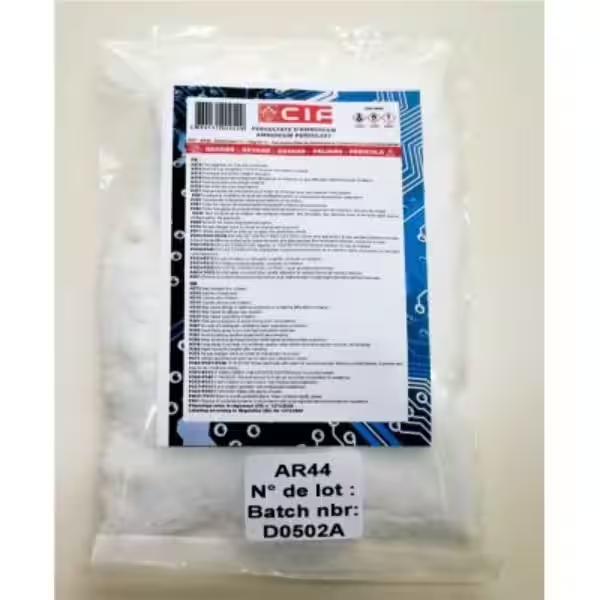
Understanding Ammonium Persulfate: Uses, Safety, and Properties
Understanding Ammonium Persulfate: Uses, Safety, and Properties
Ammonium persulfate, a powerful oxidizing agent, plays a significant role across various industries and scientific disciplines. This article delves into its properties, applications, and safety considerations to provide a comprehensive understanding of this versatile chemical compound.
Ammonium persulfate, also known as APS and represented by the chemical formula (NH₄)₂S₂O₈, is a colorless, water-soluble inorganic salt. Its most defining characteristic is its potent oxidizing ability, stemming from its capacity to readily generate sulfate radicals ([SO₄]•⁻) in solution. This radical generation is the key to understanding its wide range of applications.
The production of ammonium persulfate involves a carefully controlled electrochemical process, typically the electrolysis of a cold, concentrated ammonium sulfate or ammonium bisulfate solution in sulfuric acid. This method is based on the pioneering work of Hugh Marshall. Its crystalline structure, as revealed by X-ray crystallography, shows similarities to other persulfate salts like sodium and potassium persulfate, exhibiting a characteristic O-O bond length within the tetrahedral sulfate groups. This structural detail contributes to its reactivity and stability.
Key Applications of Ammonium Persulfate
The strong oxidizing power of persulfate d'ammonium and its ability to generate highly reactive sulfate radicals underpin its diverse applications.
Polymerization Initiator
Perhaps the most significant application of ammonium persulfate lies in its role as a radical initiator in polymerization reactions. The sulfate radicals generated upon its dissolution efficiently initiate the chain reaction leading to the formation of long polymer chains. This is particularly crucial in the synthesis of various commercially important polymers, including:
Styrene-butadiene rubber (SBR): A key component in tires and other elastomeric products.
Polytetrafluoroethylene (PTFE): Better known as Teflon, renowned for its non-stick properties.
Polyacrylamide gels: Essential in techniques like SDS-PAGE (sodium dodecyl sulfate polyacrylamide gel electrophoresis) and Western blotting, crucial tools in biochemistry and molecular biology. Often used in conjunction with tetramethylethylenediamine (TEMED) to optimize gel formation.
The mechanism involves the addition of the sulfate radical to the alkene monomer, initiating the chain growth. The controlled generation of these radicals allows for fine-tuning of the polymerization process, influencing the final properties of the resulting polymer.
Etching and Metal Treatment
Beyond polymerization, the oxidizing power of persulfate d'ammonium finds application in etching processes, particularly in the manufacturing of printed circuit boards (PCBs). It serves as a viable alternative to ferric chloride, offering a more controlled and environmentally friendly etching method in some cases. This application, dating back to at least 1908, is based on the reduction of the persulfate anion (S₂O₈²⁻) to sulfate anions (SO₄²⁻) during the etching process. The reaction efficiently removes copper from the board, leaving behind the desired circuit pattern.
Bleaching and Other Oxidative Reactions
Ammonium persulfate's strong oxidizing capabilities extend to bleaching applications. It's commonly found in hair bleaching products, where its oxidizing power lightens hair color. This application, however, requires careful handling due to potential skin and respiratory irritation. Moreover, it features as an oxidant in various organic chemistry reactions, including the Minisci reaction and the Elbs persulfate oxidation, showcasing its versatility as a reagent in chemical synthesis.
Safety Considerations When Handling Ammonium Persulfate
While offering numerous benefits, ammonium persulfate presents certain safety concerns that warrant careful attention.
Respiratory and Skin Irritation
Inhaling airborne ammonium persulfate dust can irritate the eyes, nose, throat, and lungs, potentially leading to more serious respiratory problems at higher concentrations. Skin contact can also cause irritation. Therefore, appropriate personal protective equipment (PPE), including gloves, eye protection, and respiratory masks, is essential when handling this compound.
Asthma and Health Risks
Research indicates a correlation between exposure to persulfate salts, including ammonium persulfate, and the development of asthma, particularly among professionals like hairdressers and receptionists frequently exposed to it. This is hypothesized to be linked to the oxidation of crucial cysteine and methionine residues in proteins, potentially affecting respiratory function. Proper ventilation and minimizing exposure are crucial for mitigating this risk.
Due to its potent oxidizing nature, the disposal of ammonium persulfate and its waste products necessitates careful consideration of environmental impact. Appropriate disposal methods should be followed to minimize any adverse effects on the environment.
Ammonium persulfate, with its potent oxidizing capacity and ability to generate sulfate radicals, is a versatile chemical compound with broad applications in various fields. From its crucial role in the synthesis of commercially significant polymers to its use in etching and bleaching processes, its importance is undeniable. However, understanding and adhering to the necessary safety precautions and environmentally responsible disposal practices are crucial when working with this powerful chemical. Proper handling and awareness of potential hazards ensure its safe and effective utilization.
Frequently Asked Questions about Ammonium Persulfate ((NH₄)₂S₂O₈)
What is Ammonium Persulfate?
Ammonium persulfate, also known as APS, is a colorless, water-soluble inorganic salt with the chemical formula (NH₄)₂S₂O₈. Its most significant characteristic is its potent oxidizing ability. This strong oxidizing power stems from its capacity to generate highly reactive sulfate radicals ([SO₄]•⁻) in solution.
How is Ammonium Persulfate Synthesized?
APS is produced through the electrolysis of a cold, concentrated solution of ammonium sulfate or ammonium bisulfate in sulfuric acid. This method was first described by Hugh Marshall.
What are the Primary Uses of Ammonium Persulfate?
The primary uses of APS are directly related to its strong oxidizing properties and radical generation capabilities:
Polymerization Initiator: APS is a crucial initiator in the polymerization of various alkenes, such as in the production of styrene-butadiene rubber and polytetrafluoroethylene (PTFE). It generates sulfate radicals that initiate chain reactions, leading to polymer formation. It's often used with tetramethylethylenediamine (TEMED) in polyacrylamide gel electrophoresis (PAGE).
Etching Agent: APS is used to etch copper in printed circuit board (PCB) manufacturing, providing a safer alternative in some cases to ferric chloride. This application leverages its ability to oxidize copper.
Bleaching Agent: Its strong oxidizing power makes it a component in many hair bleaching products.
Oxidant in Organic Chemistry: APS serves as an oxidant in several organic reactions, including the Minisci reaction and Elbs persulfate oxidation.
What is the Mechanism of its Action as a Polymerization Initiator?
APS dissociates in solution to produce sulfate radicals ([SO₄]•⁻). These radicals add to the alkene monomers, initiating a chain reaction that leads to polymer formation. The resulting species is a sulfate ester radical, which continues the polymerization process.
What are the Safety Concerns Associated with Ammonium Persulfate?
Inhaling APS dust can irritate the eyes, nose, throat, lungs, and skin. High concentrations can cause respiratory problems. There's also evidence linking persulfate salts, including APS, to asthma, particularly among those with occupational exposure (e.g., hairdressers). This is thought to be due to the oxidation of cysteine and methionine residues in proteins. Appropriate safety precautions, including respiratory protection and proper ventilation, are crucial when handling APS.
What is the Solid-State Structure of Ammonium Persulfate?
X-ray crystallography studies reveal that APS has a structure similar to its sodium and potassium counterparts. The sulfate groups exhibit a tetrahedral geometry with a notable O-O bond distance of approximately 1.497 Å.
Is Ammonium Persulfate Environmentally Safe?
While APS has many beneficial applications, its use requires careful management due to potential environmental concerns related to its byproducts. Proper disposal methods are crucial to minimize its environmental impact.