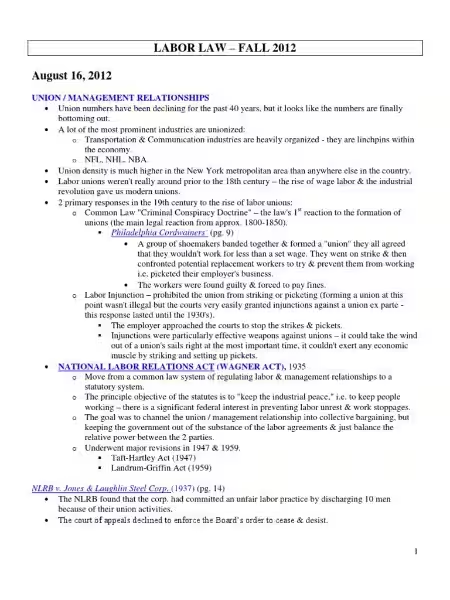
Understanding Labor Law: A Comprehensive Labor Law Outline
Understanding Labor Law: A Comprehensive Labor Law Outline
Navigating the complex world of labor law can be daunting, especially for employers and employees alike. This article provides a comprehensive labor law outline, breaking down key areas into manageable sections to help you understand your rights and responsibilities. Whether you're an employer needing to ensure compliance or an employee seeking to understand your protections, this guide offers a solid foundation.
The foundational principle in many jurisdictions is employment-at-will. This means that both employers and employees can terminate the employment relationship at any time, for any reason (not illegal), without notice. However, numerous exceptions exist that significantly limit this seemingly absolute power.
This seemingly straightforward concept is frequently complicated by nuances and legal precedents. State laws often modify the employment-at-will doctrine, introducing protections for employees based on specific circumstances. It's crucial to understand your state's specific laws and any relevant case law.
A. Exceptions to Employment-at-Will
Several key exceptions challenge employment-at-will. These include:
Breach of Contract: If an employment agreement (written or oral) exists, termination outside the terms of that contract can constitute a breach, leading to legal recourse for the employee.
Implied Contract: Even without a formal agreement, actions by the employer might create an implied contract, such as promises of long-term employment or specific performance reviews tied to continued employment.
Public Policy Exception: Terminating an employee for refusing to violate the law or for exercising a legal right (e.g., filing a workers' compensation claim) can violate public policy and be grounds for legal action.
Whistleblowing: Reporting illegal or unethical activity within the company is often protected. Laws vary on the specifics, but retaliation for whistleblowing is frequently illegal.
Discrimination and Harassment: Federal and state laws prohibit discrimination based on protected characteristics like race, religion, sex, age, disability, and national origin. Harassment based on these characteristics is also illegal.
II. Wages and Hours
This section of our labor law outline covers federal and state laws regarding payment of wages, including minimum wage, overtime, and record-keeping regulations. Understanding these regulations is crucial for both employers and employees to avoid legal issues.
Understanding the nuances of wage and hour laws requires careful attention to detail. For example, the definition of "employee" versus "independent contractor" significantly impacts wage and hour obligations. Misclassifying employees can lead to substantial penalties.
The Fair Labor Standards Act (FLSA) establishes federal minimum wage and overtime pay requirements. However, many states have their own minimum wage laws, often exceeding the federal minimum. Overtime pay is typically 1.5 times the regular rate of pay for hours worked beyond 40 in a workweek.
State laws often supplement federal regulations. Some states have stricter requirements regarding breaks, meal periods, and pay frequency. Employers need to be aware of both federal and state regulations to comply fully.
B. Record-Keeping Requirements
The FLSA mandates detailed record-keeping by employers. These records must accurately reflect hours worked, wages paid, and other relevant employment information. Failure to maintain proper records can lead to significant penalties. Maintaining accurate records is vital for both legal compliance and effective business management. It provides a crucial audit trail and facilitates accurate payroll processing, minimizing errors and disputes.
III. Employee Benefits
Many employers offer various employee benefits, including health insurance, retirement plans, and paid time off. While not always legally mandated, the provision of these benefits significantly impacts employee morale and retention. Many regulations impact these benefit offerings.
Compliance with benefit-related laws is complex and requires careful attention to detail. Employers need to be mindful of guidelines concerning eligibility, contribution limits, and reporting requirements. Failure to comply can result in costly penalties.
A. Health Insurance (Affordable Care Act)
The Affordable Care Act (ACA) significantly impacts employer-sponsored health insurance. Employers with a certain number of employees may be required to offer affordable health insurance or pay a penalty.
The ACA's complexities demand specialized knowledge. Navigating the intricacies of employer mandates and compliance requirements often requires professional guidance.
B. Retirement Plans (ERISA)
The Employee Retirement Income Security Act (ERISA) regulates employer-sponsored retirement plans, such as 401(k) plans and pension plans. ERISA sets standards for plan administration, fiduciary responsibility, and participant disclosures.
ERISA compliance is essential for protecting employees' retirement savings. Understanding fiduciary responsibilities and reporting requirements is paramount to avoiding legal liability.
IV. Workplace Safety and Health (OSHA)
The Occupational Safety and Health Administration (OSHA) sets and enforces standards for workplace safety and health. These standards aim to protect employees from workplace hazards and prevent workplace accidents and illnesses.
OSHA compliance is not merely a legal requirement; it's a moral imperative. A safe working environment fosters productivity, reduces costs associated with accidents, and improves employee morale.
Employers are required to report workplace accidents and illnesses to OSHA, and maintain detailed records of workplace safety issues. These records are crucial for identifying trends and implementing preventative measures.
Accurate and timely reporting is vital for maintaining compliance and demonstrating a commitment to workplace safety. Failure to report can lead to significant penalties.
V. Labor Unions and Collective Bargaining
A labor law outline wouldn't be complete without addressing labor unions and collective bargaining. Collective bargaining is the process by which labor unions negotiate with employers on behalf of their members to determine wages, hours, and other terms and conditions of employment. This section touches on the National Labor Relations Act (NLRA).
The NLRA guarantees employees the right to organize and bargain collectively. Understanding the legal framework surrounding unionization is crucial for both employers and employees.
This labor law outline provides a foundational understanding of key aspects of labor law. However, it's crucial to remember that labor laws are complex and vary by jurisdiction. Consulting with legal professionals is recommended for specific legal guidance and advice. This overview is intended for informational purposes only and does not constitute legal advice.
Since you haven't provided the content of the labor law outline, I will create a sample FAQ section based on common themes found in most labor law outlines. Remember to replace this example with information from your actual outline.
Frequently Asked Questions: Labor Law
What are the key areas covered in a typical labor law outline?
A typical labor law outline covers a broad range of topics, including: the employer-employee relationship; wage and hour laws (minimum wage, overtime pay, breaks); employee classification (employee vs. independent contractor); workplace safety and health regulations (OSHA); discrimination and harassment (Title VII, ADA, ADEA); unionization and collective bargaining; employee leaves (FMLA, parental leave); wrongful termination; and unemployment benefits. The specific areas and depth of coverage will vary depending on the jurisdiction and the specific focus of the outline.
What is the difference between an employee and an independent contractor?
This is a crucial distinction under labor law. An employee generally works under the direct control and supervision of the employer, receives wages or salary, and is considered an employee for tax purposes. An independent contractor, on the other hand, typically sets their own hours, works for multiple clients, uses their own tools and equipment, and is responsible for their own taxes. Misclassifying an employee as an independent contractor can lead to significant legal and financial penalties. The "control test" and the "economic realities test" are often used to determine classification.
What are the main federal laws governing wages and hours?
The Fair Labor Standards Act (FLSA) is the primary federal law governing minimum wage, overtime pay, and child labor. It establishes minimum wage requirements, mandates overtime pay for hours worked beyond 40 in a workweek, and sets restrictions on the employment of minors. Individual states may also have their own wage and hour laws which may provide greater protections than the FLSA.
What are some common types of employment discrimination prohibited by law?
Federal laws like Title VII of the Civil Rights Act of 1964 prohibit discrimination based on race, color, religion, sex (including gender identity and sexual orientation), and national origin. The Age Discrimination in Employment Act (ADEA) protects employees 40 years of age and older from age discrimination. The Americans with Disabilities Act (ADA) prohibits discrimination against individuals with disabilities. These laws cover all aspects of employment, including hiring, promotion, compensation, and termination.
What are an employee's rights regarding workplace safety?
The Occupational Safety and Health Act (OSHA) sets standards for workplace safety and health. Employees have the right to a safe and healthy work environment, free from recognized hazards. They also have the right to report safety concerns without fear of retaliation. OSHA conducts workplace inspections and enforces its standards through penalties against employers who violate safety regulations.
What is the Family and Medical Leave Act (FMLA)?
The FMLA entitles eligible employees to take unpaid, job-protected leave for specified family and medical reasons, such as the birth or adoption of a child, serious health condition of the employee or family member, or military family obligations. Eligibility requirements include working for a covered employer for a certain period and working a minimum number of hours.
This FAQ section provides a starting point. Remember to consult your specific labor law outline to answer questions accurately and thoroughly. You should also consult legal professionals for advice on specific situations.