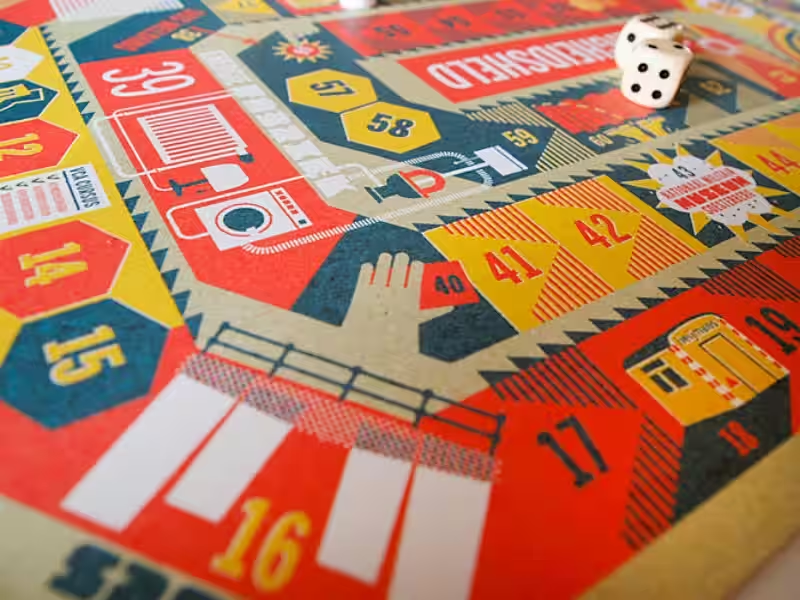
Level Up Your Safety Training: The Power of Work Safety Games
Level Up Your Safety Training: The Power of Work Safety Games
Are you tired of workplace safety training that feels like a chore? Do your employees glaze over during yet another safety lecture? The truth is, traditional safety training methods often fall flat, failing to engage employees and resulting in poor retention of crucial safety information. But what if you could transform safety training into a fun, engaging, and memorable experience? The answer may lie in the surprisingly effective world of work safety games.
Traditional safety lectures and manuals often rely on passive learning, leaving employees feeling disengaged and overwhelmed. This passive approach often results in poor information retention. This is where work safety games step in. By turning safety training into an interactive experience, games tap into our natural desire for fun and competition, making learning more enjoyable and effective.
Interactive elements, such as those found in many work safety games, stimulate different parts of the brain. This multi-sensory approach leads to better understanding and longer-lasting retention of safety information compared to solely relying on reading or listening.
Think about it: How much better do you remember information learned through a hands-on activity versus a passive lecture? This same principle applies to workplace safety.
20 Engaging Work Safety Games for Every Workplace
This list offers a wide variety of work safety games, catering to diverse learning styles and workplace settings. Remember to adapt these games to your specific workplace hazards and safety regulations.
Simple & Engaging Games:
Safety Bingo Blitz: Create bingo cards with safety-related terms or images. Call out terms, and the first to get bingo wins a prize.
Safety Word Search: Hide safety-related words in a word search puzzle. A fun and low-pressure way to reinforce terminology.
Safety Memory Match: Create pairs of cards with safety images or terms. Players flip cards to find matching pairs. A classic game that improves memory and recall.
Safety "Simon Says": A classic action game where employees must only follow instructions beginning with "Simon says," reinforcing safety procedures.
PPE Fashion Show Catwalk: A fun and memorable way to emphasize the importance of correct Personal Protective Equipment (PPE) use.
Active & Practical Games:
Safety Relay Race: Design a relay race incorporating safe work practices and procedures.
Hazard Hunt Challenge: Hide "hazards" (e.g., pictures of unsafe practices) around the workplace; teams compete to find them all.
Emergency Drill Simulation: Conduct realistic emergency drills, testing employees' responses to different scenarios.
Safety Escape Room Challenge: Create a themed escape room requiring teams to solve puzzles related to safety procedures to "escape."
Competitive & Rewarding Games:
Safety Trivia Battle: Host a trivia competition testing knowledge of safety regulations and procedures.
Safety Jenga Challenge: Write safety-related questions or tasks on Jenga blocks. Players answer questions or complete tasks as they remove blocks.
Safety Jeopardy Extravaganza: A classic game show format, testing knowledge through categories and point values.
Safety Charades: Act out safety procedures or terms without speaking.
Discussion & Role-Playing Games:
Safety Role-Playing Scenarios: Act out real-life workplace scenarios involving potential hazards, fostering discussion and problem-solving.
Safety Debate: Divide employees into teams to debate different viewpoints on safety issues, encouraging critical thinking.
Safety Storyboarding: Create a storyboard illustrating a safety-related incident, its causes, and solutions.
Planning & Implementing a Safety Day
Dedicated Safety Day: Plan a comprehensive safety day with a variety of these games and activities, creating a fun and engaging learning experience.
Budget-Friendly Options & Resources
Many of these work safety games require minimal resources. You can utilize readily available materials like paper, pens, and everyday objects. Online resources offer templates and ideas for creating your own games. Focus on creativity and engagement over expensive materials.
By incorporating work safety games into your training program, you can transform safety training from a tedious obligation into a fun and engaging experience. This will not only improve employee engagement and knowledge retention but also contribute to a safer and more productive workplace. Remember to tailor the games to your specific workplace needs and employee preferences for maximum effectiveness. Start small, experiment with different games, and watch your safety culture thrive.
Frequently Asked Questions about Workplace Safety Games
What are workplace safety games, and why are they important?
Workplace safety games are interactive activities designed to make safety training more engaging and effective. Traditional safety training methods can often be dull and lead to poor retention. Games transform learning into a fun and memorable experience, improving employee understanding and adherence to safety procedures. This leads to a safer work environment and reduces workplace accidents.
Are workplace safety games suitable for all types of workplaces?
Yes, the versatility of workplace safety games allows adaptation to various industries and company sizes. Simple games like Safety Bingo or a Safety Word Search can be easily implemented in small businesses, while larger companies might benefit from more elaborate activities like a Safety Escape Room or a PPE Fashion Show. The key is to choose games that align with your specific safety concerns and employee demographics.
What types of games are effective for workplace safety training?
Effective workplace safety games encompass a wide range of formats to cater to different learning styles. Some examples include:
Games reinforcing knowledge: Safety Bingo, Safety Word Search, Safety Trivia Battle, Safety Jeopardy.
The best approach often involves a mix of these types to provide a comprehensive and engaging learning experience.
How can I incorporate workplace safety games into my existing training program?
You can integrate games into your existing training in several ways. You can dedicate a specific "Safety Day" to game-based activities or incorporate shorter games into regular training sessions. Games can also be used as icebreakers or rewards for completing other training modules. Remember to tailor the games to the specific safety topics covered in your training program.
Are there budget-friendly options for workplace safety games?
Absolutely! Many effective safety games require minimal resources. Many of the games mentioned above (e.g., Safety Bingo, Safety Word Search, Safety Pictionary) can be created with readily available materials. Even more elaborate activities, like a Safety Poster Competition, can be managed with a small budget by utilizing readily available materials and encouraging employee participation in the creation process.
How do I measure the effectiveness of workplace safety games?
The effectiveness of safety games can be measured through several methods: Observe employee engagement during the games, conduct post-game quizzes to assess knowledge retention, and track workplace accident rates after implementing the game-based training. Employee feedback surveys can also provide valuable insights into the program's success and areas for improvement.
What if my employees are hesitant to participate in games during safety training?
Addressing employee concerns is crucial. Emphasize the fun and engaging nature of the games, highlighting their purpose in improving safety awareness and retention. Start with simpler, less time-consuming games to build confidence and gradually introduce more complex activities. Positive reinforcement and recognition for participation can also encourage involvement.
Where can I find more ideas for workplace safety games?
Numerous online resources, safety training websites and blogs offer additional ideas and templates for workplace safety games. Consider searching for specific game types (e.g., "safety escape room ideas") or looking for resources tailored to your industry. You can also adapt existing games to focus on your specific workplace hazards and safety procedures.