Understanding Piriproxyfen: Benefits, Controversies, and Facts
Understanding Piriproxyfen: Benefits, Controversies, and Facts
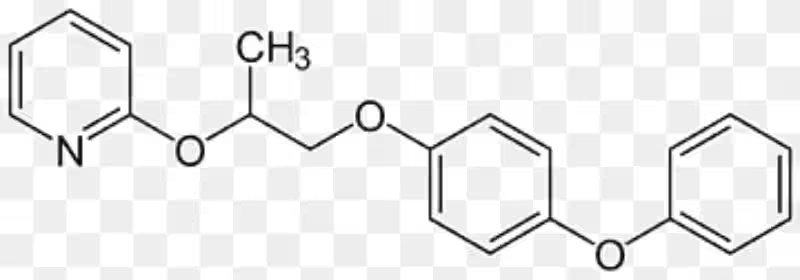
Piriproxyfen is a widely used insecticide that has garnered both praise for its effectiveness and controversy due to unsubstantiated claims linking it to health issues. This article aims to provide a balanced and evidence-based overview, separating fact from fiction surrounding this important insect growth regulator.
Piriproxyfen belongs to a class of insecticides known as juvenile hormone analogs (JHAs). Unlike traditional insecticides that kill insects directly, piriproxyfen acts as an insect growth regulator (IGR). This means it disrupts the insect's normal development, preventing it from maturing into a reproducing adult. It achieves this by interfering with the insect's juvenile hormone system, a crucial regulator of insect metamorphosis.
This mechanism is highly specific to insects. The juvenile hormone system is unique to insects and differs significantly from hormonal systems in mammals. This inherent difference is a key factor in understanding why claims linking piriproxyfen to adverse effects in humans lack scientific credibility.
Piriproxyfen’s Applications: From Agriculture to Households
Piriproxyfen finds extensive use in various settings. In agriculture, it's an effective control for a range of pests, including whiteflies on cotton. In domestic settings, it is a common component in products targeting fleas, ants, and roaches. These products come in various formulations, such as aerosols, baits, and topical treatments for pets. Brand names vary by region; for example, Nylar in the US and Cyclio in Europe are examples of products containing pyriproxyfen.
The broad applicability of piriproxyfen stems from its effectiveness against several insect species across different life stages, primarily targeting eggs and larvae. This makes it a valuable tool in integrated pest management (IPM) strategies, offering a more targeted and environmentally conscious approach compared to broad-spectrum insecticides.
Safety Profile of Piriproxyfen: Addressing Concerns
While highly effective against insects, piriproxyfen exhibits low acute toxicity to mammals. Studies have shown that extremely high doses (far exceeding levels encountered through typical environmental exposure) can cause effects like liver function changes, altered cholesterol levels, and mild anemia in laboratory animals. However, these effects are not observed at environmentally relevant concentrations.
Numerous regulatory agencies, including the World Health Organization (WHO) and the U.S. Environmental Protection Agency (EPA), have extensively reviewed the safety data on piriproxyfen. These reviews have consistently concluded that, at the concentrations used in approved applications, the insecticide poses minimal risk to human health.
The Microcephaly Controversy: Separating Fact from Fiction
The most significant controversy surrounding piriproxyfen stems from unsubstantiated claims linking it to the microcephaly outbreak in Brazil in 2015-2016. This claim, largely propagated by groups like Physicians in the Crop-Sprayed Villages (PCST), lacked any scientific evidence from laboratory studies or epidemiological research.
The Brazilian Association for Collective Health (Abrasco) initially expressed concerns, but later clarified that their statement was misinterpreted. The claim was widely refuted by numerous experts and organizations, emphasizing the lack of scientific basis and the overwhelming evidence implicating the Zika virus as the cause of the microcephaly outbreak. Even cities with high microcephaly rates did not utilize piriproxyfen in their water supply.
Addressing Misinformation and Conspiracy Theories
The unfounded link between piriproxyfen and microcephaly exemplifies the dangers of spreading misinformation. The claim mirrored previous unfounded accusations linking vaccines to other health issues, highlighting the importance of relying on credible scientific evidence and avoiding conspiracy theories. Experts emphasized the fundamental biological differences between insect and mammalian development, making it highly improbable that a substance affecting insect development would similarly impact human fetal development.
The extensive research on piriproxyfen's effects, including the WHO's evaluation confirming its non-genotoxic nature, further undermines the unsubstantiated claims. The scientific consensus firmly establishes the Zika virus as the primary cause of the microcephaly outbreak, with no credible evidence linking it to piriproxyfen.
While generally considered safe for mammals at recommended application rates, the environmental impact of piriproxyfen requires ongoing monitoring. Its persistence in the soil, potential for runoff into surface water, and potential effects on non-target organisms need careful consideration. Responsible application, including adhering to label instructions and implementing appropriate IPM strategies, is crucial to minimize environmental risks.
Further research is needed to fully understand the long-term ecological effects and to develop strategies for minimizing any potential negative impacts. Sustainable pest management practices, integrating piriproxyfen judiciously with other methods, are key to ensuring its safe and effective use while protecting the environment.
In conclusion, piriproxyfen is a valuable tool for insect control in diverse settings. While unsubstantiated claims have raised concerns, the overwhelming scientific evidence supports its safe and effective use when applied according to label instructions and within responsible environmental management practices. It’s crucial to rely on credible sources of information and avoid spreading misinformation that could undermine public health initiatives and effective pest management strategies.
Pyriproxyfen: Frequently Asked Questions
What is Pyriproxyfen?
Pyriproxyfen is an insecticide belonging to the juvenile hormone analog class (IRAC group 7C). It's an insect growth regulator (IGR), meaning it disrupts the development of insects, preventing them from reaching adulthood and reproducing. It doesn't kill adult insects directly but targets their immature stages, such as eggs and larvae.
How does Pyriproxyfen work?
Pyriproxyfen mimics or interferes with the insect's juvenile hormone (JH), a crucial hormone regulating insect development and metamorphosis. By disrupting this process, pyriproxyfen prevents larvae from molting properly, becoming sterile adults, or producing viable offspring. The precise effects vary depending on the insect species and the concentration of pyriproxyfen.
What insects does Pyriproxyfen control?
Pyriproxyfen is effective against a wide range of insects, including fleas, cockroaches, ants, mosquitoes, whiteflies, and other pests. Its use spans agricultural settings (e.g., controlling whiteflies on cotton) and domestic applications (e.g., in flea and ant control products).
Studies show pyriproxyfen has low acute toxicity for mammals. High doses in laboratory animals (significantly higher than those encountered through typical environmental exposure) have shown effects on liver function, cholesterol levels, and mild anemia. However, regulatory agencies like the US EPA and WHO have deemed it safe for use at recommended application rates. Long-term studies reveal some effects on liver and kidneys in animals at very high doses.
What are the controversies surrounding Pyriproxyfen?
The most significant controversy involved unsubstantiated claims linking pyriproxyfen to the 2015-2016 microcephaly outbreak in Brazil. This claim, fueled by some advocacy groups, lacked scientific evidence and was widely refuted by experts and organizations including the WHO and the Brazilian Health Ministry. Numerous studies found no causal link between pyriproxyfen and microcephaly, with the Zika virus strongly implicated as the primary cause. The claim was largely dismissed as a conspiracy theory.
What are the environmental effects of Pyriproxyfen?
Pyriproxyfen degrades relatively quickly in sunlight and soil. However, it can persist in the soil for some time and may contaminate surface water through runoff. Potential impacts on non-target organisms, particularly aquatic invertebrates, require careful consideration and ongoing monitoring. Responsible application and Integrated Pest Management (IPM) strategies are crucial to minimize negative environmental consequences.
Where can I find more information on Pyriproxyfen?
You can find detailed information on pyriproxyfen's safety and efficacy from reputable sources such as the Environmental Protection Agency (EPA), the World Health Organization (WHO), and published scientific literature. Always consult the product label for specific usage instructions and safety precautions.