Mastering the Consultancy Report Format: A Comprehensive Guide
Mastering the Consultancy Report Format: A Comprehensive Guide
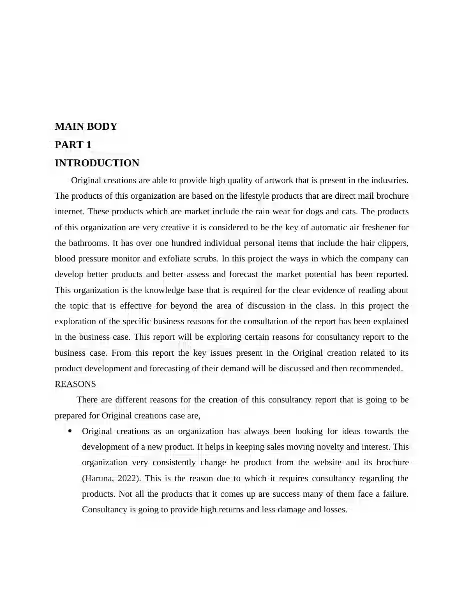
Many consultants struggle with the question: how can I create a compelling and effective consultancy report format that wins clients and showcases my expertise? Crafting a professional report that translates complex insights into actionable plans isn't easy. Starting from scratch is time-consuming and can lead to inconsistencies. This article provides a practical guide to efficiently creating impactful consultancy reports by utilizing templates and understanding key structural elements.
The Importance of a Strong Consultancy Report Format
A consultancy report is more than just a document; it's your primary tool for communicating valuable findings and recommendations to your clients. It’s the culmination of your research, analysis, and expertise, presented in a clear and persuasive manner. A well-structured report ensures your insights are easily understood and translated into actionable steps. This, in turn, builds trust and solidifies your reputation as a reliable and effective consultant.
A poorly formatted or disorganized report, however, can undermine even the most insightful analysis. It can confuse the client, diminish the impact of your findings, and ultimately damage your professional credibility. Investing time in mastering a strong consultancy report format is therefore an investment in the success of your consulting practice.
Utilizing Templates for Efficiency and Consistency
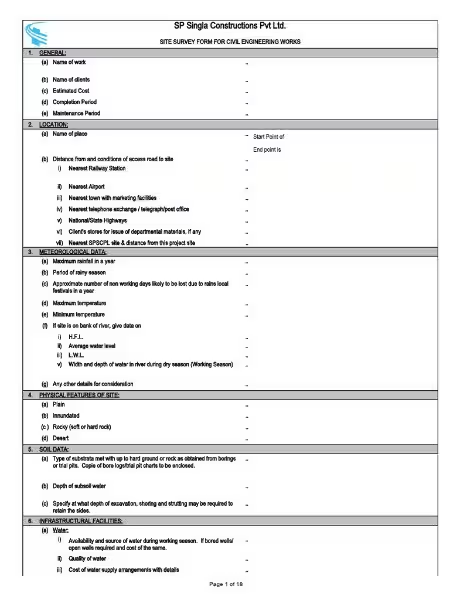
One of the most effective ways to improve your report-writing efficiency is by using templates. Templates offer a standardized, professional framework that you can customize to suit various industries and client needs. They streamline the writing process, allowing you to focus on the content itself rather than the formatting. This saves valuable time and ensures consistent branding across all your reports.
Think of a template as a blueprint. It provides the basic structure – the sections, headings, and visual elements – leaving you free to populate it with your project-specific data and analysis. Many online tools and software packages offer pre-designed templates, ready to be personalized with your own data and branding.
Choosing the Right Template
Selecting the appropriate template is crucial. Consider the type of consultancy report you're creating. Common types include:
Project Status Reports: Track progress, identify challenges, and forecast completion.
Social Media Reports: Analyze social media performance and provide recommendations for improvement.
Competitor Analyses: Evaluate competitors' strategies and identify opportunities.
Business Plans: Outline a business strategy, including market analysis, financial projections, and operational plans.
Each report type requires a slightly different structure and emphasis. For instance, a project status report will focus on timelines and milestones, while a competitor analysis will delve into market share and competitive advantages.
Essential Components of a Consultancy Report
Regardless of the type of report, several key components are essential for a strong consultancy report format:
Executive Summary: A concise overview of the key findings and recommendations. This is usually written last, after the rest of the report is complete.
Introduction: Sets the context, explains the purpose of the report, and outlines its scope.
Methodology: Describes the research methods used to gather and analyze data.
Findings: Presents the results of your analysis, using data visualization to enhance understanding.
Analysis: Interprets the findings, drawing conclusions and explaining their implications.
Recommendations: Provides clear, actionable steps for the client to address the identified problems or seize opportunities.
Conclusion: Summarizes the key takeaways and reinforces the importance of the recommendations.
Appendix (Optional): Includes supplementary materials, such as detailed data tables or survey questionnaires.
The consultancy report format should maintain a logical flow, guiding the reader through your analysis and leading them to your recommendations.
Data Visualization and Design Considerations
The visual presentation of your data is crucial. Charts, graphs, and icons make complex information more easily digestible. Using color psychology and strategically employing different chart types can enhance engagement and ensure information is easily scannable. Key data points should be visually emphasized to improve readability and impact. Consider the use of clear headings, subheadings, and bullet points to break up large blocks of text.
By understanding the key components of a strong consultancy report format and leveraging the efficiency of templates, you can create impactful reports that effectively communicate your insights and recommendations. Remember, a well-structured and visually appealing report is essential for building client trust and achieving your consulting objectives. Mastering this crucial skill will significantly enhance your professional credibility and success.
What is the standard format for a consulting report?
While there's no single "standard," most effective consulting reports follow a clear, logical structure to ensure easy understanding and impactful communication. A common format includes: a cover page, an executive summary (written last!), a background section setting the context and scope, a section detailing key findings supported by data visualization, a recommendations section with actionable steps, and finally, appendices for supplementary information. This structure allows for a smooth flow from problem identification to solution proposal.
Why are templates useful for creating consulting reports?
Creating a professional-looking consulting report from scratch is time-consuming. Templates provide a pre-designed structure and formatting, allowing consultants to focus on the content—the analysis, findings, and recommendations—rather than the visual presentation. They ensure consistency in branding and style across different projects, presenting a professional image to clients. Templates also offer a starting point for various report types, from project status updates to in-depth competitor analyses.
What are the essential components of a consulting report?
Every consulting report needs to clearly articulate the problem, the methodology used to analyze it, the findings of that analysis (supported by data), and concrete, actionable recommendations. A strong executive summary upfront is crucial for quickly conveying the report's key takeaways. The background section provides context, setting the stage for the findings and recommendations. Visuals such as charts and graphs are essential for making data easily digestible and engaging.
How can I make my consulting report more visually appealing and engaging?
Effective use of visuals is key. Charts and graphs should clearly present data, avoiding unnecessary complexity. Consider using color psychology to highlight key information and maintain reader interest. Icons can also be used strategically to break up text and emphasize important points. The overall design should be clean and uncluttered, allowing the reader to easily scan and understand the information. Think about using a consistent color scheme and font throughout the report to maintain a professional and cohesive look.
What is the purpose of an executive summary?
The executive summary is a concise overview of the entire report, written last. It should present the key findings and recommendations in a clear, concise, and persuasive manner, allowing the reader to quickly grasp the essence of the report without needing to read the entire document. Think of it as the "bottom line up front" (BLUF) – the most important information first. It serves as a valuable tool for busy clients who may not have time to review the entire report.
How important is the use of data visualization in a consulting report?
Data visualization is paramount. It transforms raw data into easily understandable and memorable information. Charts, graphs, and other visuals make complex data more accessible, increasing the report's impact and persuasiveness. Well-chosen visuals can highlight key trends and insights, making it easier for the client to understand the analysis and accept the recommendations. Remember to select the appropriate chart type for the data being presented.