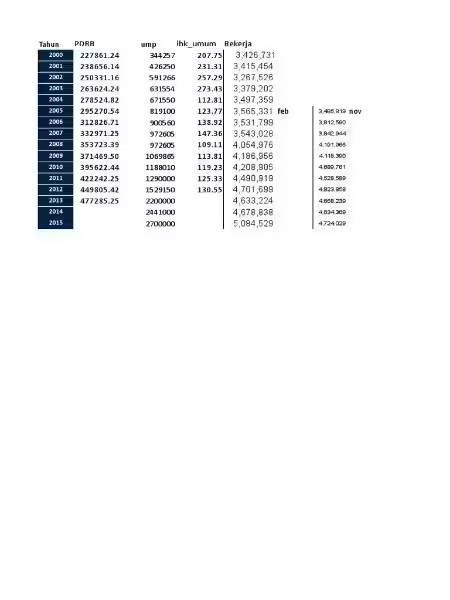
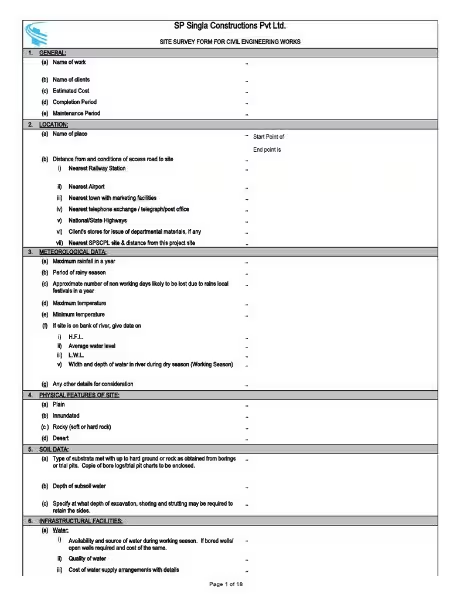
Data Entry and Analysis: Unlocking the Power of Your Data
Data Entry and Analysis: Unlocking the Power of Your Data
Many people wonder about the difference between data entry and data analysis. While seemingly distinct, they are actually two sides of the same coin, inextricably linked in the process of transforming raw information into actionable insights. This article will explore the nuances of each, highlighting their individual roles and synergistic relationship within the broader context of data management.
Understanding Data Entry: The Foundation of Information
Data entry, at its core, is the process of inputting raw data into a structured format. Think of it as the meticulous act of transcribing information from various sources – be it paper forms, spreadsheets, or digital documents – into a computer system or database. This seemingly simple task demands accuracy and attention to detail, as errors introduced at this stage can cascade through the entire data lifecycle, impacting the reliability of subsequent analyses.
The primary goal of data entry is to create a clean, organized, and readily accessible dataset. This involves adhering to strict guidelines regarding data formats, ensuring consistency, and correctly identifying and classifying information. Efficiency is also vital, as large datasets require substantial time and effort to enter manually. Software designed specifically for data entry can significantly improve speed and accuracy.
The Art and Science of Data Analysis: Extracting Meaning from Data
Data analysis, conversely, takes the structured data created through data entry and transforms it into meaningful insights. It's not just about crunching numbers; it's about uncovering patterns, identifying trends, and formulating conclusions that inform decision-making. This process often involves significantly more complex tools and techniques.
Unlike the relatively straightforward procedures of data entry, data analysis requires a deeper understanding of statistical methods, programming languages (like Python or R), and data visualization tools (such as Tableau or Power BI). Analysts use these tools to explore the data, identify relationships between variables, test hypotheses, and ultimately generate reports and visualizations that communicate their findings effectively.
Data Analysis Techniques
Data analysis employs various techniques, each suited to different types of data and research questions. Some common methods include:
Descriptive Statistics: Summarizing data using measures like mean, median, and standard deviation.
Inferential Statistics: Drawing conclusions about a population based on a sample of data.
Regression Analysis: Modeling the relationship between a dependent variable and one or more independent variables.
Clustering Analysis: Grouping similar data points together based on their characteristics.
Data Mining: Discovering patterns and relationships in large datasets using advanced algorithms.
Successful data analysis requires a blend of technical and soft skills. These include:
Statistical knowledge: Understanding statistical concepts and methods.
Programming skills: Proficiency in at least one programming language used for data analysis.
Data visualization skills: Ability to create clear and informative visualizations of data.
Critical thinking skills: Ability to analyze data objectively and draw meaningful conclusions.
Communication skills: Ability to effectively communicate findings to both technical and non-technical audiences.
The Interdependence of Data Entry and Analysis
Data entry and data analysis are not mutually exclusive processes; they are intrinsically linked. The quality of data analysis is directly dependent on the accuracy and completeness of the data entry process. Inaccurate or incomplete data will inevitably lead to flawed analyses and unreliable conclusions. Therefore, data entry and analysis must be seen as complementary processes in a unified data management workflow. Data entry provides the raw material, while data analysis extracts the value.
Ensuring Data Integrity: A Collaborative Effort
Maintaining data integrity is paramount throughout this entire workflow. This requires careful attention to detail during the data entry phase, rigorous quality control measures, and the use of appropriate data validation techniques. Moreover, effective data governance policies and procedures play a crucial role in ensuring the accuracy and reliability of the data throughout its lifecycle. This collaborative effort, encompassing both data entry and analysis, is essential for achieving meaningful and actionable insights.
Conclusion: A Powerful Partnership for Informed Decision-Making
In conclusion, while data entry and data analysis differ significantly in their approaches and objectives, they are inseparable components of a robust data management strategy. Data entry forms the critical foundation, providing the raw material for data analysis. Data analysis, in turn, unlocks the potential of that data, transforming it into valuable insights that drive informed decision-making and contribute to organizational success. By understanding the strengths and limitations of each process, organizations can optimize their data management workflows and harness the full potential of their data assets.
Here are some frequently asked questions about data entry and data analysis:
What is the difference between data entry and data analysis?
Data entry is the process of manually or automatically inputting data into a computer system. It focuses on accurately recording information in a structured format, ensuring data integrity and creating a usable database. Data analysis, on the other hand, involves interpreting this data to identify patterns, trends, and insights. It's about extracting meaning and knowledge from the raw data to support decision-making. Data entry is the foundation; data analysis builds upon it.
What skills are needed for data entry?
Data entry requires meticulous attention to detail, accuracy in typing and inputting information, and the ability to work efficiently and quickly. Proficiency with data entry software is also essential. While specific training might be minimal, a strong focus on accuracy is paramount.
What skills are needed for data analysis?
Data analysis demands a much broader skillset, including strong analytical and problem-solving abilities. A firm grasp of statistical concepts and methods is crucial. Proficiency in data analysis software such as Excel, Python, R, Tableau, or Power BI is also vital. Furthermore, the ability to interpret results and communicate findings effectively is key.
What are the tools used in data entry and data analysis?
Data entry often utilizes specialized input software, sometimes integrated within larger database management systems. Data analysis employs a wider range of tools, including spreadsheet software (like Excel), statistical programming languages (like R and Python), and data visualization tools (like Tableau and Power BI).
How are data entry and data analysis related?
Data entry and data analysis are intrinsically linked and interdependent. High-quality data entry is fundamental to effective data analysis; inaccurate or incomplete data entry can lead to flawed or misleading analytical results. Conversely, data analysis informs the improvement and refinement of data entry processes. They work together to ensure effective data management.
Both data entry and data analysis are crucial for effective data management and informed decision-making. Data entry provides the raw material, while data analysis transforms that material into actionable insights. Neither is more important; they are complementary processes.
What are the typical outputs of data entry and data analysis?
The output of data entry is a structured, organized database containing accurate information. The output of data analysis is a set of insights, conclusions, visualizations, and/or recommendations based on the interpretation of that data. These insights can be used to inform business strategies, improve processes, and make better decisions.
How can I improve my data entry and analysis skills?
For data entry, practice and attention to detail are key. For data analysis, consider taking courses or workshops in statistics, programming (Python or R), and data visualization techniques. Hands-on experience working with real-world datasets is invaluable for both.
What are the career paths involving data entry and data analysis?
Data entry roles can range from administrative assistants to dedicated data entry clerks. Data analysis offers a broader range of career paths, including data analyst, business analyst, data scientist, and data engineer, each requiring varying levels of expertise and specialization.
What is the future of data entry and data analysis?
With the increasing volume of data generated daily, both data entry and data analysis are fields with significant future prospects. Technological advancements, such as automation and improved data capture methods, will continue to shape data entry, while the demand for skilled data analysts will only grow as organizations seek to leverage data for competitive advantage.