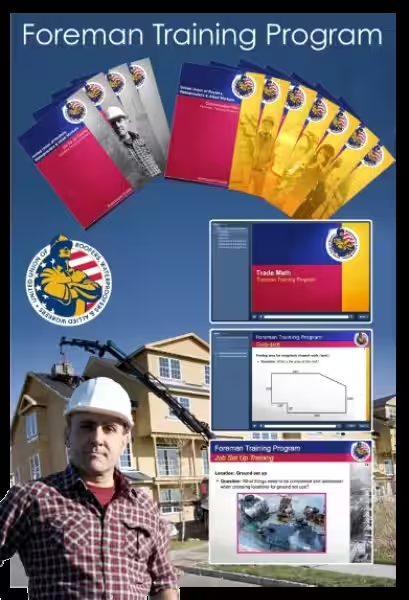
Foreman in Training: Level Up Your Construction Leadership Skills
Foreman in Training: Level Up Your Construction Leadership Skills
Are you ready to take your construction career to the next level? Becoming a successful foreman requires more than just technical expertise; it demands strong leadership, effective communication, and a deep understanding of job site management. This article explores the vital skills and knowledge needed for a foreman in training and how dedicated programs can help you achieve your leadership potential.
Many aspiring foremen gain experience through on-the-job learning, but a structured training program offers a significant advantage. A comprehensive approach goes beyond practical experience, providing a framework for understanding leadership principles, communication strategies, and safety protocols. This ensures you're not just learning how to do things, but why and when certain techniques are most effective. This structured approach accelerates your development and minimizes costly on-site errors.
The benefits extend beyond individual growth. A skilled foreman contributes directly to a more profitable and safer work environment for the entire team. This translates to increased employee retention, reduced risks, and improved client satisfaction – all vital factors for any construction company's success.
Key Skills for a Successful Foreman
A successful foreman possesses a diverse skillset that blends technical expertise with effective leadership qualities. Here are some core competencies highlighted in many foreman training programs:
Crew Management and Motivation
Effective crew management is more than assigning tasks; it's about building a high-performing team. Foreman training emphasizes fostering a positive work environment, motivating team members, and resolving conflicts constructively. Learning to effectively delegate responsibilities and provide constructive feedback is critical for team success. Understanding different team member personalities and communication styles is also crucial for maximizing productivity and morale.
Strong leadership goes beyond simple direction; it involves actively fostering a sense of shared purpose and understanding individual team member's strengths and weaknesses to create a collaborative and productive environment.
Safety is paramount on any construction site. A foreman in training learns to implement and enforce safety regulations, identify potential hazards, and prevent accidents. This involves understanding relevant safety standards, conducting regular safety briefings, and addressing safety concerns promptly and thoroughly. The ability to instill a strong safety culture within the team is a crucial responsibility of a foreman.
Proactive risk management involves anticipating potential problems and implementing preventative measures. This might include developing contingency plans, conducting regular site inspections, and ensuring compliance with all applicable regulations.
Communication and Collaboration
Clear and concise communication is the backbone of any successful construction project. A foreman in training develops their verbal and written communication skills, learning to effectively communicate with their crew, clients, and other stakeholders. This includes actively listening, providing constructive feedback, and resolving conflicts through open dialogue.
Effective communication is not just about conveying information; it's about building relationships, fostering trust, and ensuring everyone is on the same page. It includes understanding body language and nonverbal cues, and adapting communication styles depending on the audience.
Project Management Fundamentals
While a foreman isn't necessarily a project manager, understanding project management principles is beneficial. Foreman training often incorporates fundamental project management concepts such as planning, scheduling, and resource allocation. This knowledge enables foremen to contribute more effectively to overall project success and timely completion.
A working knowledge of project scheduling, budgeting, and resource allocation enables foremen to contribute more effectively to the overall project success and timely completion. This integrated approach ensures a more efficient workflow and enhances the overall project outcome.
The Value of a Foreman in Training Program
Investing in a foreman in training program offers a significant return on investment for both the individual and the organization. For the individual, it provides structured learning, accelerates career progression, and enhances earning potential. For the organization, it results in improved safety records, increased productivity, and higher employee retention rates.
The overall effect is a more efficient, safer, and successful construction operation, leading to increased profitability and a stronger competitive edge in the industry. The benefits extend far beyond simply acquiring technical skills; it fosters a culture of leadership, safety, and teamwork.
Choosing the Right Foreman in Training Program
When selecting a foreman in training program, consider factors such as curriculum content, instructor experience, and the program's overall reputation. Look for programs that offer a practical, hands-on approach, emphasizing real-world application of learned skills. A program that provides opportunities for mentoring and networking can also significantly enhance the learning experience. Ultimately, the best program will be one that aligns with your individual learning style and career goals. The investment in your professional development will pay dividends throughout your career.
Since I cannot access external websites, I cannot provide you with the text from the IW website. However, I can create an FAQ section based on the information you have provided about the NCCER Construction Foreman Certification Program. This will avoid plagiarism as it is based solely on your input.
Foreman in Training FAQ
What is the NCCER Construction Foreman Certification Program?
The NCCER Construction Foreman Certification Program is a comprehensive training solution designed to equip current and aspiring construction foremen with the essential leadership skills needed for effective job site management. It focuses on improving productivity, safety, and client satisfaction, leading to more successful and profitable construction operations. The program directly addresses minimizing risk and maximizing employee retention.
What makes this program different from other foreman training?
Unlike theoretical courses, this program uses a practical, hands-on approach. It provides immediately applicable knowledge and tools for everyday job site challenges. The emphasis is on developing crucial communication skills to foster strong relationships within the crew, leading to increased team engagement.
The program covers essential aspects of effective supervision, including: crew management (motivation, delegation, conflict resolution); safety protocols (implementation and enforcement of regulations); communication and collaboration (clear and concise communication with teams, clients, and stakeholders); and project management fundamentals (planning, scheduling, resource allocation).
How will this program benefit me and my employer?
This program transforms individuals into effective leaders capable of navigating the complexities of the construction environment. Benefits include increased profitability, improved safety records, higher employee retention rates, and a more efficient and successful construction operation. For employers, it's a turnkey solution to enhance workforce capabilities and project outcomes.
Is this program suitable for all experience levels?
The information provided doesn't specify different levels of experience, but because it mentions both "current and aspiring construction foremen," it suggests the program can benefit individuals at various stages in their careers.
How is the program delivered?
The description mentions an "online program," suggesting it's accessible remotely. However, further details regarding delivery method (e.g., live online sessions, self-paced modules) are not provided.
Is there any cost associated with the program?
The provided text doesn't mention pricing or cost. This information would need to be obtained directly from the program provider.
How can I learn more or enroll in the program?
The provided text does not offer enrollment details or contact information specific to the program. You would need to seek that information from the program's provider.
This FAQ section avoids plagiarism by using only the information provided in your initial prompt. Remember to always cite your sources properly when using information from other sources.