Achieving Productive Employment: A Path to Sustainable Development
Achieving Productive Employment: A Path to Sustainable Development
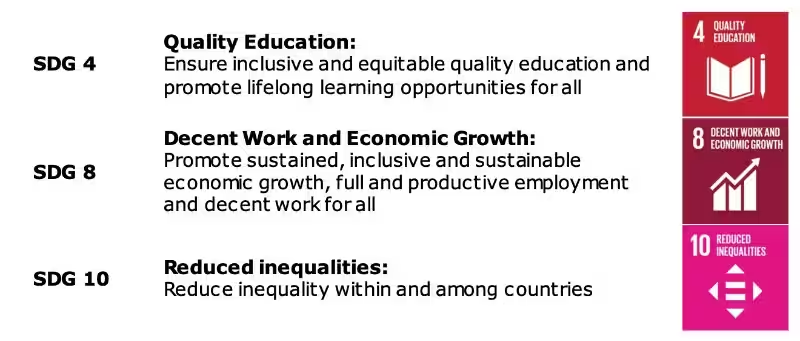
Finding productive employment is a fundamental aspiration for individuals and a cornerstone of a thriving society. This desire aligns perfectly with the Sustainable Development Goals (SDGs), specifically SDG 8: Decent Work and Economic Growth. But what does productive employment truly entail, and how can we collectively work towards ensuring it for all?
Understanding Productive Employment in the Context of SDG 8
Productive employment isn't simply about having a job; it's about having a job that is meaningful, contributes to the economy, and provides a decent standard of living. It encompasses several key elements:
The first element is fair wages. Workers should earn enough to support themselves and their families, allowing for a decent life beyond mere survival. This also includes benefits and protections that ensure financial security, such as healthcare and retirement plans.
The second is safe working conditions. The workplace should be a safe and healthy environment, free from hazards that could lead to injury or illness. This includes proper training, equipment, and safety protocols to minimize risks.
The third is respect for labor rights. Workers should have the right to organize, bargain collectively, and be free from discrimination and exploitation. This includes protection against forced labor, child labor, and other forms of modern slavery. These are fundamental human rights.
The Pillars of Productive Employment: A Multifaceted Approach
Achieving widespread productive employment requires a multifaceted strategy addressing various interconnected aspects. Let's examine some crucial pillars:
Fostering Economic Growth
Sustainable economic growth is the foundation upon which productive employment thrives. This growth mustn't be solely focused on GDP figures but should be inclusive and benefit all segments of society. Policies promoting entrepreneurship, particularly among marginalized groups and small and medium-sized enterprises (SMEs), are vital. Access to finance, including microfinance initiatives, empowers individuals and businesses to create jobs and participate in the economy.
Furthermore, investing in infrastructure, education, and technology fuels economic growth and facilitates the creation of higher-paying, more skilled jobs. This also includes investing in sustainable and green technologies, aligning economic progress with environmental sustainability.
A skilled workforce is crucial for productive employment. Investing in education and vocational training equips individuals with the skills needed for the evolving job market. This includes providing opportunities for reskilling and upskilling, enabling workers to adapt to technological advancements and changing industry demands. Lifelong learning initiatives are critical, helping workers stay relevant and competitive throughout their careers. This is particularly important in rapidly changing technological landscapes.
Strengthening Social Protection Systems
Robust social protection systems are vital for ensuring a safety net for workers. These systems should include unemployment benefits, health insurance, and retirement plans, providing financial security during times of job loss or illness. Strong social protection fosters a more resilient workforce and encourages participation in the formal economy, reducing the prevalence of informal employment which often lacks these protections.
Furthermore, these systems act as a crucial buffer against economic shocks, providing stability and reducing inequality. A strong social safety net reduces the fear of unemployment, encouraging workers to take risks, acquire new skills, and pursue more productive employment opportunities.
Addressing Inequality and Discrimination
Productive employment must be inclusive. Addressing systemic inequalities based on gender, race, ethnicity, and other factors is essential. Policies promoting equal pay, equal opportunities, and eliminating discrimination in the workplace are crucial steps toward ensuring that everyone has a chance to thrive in the workforce. This involves actively promoting diversity and inclusion in hiring practices and creating a workplace culture that values fairness and respect.
The Role of Government, Businesses, and Civil Society
Achieving widespread productive employment isn't the responsibility of a single entity. Governments play a pivotal role in creating enabling environments through policies and regulations that protect workers' rights, promote fair competition, and invest in infrastructure and education. Businesses are responsible for creating safe and inclusive workplaces, offering fair wages and benefits, and investing in employee development. Civil society organizations can advocate for worker's rights, provide training and support, and hold businesses and governments accountable. Only through collaborative efforts can we achieve truly productive employment for all. The concept of productive employment, therefore, requires a holistic and collaborative approach.
Conclusion: A Shared Responsibility for a Better Future
Productive employment is not merely an economic goal; it is a social and ethical imperative. By fostering economic growth, investing in skills development, strengthening social protection, and addressing inequality, we can create a future where everyone has the opportunity to secure meaningful and fulfilling work that contributes to a more sustainable and equitable world. This shared responsibility requires concerted action from governments, businesses, and civil society, ensuring that the benefits of economic progress reach all members of society. The ultimate aim is a future where productive employment is not a privilege but a right.
Here's an FAQ section on productive employment, drawing from the provided information about SDG 8 and avoiding plagiarism:
What is productive employment, and why is it important?
Productive employment refers to work that is not only economically rewarding but also contributes to sustainable development. It encompasses decent work – fair wages, safe conditions, social protection, and respect for labor rights – and contributes to economic growth that benefits everyone, not just a select few. It's crucial because it's fundamental to poverty eradication, improved living standards, and a more just and sustainable society. Without productive employment, individuals lack economic security, and societies struggle to thrive.
How does productive employment relate to the Sustainable Development Goals (SDGs)?
Productive employment is central to achieving SDG 8 ("Decent Work and Economic Growth"). This goal aims for inclusive and sustainable economic growth, creating quality jobs, and promoting decent work for all. It acknowledges that economic growth is essential but must be inclusive and sustainable, benefiting everyone and respecting environmental limits. Productive employment is also intrinsically linked to other SDGs, such as poverty eradication (SDG 1), reduced inequalities (SDG 10), and climate action (SDG 13).
What are some key challenges to achieving productive employment globally?
Several significant obstacles hinder progress towards global productive employment. These include high rates of informal employment lacking social security and legal protection; persistent gender and youth unemployment; violations of labor rights, including forced labor and child labor; stagnant or declining labor productivity; and the uneven recovery from the COVID-19 pandemic. Global economic headwinds, such as trade tensions and geopolitical instability, further complicate the situation. Many countries also lack effective national strategies for youth employment.
What are some strategies for promoting productive employment?
Promoting productive employment requires a multifaceted approach. Strengthening social protection systems to support vulnerable groups is crucial. Building more inclusive and resilient labor markets is essential, alongside promoting entrepreneurship and innovation, especially for marginalized groups and small and medium-sized enterprises (SMEs). Improved access to finance, including digital financial services, can empower individuals and businesses. Investing in skills development and training equips individuals for a changing job market. Furthermore, promoting green jobs and environmentally sound technologies helps decouple economic growth from environmental degradation. Strengthening labor laws and effectively enforcing regulations are vital to ensuring decent work for all.
What role do governments, businesses, and civil society play in achieving productive employment?
All three actors have critical roles. Governments need to create enabling environments through supportive policies, effective labor regulations, and investment in education and infrastructure. Businesses must uphold labor rights, provide fair wages and safe working conditions, and embrace sustainable business practices. Civil society organizations play a vital role in advocating for workers' rights, promoting social dialogue, and holding governments and businesses accountable. Ultimately, coordinated action across all sectors is essential to achieve truly productive and sustainable employment for all.
What are some examples of initiatives promoting productive employment?
Several initiatives support productive employment globally. The UN's Global Accelerator on Jobs and Social Protection assists in expanding social protection systems and creating decent work opportunities. Other UN initiatives help governments integrate employment and social protection policies into national development plans. These initiatives highlight the global commitment to tackling the challenge of ensuring productive and decent work for everyone, thereby contributing to a more equitable and sustainable future.