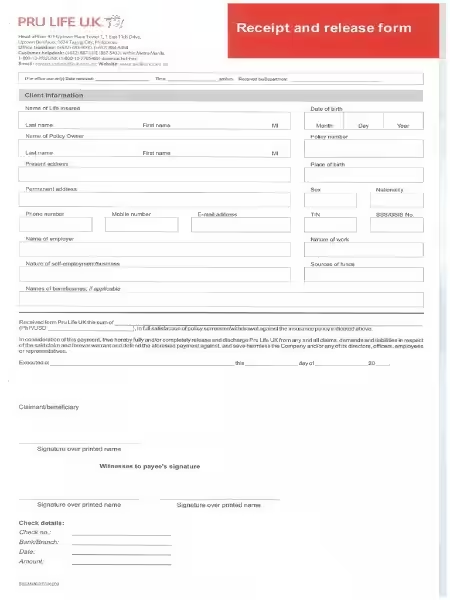
The phrase "receipt of goods" might seem straightforward, but its implications within a business context are far-reaching. This article will delve into the significance of a goods receipt (GR) or goods receipt note (GRN), exploring its uses, the process involved, and best practices for its effective management.
What is a Goods Receipt (GR) or Goods Receipt Note (GRN)?
A goods receipt, often shortened to GR or GRN, is a crucial document confirming the physical arrival of goods ordered by a business. Unlike an invoice, which focuses on payment, the GR verifies that the goods themselves have been received. It's a vital link in the supply chain, acting as proof of the transaction's physical completion.
This document serves as a critical record within the business, providing evidence for both internal processes and external accountability. It acts as a bridge between the ordering stage and the eventual payment for those goods. Without a properly documented receipt of goods, many operational processes could become problematic.
The Key Roles of a Goods Receipt
The goods receipt plays a multifaceted role across various departments within a company. Here are some of its key functions:
Inventory Management
The GR is the cornerstone of accurate inventory tracking. By recording the exact quantities and types of goods received, it ensures stock levels are always up-to-date, preventing stockouts or overstocking. This, in turn, optimizes production planning and minimizes storage costs.
Accurate inventory management, heavily reliant on the receipt of goods documentation, is critical for operational efficiency, informing purchasing decisions, and ensuring the smooth flow of goods throughout the supply chain.
Accounts Payable
In accounts payable, the GR provides crucial evidence that goods have been received, justifying the payment to the supplier. This helps prevent overpayments or payments for goods that were never delivered.
The GR's role in linking the physical receipt of goods to the financial transaction ensures that payments are accurately processed and that discrepancies are quickly identified and resolved. This ensures accuracy in financial reporting and prevents unnecessary disputes.
The GR process often includes an inspection of the received goods to verify their quality and condition. Any discrepancies, such as damage or shortages, are noted on the GR, which then facilitates timely communication with the supplier or shipping carrier to address these issues.
This proactive approach to quality control, initiated with the receipt of goods, minimizes losses due to damaged or substandard products, protecting the business from financial and reputational losses.
Dispute Resolution
In case of any disputes between the buyer and seller regarding the delivery of goods, the GR acts as indisputable evidence. It provides a verifiable record of the goods received, their quantity and condition, thus assisting in conflict resolution.
Having a well-documented receipt of goods offers a crucial point of reference during any disputes, providing concrete evidence to establish the facts and secure a fair resolution.
The Five Steps of the Goods Receipt Process
The process of receiving goods and creating the corresponding GR usually involves these five key steps:
Identification of Goods: This involves carefully comparing the goods received against the purchase order or packing slip to ensure they match.
Verification of Quantity and Condition: This step involves a thorough check of the goods' quantity and condition, noting any damages or shortages. Damaged goods necessitate immediate reporting to the carrier and/or supplier.
Unloading and Storage: The goods are carefully unloaded and stored in designated areas within the warehouse, with accurate location records maintained.
Recording Goods Received: A formal record is created, either manually or digitally, updating inventory levels to reflect the newly arrived goods. This is the actual creation of the goods receipt document.
Notification of Purchasing: The purchasing department is informed of the goods' arrival, allowing them to manage future orders and plan for replenishment.
Regular Audits: Conduct regular audits of the GR process to identify and address any weaknesses.
Efficient management of the receipt of goods is essential for smooth operations, accurate financial reporting, and strong supplier relationships. By adhering to best practices, businesses can significantly improve their overall supply chain efficiency.
Frequently Asked Questions: Goods Receipts
What is a Goods Receipt (GR) or Goods Receipt Note (GRN)?
A goods receipt (GR) or goods receipt note (GRN) is a crucial document confirming the buyer's receipt of goods ordered. Unlike an invoice (which details payment), a GR verifies the physical receipt of the goods. It can be issued by either the buyer or seller, with the receiving party usually signing it for confirmation. It serves as proof that the goods have been received, allowing for accurate inventory management, financial accounting, and dispute resolution.
What information is typically included on a Goods Receipt?
A GR typically includes the supplier's information, product descriptions, quantities received, unit costs, dates, purchase order numbers, and any notes regarding the condition of the goods (e.g., damage or shortages).
Why are Goods Receipts important?
Goods receipts are vital for several reasons: they provide irrefutable proof of goods received; ensure accurate inventory tracking and stock levels; facilitate smooth accounts payable processes by justifying payment to the supplier; are essential for resolving disputes between buyers and sellers; and help maintain accurate inventory balances and update the stock ledger.
What are the key steps in the Goods Receipt process?
The process generally involves: 1) Identification of Goods: Comparing the delivery contents with the purchase order or packing list. 2) Verification of Quantity and Condition: Checking the quantity and condition of goods, noting any damage or shortages. 3) Unloading and Storage: Moving goods to designated storage areas. 4) Recording Goods Received: Updating inventory records to reflect the new stock. 5) Notification of Purchasing: Informing the purchasing department of the goods' arrival.
How do Goods Receipts relate to inventory management?
Goods receipts are fundamental to inventory management. They ensure accurate stock levels by providing a record of all incoming goods. This accuracy prevents stockouts, overstocking, and facilitates efficient production planning.
How are Goods Receipts used in accounts payable?
GRs provide the necessary evidence to justify payment to suppliers. They link the physical receipt of goods to the invoice, ensuring payments are made only for goods actually received. This helps prevent overpayments and strengthens financial control.
What happens if there are discrepancies in the Goods Receipt?
Discrepancies (damaged goods, shortages, etc.) should be noted on the GR and reported immediately. A claim might need to be filed with the carrier or supplier. Clear communication with the supplier is crucial to resolve the issue.
Can Goods Receipts be automated?
Yes, many businesses use software and systems to automate GR processes, improving efficiency and accuracy. This often involves integrating the system with barcode scanners or RFID technology for quicker and more accurate data entry.
What are some common challenges in Goods Receipt management?
Common challenges include discrepancies between expected and received goods, damaged or defective items, processing delays, and missing or incorrect documentation.
How can I improve my Goods Receipt process?
Implement three-way matching (Purchase Order, Goods Receipt, Invoice), use barcode/RFID technology, establish clear communication with suppliers, invest in staff training, and utilize inventory management software. Consider using Advanced Shipping Notices (ASNs) from suppliers for proactive preparation.