Understanding the Classes of Asbestos Work: A Guide to Safety Regulations
Understanding the Classes of Asbestos Work: A Guide to Safety Regulations
Working with asbestos requires a thorough understanding of the different classes of asbestos work and the associated safety regulations. Failure to comply with these regulations can lead to serious health consequences, including lung cancer and asbestosis. This article breaks down the key classifications of asbestos work, focusing on the risk levels and necessary precautions.
The Occupational Safety and Health Administration (OSHA) categorizes asbestos work into four classes, each with varying levels of risk and specific safety protocols. These classifications are crucial for determining the appropriate personal protective equipment (PPE), work practices, and training requirements. Understanding these distinctions is vital for ensuring a safe working environment and protecting worker health.
The hierarchy of risk is important to note as it directly impacts the level of caution and protective measures required. Higher-risk classes necessitate more stringent safety protocols.
Class I: Asbestos Abatement (High Risk)
Class I asbestos work encompasses the removal of thermal system insulation (TSI) and surfacing materials containing asbestos. This is considered the highest-risk class due to the potential for significant asbestos fiber release during the removal process. Examples include removing asbestos-containing pipe insulation, boiler lagging, and ceiling tiles.
This class requires stringent safety measures, including the use of specialized equipment, respiratory protection, and comprehensive decontamination procedures. Workers undertaking Class I asbestos work necessitate extensive training and certification to ensure they can safely handle the materials and mitigate risks.
Class II: Asbestos Abatement (Medium Risk)
Class II asbestos work involves the removal of asbestos-containing materials that are not TSI or surfacing materials. This might include removing asbestos-containing wallboard, flooring, or other non-thermal system materials. While still posing a risk, it generally presents a lower risk of fiber release compared to Class I.
The safety precautions for Class II work are less stringent than those for Class I, but still crucial. Proper respiratory protection, appropriate work practices to minimize fiber release, and a designated regulated area are still essential.
Class III: Asbestos Repair and Maintenance (Low Risk)
Class III asbestos work encompasses repair and maintenance activities where there's a potential for asbestos disturbance. This might involve minor repairs that could cause some asbestos fibers to become airborne, such as patching a small hole in an asbestos-containing ceiling. This is a lower-risk category than Class I and II, but still requires careful planning and execution.
Even though the risk is lower, precautions are still necessary. These may include localized containment, appropriate respiratory protection, and careful cleanup procedures to minimize fiber dispersion. Regular monitoring of airborne asbestos levels is also recommended.
Class IV: Asbestos Maintenance and Custodial Work (Lowest Risk)
Class IV asbestos work involves maintenance and custodial activities where there's no anticipated asbestos disturbance. This could include routine cleaning in areas with intact asbestos-containing materials. This is the lowest-risk category, but still requires awareness of potential hazards and appropriate procedures to prevent accidental disturbance.
The focus here is on preventing accidental damage to asbestos-containing materials. This might involve proper cleaning techniques to avoid generating airborne dust, and regular inspections to identify any potential issues.
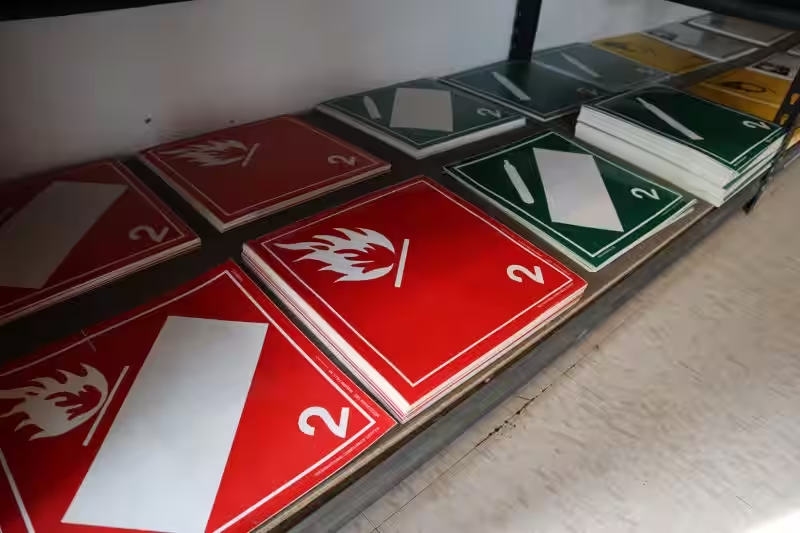
Asbestos Work Signage: A Critical Safety Element
Effective communication is paramount in asbestos work. OSHA regulations (29 CFR 1910.1001(j)(4)) mandate clear and prominent warning signs in all regulated asbestos work areas. These signs must warn of the dangers of asbestos, specifying that it can cause cancer and lung damage, and restricting access to authorized personnel only.
Where respiratory protection and protective clothing are required, the signage must explicitly state this. The use of multilingual signage and pictographs is encouraged to ensure that all workers understand the warnings, regardless of their language or literacy skills. This emphasis on clear communication is vital for minimizing risks and protecting worker health. For all classes of asbestos work, appropriate signage is a fundamental element of safety. The clarity and comprehensiveness of these signs are crucial for ensuring every worker understands the potential dangers and necessary precautions.
Understanding the classes of asbestos work is crucial for ensuring worker safety and compliance with OSHA regulations. Each class presents different levels of risk, necessitating appropriate safety protocols, PPE, and training. By adhering to these regulations and prioritizing worker safety, we can significantly reduce the risk of asbestos-related diseases. Remember, proactive measures and a thorough understanding of asbestos hazards are key to a safe working environment.
Asbestos Work Class FAQ
Here's a frequently asked questions section regarding the classes of asbestos work, based on OSHA regulations:
What are the different classes of asbestos work?
Asbestos work is categorized into four classes based on the risk level involved:
Class I: This involves the removal of thermal system insulation (TSI) and surfacing materials containing asbestos. This is considered high-risk due to the potential for significant asbestos fiber release. Examples include removing asbestos-containing pipe insulation or asbestos-containing ceiling tiles.
Class II: This includes the removal of asbestos-containing materials that are not TSI or surfacing materials. Examples include removing asbestos-containing wallboard or flooring tiles. The risk level is medium, lower than Class I but still significant.
Class III: This encompasses repair and maintenance activities where there's a likelihood of disturbing asbestos-containing materials. While the risk is lower than Classes I and II, there's still a potential for asbestos fiber release. Examples include minor repairs that might involve cutting or sanding materials that could contain asbestos.
Class IV: This is the lowest risk category. It includes maintenance and custodial activities where there's no disturbance of asbestos-containing materials. This might involve cleaning up dust generated from other asbestos work classes.
What constitutes "disturbance" of asbestos-containing materials?
Disturbance is defined as any activity that breaks down asbestos-containing materials (ACM) and generates visible debris. This is generally limited to the amount that can fit within a single glove bag. Activities that cause more significant release of asbestos fibers would be classified under Class I or Class II removal.
What's the difference between asbestos removal and asbestos repair?
Removal: Removal involves the complete extraction of asbestos-containing materials from a structure. This is a high-risk activity usually falling under Class I or II. It includes demolition work involving ACM.
Repair: Repair focuses on overhauling, rebuilding, or reconditioning structures, which may involve ACM. This can include processes like encapsulating asbestos-containing materials to prevent fiber release. Repair work is typically less risky than removal and often falls under Class III.
What defines a "regulated area"?
A regulated area is a designated space where Class I, II, or III asbestos work occurs, and where airborne asbestos levels may exceed permissible exposure limits (PELs). Strict safety protocols and personal protective equipment (PPE) are mandatory within these areas. This includes areas where asbestos debris accumulates.
What PPE is required for asbestos work?
The specific PPE requirements depend on the class of asbestos work. However, all classes require some level of respiratory protection and protective clothing. Signage in regulated areas must clearly state when respiratory protection and protective clothing are required. Additional PPE may include gloves, eye protection, and coveralls.
What training is necessary for working with asbestos?
Workers involved in any class of asbestos work must receive appropriate training from a competent person. The training requirements vary based on the class of work and the tasks performed. The competent person is responsible for identifying asbestos hazards, selecting appropriate control strategies, and having the authority to correct unsafe practices.
What are Presumed Asbestos-Containing Materials (PACM)?
PACM refers to thermal system insulation and surfacing materials in buildings constructed before or during 1980. These materials are presumed to contain asbestos unless proven otherwise through testing. Handling PACM requires following the same safety precautions as confirmed ACM.