Understanding Alcohol Anhydrous: A Deep Dive into its Properties and Applications
Understanding Alcohol Anhydrous: A Deep Dive into its Properties and Applications
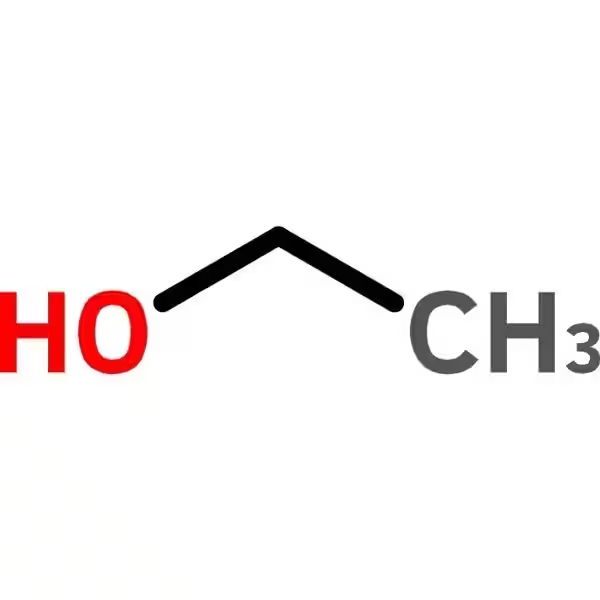
Alcohol anhydrous, also known as absolute ethanol or extra neutral anhydrous ethanol, is a highly purified form of ethanol with a water content of less than 0.1% (typically 99.9% pure). This exceptionally low water content is what distinguishes it from regular ethanol and makes it incredibly valuable across a wide spectrum of industries. Its unique properties make it a versatile substance with a broad range of applications, from cleaning delicate electronics to creating high-quality cosmetics. Let's explore its characteristics and uses in more detail.
Alcohol anhydrous possesses several key properties that contribute to its wide-ranging uses. Its most critical feature is its incredibly low water content. This ensures that it doesn't interfere with reactions or processes sensitive to moisture.
The near-total absence of water allows for better solubility of many substances. It acts as an excellent solvent for a vast array of organic and inorganic compounds, making it invaluable in various chemical processes. Its high purity also guarantees consistent results and minimizes unwanted side reactions.
Alcohol Anhydrous as a Powerful Solvent and Cleaner
One of the primary applications of alcohol anhydrous is as a powerful cleaning agent and solvent. Its exceptional ability to dissolve a broad range of substances, including fats, oils, and many organic compounds, makes it ideal for cleaning delicate equipment and components.
This property is especially valuable in the electronics industry, where it's frequently used to clean circuit boards and other sensitive components. Its rapid evaporation rate also prevents residue buildup. Beyond electronics, it finds applications in cleaning laboratory glassware and equipment, ensuring the integrity of experiments and analyses.
Cleaning Applications in Detail
The effectiveness of alcohol anhydrous as a cleaner stems from its ability to dissolve a wide array of contaminants. For instance:
Ionic flux residues: Often left behind after soldering, these residues can impact the performance of electronic components. Alcohol anhydrous effectively removes them.
Organic contaminants: Such as oils and greases, these are readily dissolved by alcohol anhydrous, leaving surfaces clean and dry.
Dirt and debris: Even fine particulate matter can be removed with alcohol anhydrous, ensuring a thorough cleaning process.
Industrial and Commercial Applications of Alcohol Anhydrous
The uses of alcohol anhydrous extend far beyond cleaning. Its versatility makes it a critical component in numerous industries:
Cosmetics and Fragrances: While often denatured for safety reasons (e.g., with Bitrex), alcohol anhydrous serves as a solvent and carrier for fragrances and other cosmetic ingredients.
Ink Production: It plays a role in the formulation of various inks, impacting their viscosity and flow properties.
Motor Fuel: Though less common now, it can be used as a component in certain types of motor fuels.
Pharmaceutical Industry: In pharmaceutical applications, it is often denatured with methanol or other additives to prevent recreational consumption. It is used as a solvent in the production of various medications and formulations. Note that the denaturants are carefully selected to not interfere with the medicinal properties.
Laboratory Settings: Its exceptional purity makes it indispensable in many laboratory procedures, ensuring accurate and reliable results across a wide range of chemical analyses and experiments. This is particularly critical where even small amounts of water could skew results.
The specific applications are numerous and depend on the exact formulation and requirements of the process.
Nucleic Acid Precipitation: In molecular biology, anhydrous alcohol is crucial for precipitating DNA or RNA, allowing for their isolation and purification.
Paint and Resin Modification: In the paint and coatings industry, alcohol anhydrous acts as a carrier solvent, modifying the rheological properties (flow and viscosity) of paints and resins improving their application and final characteristics.
Quality Control and Sourcing Anhydrous Alcohol
The quality of alcohol anhydrous is paramount, particularly in applications where high purity is essential. Reputable suppliers adhere to strict quality control measures, ensuring consistent product quality and meeting relevant industry standards.
ISO certifications, such as ISO 9001 (Quality Management System) and ISO 22000:2018 (Food Safety Management System), are indicators of a supplier's commitment to meeting international standards.
Choosing a Reliable Supplier
When sourcing alcohol anhydrous, it's crucial to select a reliable supplier who can guarantee:
High purity: The alcohol should meet the specified purity level (e.g., 99.9%).
Consistent quality: Batch-to-batch consistency is essential for reliable results.
Safe handling and transportation: The supplier should have expertise in handling and transporting this potentially hazardous material.
Compliance with regulations: Adherence to all relevant health, safety, and environmental regulations is crucial.
In conclusion, alcohol anhydrous is a versatile and indispensable substance with applications spanning numerous industries. Its high purity, excellent solvent properties, and ability to dissolve a wide range of contaminants make it a critical component in many processes, from cleaning delicate electronics to facilitating complex laboratory procedures. Understanding its properties and selecting a reputable supplier are key to leveraging its full potential.
What is anhydrous alcohol 99.9%?
Anhydrous alcohol 99.9%, also known as extra neutral anhydrous ethanol or absolute ethyl alcohol, is a high-purity form of ethanol containing only 0.1% water. Its exceptional purity makes it a versatile substance with broad applications.
Primarily, it serves as a powerful cleaner and solvent. Its ability to dissolve various substances makes it ideal for cleaning electronics (circuit boards), and as a solvent in modifying paint resins and other mixtures. It also finds use in cosmetics, fragrances, ink production, motor fuel, and laboratory settings.
How does anhydrous alcohol work as a solvent?
Its complete miscibility with water and most organic fluids allows it to effectively dissolve dirt, light organic contaminants, and ionic flux residues. Its moderate evaporation rate and compatibility with plastics are also beneficial properties.
Is anhydrous alcohol suitable for all applications?
While highly versatile, it's crucial to consider the specific application. For example, in cosmetics and fragrances, it's often used with added denaturants. In some laboratory applications, the presence of even 0.1% water might be significant. Always check the requirements of your specific application.
What are the safety considerations when using anhydrous alcohol?
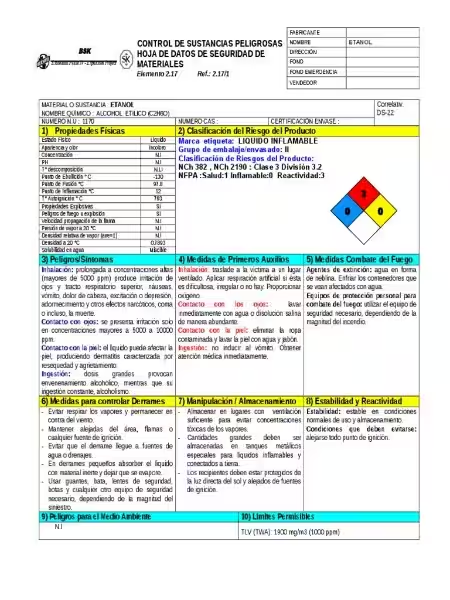
Anhydrous alcohol is flammable. Appropriate safety precautions, including proper ventilation and the use of appropriate personal protective equipment (PPE), should always be followed. Consult the Safety Data Sheet (SDS) for detailed safety information.
Is anhydrous alcohol suitable for consumption?
No. Anhydrous alcohol is for industrial and professional use only and is not intended for consumption. Ingestion can be extremely dangerous.
What are the typical packaging and transportation options?
Packaging and transportation options vary depending on the supplier and order size, but generally include options to meet diverse customer needs and comply with all relevant regulations. Bulk shipments require specialized handling.
What quality standards does anhydrous alcohol 99.9% adhere to?
Reputable suppliers adhere to international quality standards, such as ISO 9001 (Quality Management System) and potentially ISO 22000:2018 (Food Safety Management System), ensuring consistent high quality.
Where can I purchase anhydrous alcohol 99.9%?
Anhydrous alcohol 99.9% is available from various chemical suppliers. It's essential to select a reputable supplier with appropriate certifications and a proven track record of quality and safe delivery.
What is the difference between anhydrous alcohol and denatured alcohol?
Anhydrous alcohol is pure ethanol with minimal water content. Denatured alcohol has substances added to make it unsuitable for consumption, often including methanol. The denaturant alters the properties slightly, making it suitable for different applications.
Is anhydrous alcohol suitable for nucleic acid precipitation?
High-purity anhydrous ethanol is frequently used in molecular biology for precipitating nucleic acids (DNA or RNA). The process requires careful control of other conditions as well.
What makes anhydrous alcohol 99.9% superior to lower purity ethanol?
The extremely low water content (0.1%) is crucial for applications sensitive to moisture. Higher purity ensures consistent and reliable results, especially in precise applications.
Does the supplier's location impact the quality of anhydrous alcohol?
No. The inherent properties of anhydrous alcohol 99.9% are consistent regardless of the vendor. However, the supplier's reliability in terms of delivery, quality control, and adherence to regulations should be a key consideration.
Is the denatured form of anhydrous alcohol suitable for all uses?
No. The addition of denaturants like methanol alters the properties. While increasing versatility for some applications, it might not be suitable for others. Always check compatibility with your intended use.
What regulations govern the transport of anhydrous alcohol?
Transportation of anhydrous alcohol is subject to various legal, health, and safety regulations, which vary by location. These regulations are designed to ensure safe handling and prevent misuse.
Why is the anhydrous alcohol only for professional use?
Due to its flammability and potential toxicity if misused, its sale and use are typically restricted to professionals who have the knowledge and facilities to handle it safely.
What is the role of a supplier's quality control in anhydrous alcohol production?
Rigorous quality control measures throughout the production process are crucial for ensuring the high purity and consistency of the final product. This includes testing to meet or exceed industry standards.
How does the methanol denaturation affect the properties of anhydrous ethanol?
The addition of methanol makes the ethanol less desirable for consumption and alters certain physical properties, making it suitable for various industrial and pharmaceutical applications. The precise impact depends on the methanol concentration.
Can I get anhydrous alcohol shipped to my home address?
No. Due to safety and regulatory reasons, most reputable suppliers will only ship anhydrous alcohol to businesses or approved professional addresses, not residential locations.
What should I do if I have a question about a specific application of anhydrous alcohol?
Contact the supplier or a chemical expert for advice on the suitability of anhydrous alcohol for your specific application and to discuss any safety concerns.