Understanding China Textile Production: A Global Powerhouse
Understanding China Textile Production: A Global Powerhouse
China's textile production is a colossal force in the global economy, shaping international trade and employing millions. Its impact extends far beyond mere numbers, influencing everything from global fashion trends to geopolitical strategies. This article delves into the history, current state, and future prospects of this vital industry.
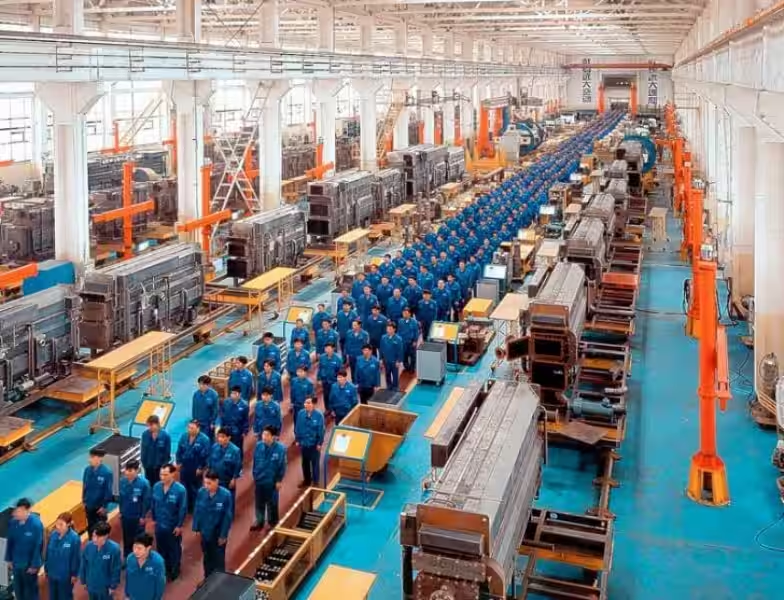
The phenomenal success of China textile production isn't accidental. It's the culmination of decades of strategic planning, leveraging global opportunities, and a vertically integrated industry structure. The scale is staggering: in 2023 alone, exports generated US$293.6 billion in revenue, representing a significant portion of its GDP. This economic clout is matched by the industry’s social impact, directly employing approximately 8 million people.
China's accession to the World Trade Organization (WTO) in 2001 served as a pivotal turning point. The subsequent removal of quotas and tariffs under the expiring World Textile Agreement (2004) unleashed a period of unprecedented growth. This opened floodgates to major markets like the US and EU, allowing for rapid expansion and solidifying China's position as the leading exporter of textiles and apparel worldwide. This success isn't limited to Western markets; China is a major trading partner for countless nations across Asia and Africa, underscoring its global reach.
Key Factors in China's Textile Success
Several key factors contributed to China's dominance in textile production:
Vertical Integration: China's textile industry isn't simply about manufacturing; it's a vertically integrated system encompassing everything from raw material sourcing to finished products. This control over the entire supply chain grants greater efficiency and cost advantages.
Strategic Policy Decisions: Government policies have played a crucial role, fostering investment, infrastructure development, and creating a favorable business environment.
Exploitation of Global Trade Liberalization: The removal of trade barriers created immense opportunities that China deftly seized, transforming its industry into a global leader.
Low Labor Costs (Initially): While wages have risen, China initially benefited from significantly lower labor costs compared to many competitors. However, efficiency gains and technological advancements have helped maintain competitiveness.
The industry is incredibly diverse, ranging from massive state-owned enterprises (SOEs) to smaller, privately-owned businesses. This creates a complex ecosystem with varying levels of technological advancement and production capabilities. Major players include SOEs like Shandong Demian Group and Sinomach, and private enterprises such as Esquel Group and Luthai.
Challenges and Future Trends
Despite its dominance, the industry faces challenges. Rising labor costs, concerns about environmental sustainability, and increasing competition from other countries are all factors that require ongoing adaptation. There’s a clear trend towards industry consolidation, with a projected future of fewer, larger manufacturers. Factory relocation from coastal provinces to inland areas is also underway, seeking lower labor costs.
The industry is also grappling with issues like domestic cotton price distortion, which has made it less competitive globally. While China has significantly improved its technological infrastructure and worker productivity, maintaining its competitive edge requires continuous innovation and adaptation to evolving global demands.
China Textile Production and the Global Economy
China's impact on the global textile market is undeniable. It's not just about sheer volume; it's about shaping trends, influencing pricing, and setting standards. Its dominance has had significant consequences for other textile-producing nations, creating both opportunities and challenges. For example, the Trans-Pacific Partnership (TPP) posed a potential threat through trade diversion, aiming to reduce China's share of the global market. This underlines the geopolitical implications of China's textile production.
The Future of China's Textile Industry
The future of China textile production is likely to be characterized by:
Increased automation and technological advancements: To offset rising labor costs and maintain competitiveness.
Focus on higher-value-added products: Moving away from purely price-competitive products towards specialized, high-quality textiles.
Emphasis on sustainability and environmental responsibility: Addressing concerns about pollution and resource consumption.
Continued integration into global supply chains: Maintaining strong relationships with international brands and retailers.
China's textile industry is not just a significant player; it’s a defining force in the global economy. Its continued success will depend on its ability to adapt to evolving market conditions, embrace innovation, and address the social and environmental implications of its production. The journey from a low-cost producer to a global leader is a testament to strategic planning, adaptability, and the relentless pursuit of economic growth. However, maintaining this position requires a constant evolution, balancing economic advancement with sustainable practices and navigating the complexities of the global market.
Frequently Asked Questions: China’s Textile Industry
What is China's role in global textile production?
China is the world's leading producer and exporter of textiles. Its industry is vertically integrated, controlling a significant portion of the global market share, impacting international trade significantly. In 2023, its textile exports generated US$293.6 billion in revenue, representing a substantial portion of its GDP.
How many people are employed in China's textile industry?
The Chinese textile sector directly employs approximately 8 million people, highlighting its substantial social and economic importance within the country.
When did China's textile industry become so dominant?
China's textile industry's rise to global dominance is largely attributed to its accession to the World Trade Organization (WTO) in 2001 and the subsequent expiration of the World Textile Agreement in 2004. The removal of trade barriers allowed for rapid expansion and propelled China to its current leading position.
What factors contribute to China's textile industry success?
Several factors contribute to China's success: a vertically integrated production system, strategic policy decisions, and the exploitation of opportunities presented by global trade liberalization. Access to a large domestic market also plays a significant role.
What is the economic impact of the textile industry on China?
The textile industry makes a substantial contribution to China's GDP and is a major source of employment, impacting both the national economy and the livelihoods of millions of citizens. Its exports generate significant revenue for the country.
Does China export all of its textile production?
While a considerable amount of higher-quality textiles is exported internationally, a substantial portion of production is consumed by the vast domestic market in China.
What is the geographic distribution of textile production within China?
While initially concentrated in coastal provinces, the industry is undergoing a shift, with factories relocating to inland areas to take advantage of lower labor costs.
What are some of the major challenges faced by China's textile industry?
While China maintains its competitiveness, challenges such as rising wages (although still relatively low compared to many other countries), and previous issues related to domestic cotton pricing have been factors to consider. Increased global competition is also an ongoing factor.
Who are some of the key players in China's textile industry?
The industry comprises a mix of large state-owned enterprises (SOEs) and private companies. Examples include Shandong Demian Group and Sinomach (SOEs), and Esquel Group and Luthai (private companies).
What role has foreign investment played in the development of China's textile industry?
Foreign direct investment (FDI), particularly from Hong Kong, Macao, and Taiwan, has played a significant role in the industry's development, often addressing financial constraints faced by private firms and contributing to technological advancements and efficiency improvements.