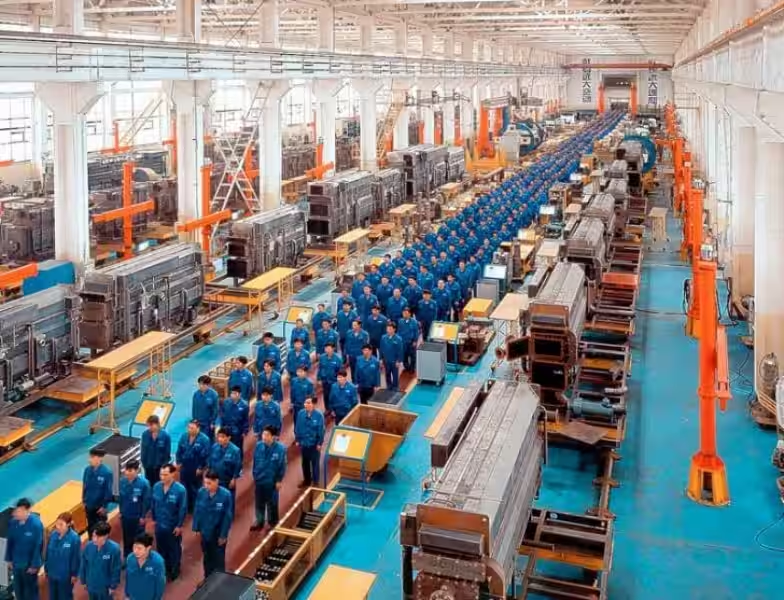
Understanding Asian Production: A Comprehensive Overview
Understanding Asian Production: A Comprehensive Overview
Asian production has become a dominant force in the global economy, shaping everything from the smartphones in our pockets to the clothes we wear. Understanding its intricacies is crucial for businesses, policymakers, and consumers alike. This article explores the key aspects of this vast and complex landscape.
Asia's manufacturing prowess isn't uniformly distributed. Some nations specialize in specific sectors, creating a complex web of interdependence. China, for instance, remains a manufacturing powerhouse, producing a vast array of goods, from electronics to textiles. Its sheer scale and infrastructure have made it a global hub for many industries. However, this dominance is gradually shifting.
Vietnam, for example, has experienced significant growth in recent years, particularly in the electronics and textile sectors. Benefiting from lower labor costs and government incentives, it's attracting substantial foreign investment. This diversification reflects a broader trend within Asian production: a shift away from reliance on a single dominant player.
Key Industries Driving Asian Production
Several industries are central to Asian production. The electronics sector, encompassing the manufacturing of smartphones, computers, and other consumer electronics, is a prime example. This industry is highly concentrated in several Asian countries, often involving intricate global supply chains.
The textile and apparel industry represents another major component. Asian countries, particularly in Southeast Asia, are major players in the production of clothing and textiles, often utilizing a combination of large-scale factories and smaller, family-run businesses. This sector faces ongoing challenges related to labor practices and sustainability.
Automotive manufacturing is another crucial sector. Countries like South Korea, Japan, and China are significant players, producing a wide range of vehicles, from budget-friendly models to luxury cars. The industry is constantly evolving, adapting to new technologies and consumer preferences. The rise of electric vehicles is further reshaping the landscape of Asian production in this industry.
Asian production is deeply integrated into global supply chains. Raw materials are sourced from various regions, processed and assembled in Asian factories, and then distributed worldwide. This intricate network ensures efficient production and delivery of goods to consumers globally.
However, this interconnectedness also creates vulnerabilities. Disruptions, such as the COVID-19 pandemic, highlighted the fragility of these chains. Pandemics, geopolitical instability, and natural disasters can all significantly impact the flow of goods, causing delays and shortages. This interconnectedness necessitates a robust and resilient framework that anticipates and mitigates such risks.
Labor Practices and Ethical Considerations
Asian production has faced considerable scrutiny regarding labor practices. Concerns about working conditions, wages, and labor rights in some regions have prompted increased calls for greater transparency and accountability. While many companies have implemented ethical sourcing initiatives, challenges remain.
The enforcement of labor laws varies significantly across Asian countries. Some nations have robust regulatory frameworks, while others lack the capacity or political will to effectively enforce existing regulations. This disparity necessitates a multi-faceted approach that includes collaboration between governments, businesses, and civil society organizations.
The Future of Asian Production: Trends and Challenges
The future of Asian production is likely to be shaped by several key trends. Automation and technological advancements, such as artificial intelligence and robotics, are expected to play a significant role, transforming manufacturing processes and potentially impacting employment.
Sustainability initiatives are also gaining momentum. Growing environmental concerns are pushing companies to adopt more eco-friendly practices, reducing their environmental footprint. This includes embracing renewable energy, minimizing waste, and improving resource efficiency. These changes are reshaping Asian production, pushing innovation and investment in green technologies.
Geopolitical tensions and trade disputes also pose significant challenges. Rising protectionist sentiment in some countries could disrupt established trade patterns and lead to regionalization of supply chains. Navigating this complex geopolitical landscape requires careful strategic planning and adaptation.
In conclusion, Asian production is a dynamic and multifaceted system. Understanding its geographic distribution, key industries, global supply chains, labor practices, and future trends is essential for anyone interested in the global economy. The ongoing evolution of Asian production will continue to shape the world's manufacturing landscape for years to come, demanding constant adaptation and innovation from businesses and policymakers alike.
Frequently Asked Questions about Asian Production
Here are some frequently asked questions about Asian production, based on common knowledge and general trends. Note that specific details vary significantly across different Asian countries and industries.
What are the major Asian countries involved in production?
Many Asian nations play significant roles in global production. China is a dominant player, particularly in manufacturing electronics, textiles, and a wide range of consumer goods. Other key players include Vietnam (garments, electronics), South Korea (electronics, automobiles), Japan (automobiles, electronics, advanced technology), Taiwan (electronics, semiconductors), and India (IT services, pharmaceuticals). The specific strengths of each country differ based on their infrastructure, labor costs, and technological capabilities.
Which industries are heavily concentrated in Asia?
Asia dominates in several key industries. Electronics manufacturing (smartphones, computers, etc.) is a prime example, with significant production concentrated in China, South Korea, Vietnam, and Taiwan. The textile and apparel industry is also heavily concentrated in Asia, with China, Vietnam, Bangladesh, and India being major players. Automotive manufacturing is another important sector, with Japan, South Korea, and increasingly China playing leading roles. Food processing is also a significant industry across Asia, varying widely by country and product.
How does Asian production fit into global supply chains?
Asian production is deeply integrated into global supply chains. Many products sold worldwide rely on components and manufacturing processes spread across multiple Asian countries and beyond. This interconnectedness allows for specialization and efficiency but also creates vulnerabilities. Disruptions in one part of the chain (e.g., a pandemic, natural disaster, or geopolitical event) can have ripple effects throughout the system. The intricate logistics and transportation networks supporting these chains are crucial to their functioning.
What are the typical labor practices in Asian factories?
Labor practices vary widely across Asian countries. While some nations have strong labor laws and enforcement mechanisms, others face challenges related to working conditions, wages, and worker rights. The ethical and sustainable sourcing of products is a growing concern, with increasing pressure on companies to ensure fair labor practices throughout their supply chains. Automation and technological advancements are also changing the nature of employment in Asian factories.
What is the future of Asian production?
The future of Asian production is subject to several evolving factors. Technological advancements like automation, AI, and robotics are transforming manufacturing processes. Climate change and sustainability initiatives are pushing for more environmentally friendly practices. Geopolitical tensions and trade policies can significantly impact production locations and investment flows. Different Asian countries are likely to experience varying degrees of growth and face unique challenges in the coming years, with some potentially seeing a shift in their production specializations.