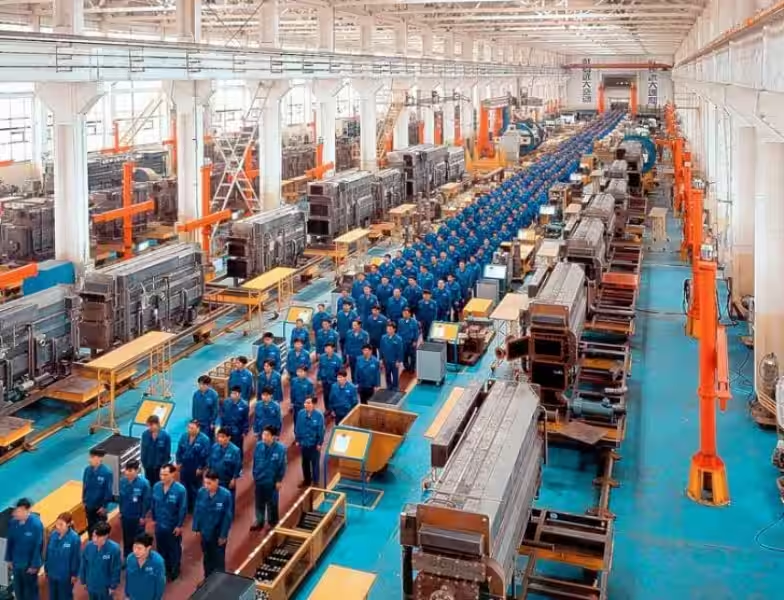
Understanding Fabric Mills in China: A Deep Dive into the Textile Powerhouse
Understanding Fabric Mills in China: A Deep Dive into the Textile Powerhouse
China's dominance in the global textile industry is undeniable, holding over 30% of global exports. This success is fueled by a vast and sophisticated network of fabric mills in China, each contributing unique strengths to the overall landscape. This article delves into the key characteristics of these mills, exploring their specializations, innovations, and the factors driving their global success.
The Landscape of Chinese Fabric Mills: Vertical Integration and Specialization
The Chinese textile industry isn't a monolithic entity. Instead, it's comprised of a diverse range of fabric mills, each with its own area of expertise. Many companies showcase impressive vertical integration, controlling the entire production chain from raw materials to finished goods. This approach offers significant advantages in terms of quality control, efficiency, and speed to market.
One excellent example is Shenzhou International, the world's largest vertically integrated knitwear manufacturer. Their ability to manage the entire process internally allows them to supply major international brands like Nike and Uniqlo with exceptional speed and consistent quality. This focus on efficiency and sustainability is a key differentiator in a highly competitive global market. Their commitment to sustainability also resonates with environmentally conscious consumers and brands.
Other companies, like Luthai Textile, demonstrate a similar approach. They oversee everything from cotton cultivation to the creation of finished garments, focusing on high-end yarn-dyed fabrics and shirts. This vertical integration allows for meticulous quality control at every stage, resulting in premium products that command higher prices in the market. Their expertise in yarn dyeing, a complex process requiring specialized knowledge, highlights their dedication to craftsmanship.
Beyond Vertical Integration: Diversification and Niche Markets
While vertical integration is a common theme, not all fabric mills in China follow this model. Many companies instead focus on specific niches within the textile market, leveraging specialized expertise and innovative technologies.
Jiangsu Hengli Group, for example, is a prime illustration of diversification. Their operations span polyester fibers, yarns, and fabrics, showcasing a broad range of capabilities. Their commitment to sustainability, including recycling initiatives, further underscores their forward-thinking approach and adaptation to evolving consumer demands. This breadth of offerings allows them to cater to diverse market segments and reduces their reliance on any single product line.
Other companies highlight even more specific specializations. Jium Hi-tech Textile focuses on technical textiles, particularly sportswear and protective clothing. Their expertise in high-performance fabrics is crucial in a market increasingly demanding durable and functional garments. Their focus on a niche market allows them to develop deep expertise and cater to specialized clients with unique needs. This focus contrasts sharply with the broader approach of companies like Jiangsu Hengli Group.
Sustainability and Innovation: Key Drivers of Success
A recurring theme among successful Chinese fabric mills is a dedication to sustainability and innovation. This isn't merely a marketing trend; it's a strategic imperative for maintaining competitiveness in a global market increasingly valuing ethical and environmentally conscious practices.
Companies like Changzhou Sinopoly Textile are at the forefront of sustainable solutions within the industry, focusing on the use of recycled polyester fibers. This commitment to environmentally friendly practices aligns with global sustainability goals and attracts environmentally conscious brands and consumers. Their innovation in utilizing recycled materials further reduces the industry's environmental footprint.
Shandong Demian Group, while specializing in bedding products, also prioritizes advanced technologies. Their incorporation of innovative manufacturing techniques demonstrates a commitment to efficiency, quality, and continuous improvement. This commitment to technology allows them to create high-quality products while maintaining a competitive edge.
The Role of Supply Chain Management and Digital Transformation
The success of Chinese fabric mills is not solely dependent on production capabilities. Efficient supply chain management and the adoption of digital technologies play equally critical roles.
Li & Fung Limited, while not a fabric mill itself, exemplifies the importance of efficient supply chain management in the Chinese textile industry. Their expertise in optimizing production and logistics for international brands highlights the crucial role of efficient supply chain management in the international textile trade. Their utilization of digital technologies streamlining processes and ensuring timely deliveries is a key factor in their success.
The digital transformation sweeping the industry is helping mills enhance efficiency, improve design processes, and better respond to market demands. Shaoxing Keqiao Textile, for example, is a testament to this trend, emphasizing market responsiveness and digital design. This digital focus helps them quickly adapt to changing trends and deliver products that meet consumer needs. This ability to react quickly to market changes is a key advantage in today's dynamic global market.
Conclusion: The Enduring Power of Chinese Fabric Mills
The Chinese textile industry's global dominance is not a matter of chance; it’s the result of strategic investments in vertical integration, specialization, innovation, and digital transformation. The diverse range of fabric mills in China, from those focusing on vertical integration to those specializing in niche markets, collectively contribute to the industry's ongoing success. Their commitment to sustainability and technological advancement positions them well to navigate the challenges and opportunities of the evolving global textile market and maintain their position as a leading force in the industry for years to come.
Frequently Asked Questions about Fabric Mills in China
What is the current state of the Chinese fabric mill industry?
China holds a dominant position in global textile exports, accounting for over 30% of the market. This dominance stems from a vast and sophisticated network of manufacturers, ranging from vertically integrated giants controlling the entire production process (from raw materials to finished goods) to specialized mills focusing on specific fabrics or market segments. The industry is characterized by a drive towards innovation, sustainability, and technologically advanced production methods.
What types of fabrics are produced in Chinese mills?
Chinese fabric mills produce an incredibly diverse range of fabrics. This includes knitwear, yarn-dyed fabrics, cotton textiles, polyester fibers and fabrics, wool fabrics, and technical textiles for sportswear and protective clothing. Some mills specialize in high-end fabrics, while others focus on fast fashion and readily available materials. The industry also encompasses bedding products and home textiles.
Are Chinese fabric mills vertically integrated?
Many leading Chinese textile companies are vertically integrated, meaning they control the entire production process from raw materials to finished goods. This allows for greater efficiency, quality control, and often, more sustainable practices. However, not all mills operate under this model; some specialize in specific stages of production or focus on particular types of fabric.
What is the focus on sustainability within the Chinese fabric mill industry?
There is a growing emphasis on sustainability within the Chinese textile industry. Several companies are investing in recycled materials (like recycled polyester), sustainable practices throughout their supply chain, and environmentally friendly production methods. However, the level of commitment to sustainability varies across different mills.
How technologically advanced are Chinese fabric mills?
Many Chinese fabric mills utilize advanced technologies in their production processes. This includes investments in R&D, automation, and digital supply chain management. This technological advancement contributes to their efficiency, ability to meet large-scale orders, and capacity for innovation in fabric development.
What are some examples of leading Chinese fabric mills?
The industry boasts numerous leading companies, each with its own specialization. Examples include Shenzhou International (largest vertically integrated knitwear manufacturer), Luthai Textile (cotton cultivation to garment production), Texhong Textile Group (cotton textiles and R&D), Jiangsu Hengli Group (polyester fibers and recycling), and Shandong Ruyi Technology Group (high-end wool fabrics). Others specialize in areas such as fast fashion, technical textiles, or supply chain management.
Can I find information on specific Chinese fabric mills?
Information on specific mills can often be found through online searches, industry directories, and company websites. However, detailed information on production capacity, pricing, and specific product offerings may require direct contact with the mills themselves.
Are Chinese fabric mills reliable suppliers?
The reliability of Chinese fabric mills varies. Many are established and reputable suppliers with a proven track record of meeting large-scale orders and maintaining consistent quality. However, it's crucial to conduct thorough due diligence before engaging with any supplier to evaluate their reputation and capabilities.
How can I source fabrics from Chinese mills?
Sourcing fabrics from Chinese mills can be done through various channels, including online platforms, trade shows, import agents, and direct contact with manufacturing companies. Thorough research and due diligence are essential for finding a reliable and suitable supplier.
What are the typical lead times for fabric production in China?
Lead times for fabric production vary depending on the type of fabric, order volume, and the mill's production capacity. It is best to discuss lead times directly with the potential supplier to get an accurate estimate.